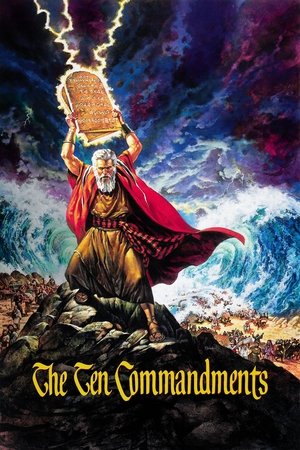
Escaping death, a Hebrew infant is raised in a royal household to become a prince. Upon discovery of his true heritage, Moses embarks on a personal quest to reclaim his destiny as the leader and liberator of the Hebrew people.
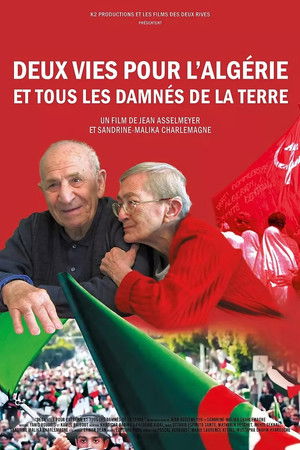
In 1994, at over seventy years old, Gilberte and William Sportisse, threatened by the FIS, arrived from Algeria. Of Jewish faith, he of Arabic mother tongue, they formed a fighting couple, started for the independence of Algeria, always with an unshakeable faith in humanity. They enjoy recounting the participation of Algerian Jews in the Second World War and the struggle for Algerian independence. They provide us with previously unpublished information on the public and clandestine struggles of the Algerian Communist Party before and after independence, and on the repression of activists who, like William and Gilberte Sportisse, were tortured and imprisoned after Colonel Boumédiène came to power. The film is an ode to understanding between people of different origins or cultures and a tribute to a couple whose youthful character and enthusiasm still astonish.
Danish social democratic propaganda film. During the Occupation, the young freedom fighter Søren had a good working relationship with a comrade in the resistance movement, despite the fact that Søren was a social democrat and his comrade a communist. After the liberation in May 1945, the differences that had been less important during the war begin to stand in Søren's way. Both his friendship with his comrade and his relationship with the wealthy Inger fall apart in the summer of liberation. But through his work in the Social Democratic Party, Søren experiences a renewed enthusiasm and resumes his relationship with Inger. Together, they actively engage in the party's work and both see it as an extension of the struggle for freedom during the occupation. Denmark's entry into NATO is particularly important.
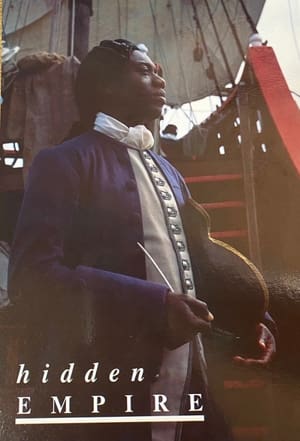
A documentary following the life of Olaudah Equiano, based on his autobiography "The Interesting Narration of the Life of Olaudah Equiano, or Gustavus Vassa the African".
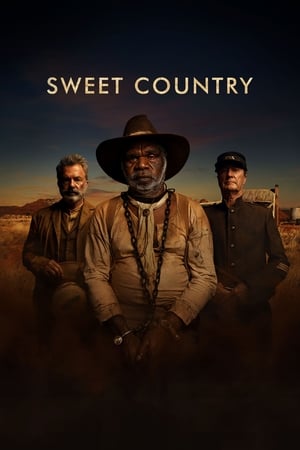
In 1929, an Australian Aboriginal stockman kills a white station owner in self-defense and goes on the lam, pursued by a posse.
The true story of William Wilberforce and his courageous quest to end the British slave trade. Along the way, Wilberforce meets intense opposition, but his minister urges him to see the cause through.
Lesson in History was produced when Peters was a student at the West Surrey School of Art and Design. Having read The People Could Fly by Virginia Hamilton, she was inspired to make what she describes as 'the stories of black achievement and how stories had not been told.' The animated film was subsequently screened on the BBC as part of the series 10X10. It was shot on 16mm using cutouts, photography and masks.
Caesar and his apes are forced into a deadly conflict with an army of humans led by a ruthless Colonel. After the apes suffer unimaginable losses, Caesar wrestles with his darker instincts and begins his own mythic quest to avenge his kind. As the journey finally brings them face to face, Caesar and the Colonel are pitted against each other in an epic battle that will determine the fate of both their species and the future of the planet.
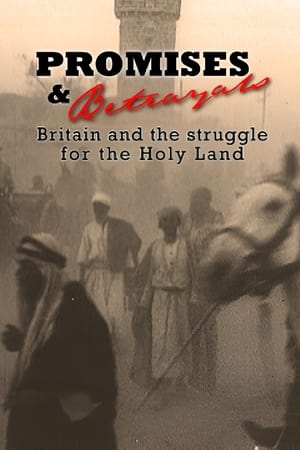
A documentary on how British double-dealing during the First World War ignited the conflict between Arab and Jew in the Middle East. The bitter struggle between Arab and Jew for control of the Holy Land has caused untold suffering in the Middle East for generations. It is often claimed that the crisis originated with Jewish emigration to Palestine and the foundation of the state of Israel. Yet the roots of the conflict are to be found much earlier – in British double-dealing during the First World War. This is a story of intrigue among rival empires; of misguided strategies; and of how conflicting promises to Arab and Jew created a legacy of bloodshed which determined the fate of the Middle East.
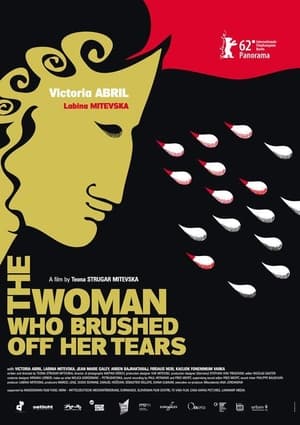
After her son's tragic death, Helena abducts her employee, Lucian, and travels with him and her husband to scatter her son's ashes in Macedonia. Meanwhile, Lucian's lover struggles to provide for their son and break free from her dictatorial father.
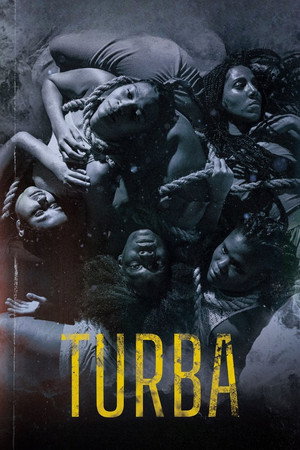
Six Black women throw themselves overboard to escape a slave ship bound for America. Based on Jericó Montilla's play of the same name (a free adaptation of Fabienne Kanor's Humus), directed by brothers Andrés and Luis Rodríguez. Less narrative than sensation: a visceral, poetic journey about resistance and the search for freedom, shot in Choroní and Caracas under CNAC's "Aprender haciendo" training program. Venezuela, 2025/2026.
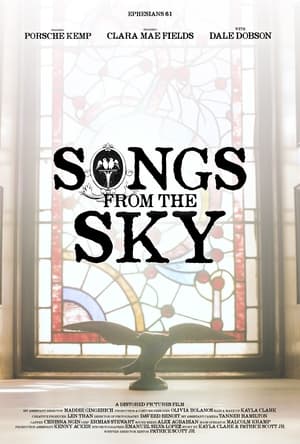
During the Civil War, a Quaker couple risks their lives by helping runaway slaves.
The first Macedonian Movie from 1952- Frosina is one of the many Macedonian wives whose husbands are economic emigrants abroad. Marriage does not bring them a family, only the burden of life itself. After her husband's short visits, she gives birth to children who do not live long because of the poverty into which they have been born. She gives birth to them alone, and she buries them alone. Only her last child, Klime, survives all his various illnesses and grows up to be her one joy in life. The war breaks out...
Macedonia on the turn of the century is enslaved by decaying Ottoman Empire. Freedom fighters, in order to raise money for their cause, kidnap American lady who works in Protestant mission.
After Phyllis discovers that her daughter Cecilia can read, she’s torn between abiding to her slave owner’s commands or encouraging her daughter that reading is a pathway to their freedom.
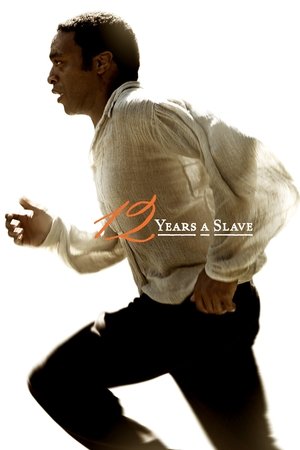
In the pre-Civil War United States, Solomon Northup, a free black man from upstate New York, is abducted and sold into slavery. Facing cruelty as well as unexpected kindnesses Solomon struggles not only to stay alive, but to retain his dignity. In the twelfth year of his unforgettable odyssey, Solomon’s chance meeting with a Canadian abolitionist will forever alter his life.
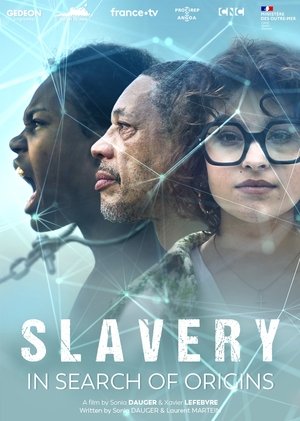
Aux origines, l'esclavage
Mahpeyker: Kösem Sultan
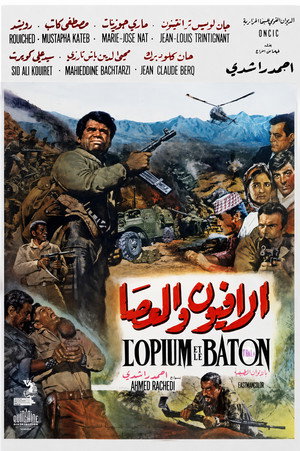
In 1950, in Algeria, in a village in Kabylia, Algerian resistance fighters resisted the French occupation army. Bachir returns to the village to escape the clashes ravaging Algiers. In Thala, he has two brothers, Ali and Belaïd. The first is engaged with the ALN (The National Liberation Army) and fights against the colonizer. His second brother, Belaïd, the eldest, is convinced of a French Algeria. His family torn apart, Bachir decides to join the war and takes sides against the repression of the French army. The French army is trying in vain to turn the population against the insurgents by using disinformation. The more time passes, the more the inhabitants of the village and surrounding areas, oppressed, rally to the cause of the FLN, their houses and their fields will be burned... Adaptation to the cinema of the eponymous novel Opium and the Stick, published in 1965, by Mouloud Mammeri, the film was dubbed into Tamazight (Berber), a first for Algerian cinema.
During the American Civil War, two women, a wealthy white woman and a freed black slave, join forces to fight for freedom and the abolition of slavery.