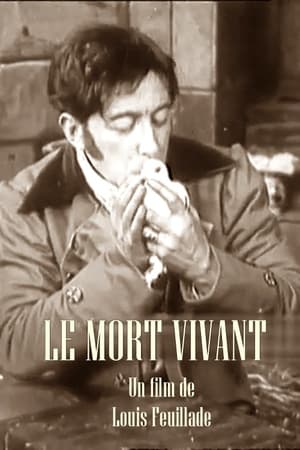
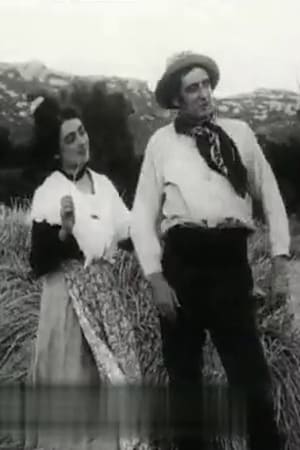
"The Living Corpse" - Fedor Protasov is tormented by the thought that his wife Liza never really made a clear choice between him and Victor Karenin, a more conventional rival for her hand. He wants to kill himself, but doesn't have the nerve. Running away from his life, he falls in with Gypsies, and into a sexual relationship with a Gypsy singer Mascha. Meanwhile, his wife Liza, presuming him dead, marries the other man, Victor.
Winsor McCay recreates the sinking of the ocean liner Lusitania by a German U-boat in this propaganda piece designed to stir up anti-German sentiment during World War I.
Kren frames the image to suggest a proscenium, with a view to the harbor that conveys a literal sense of “tele-vision”. The static framing of the image and the clearly stratified mise-en-scène can hardly provoke interpretation. The sight of the girls does so all the more. Kren, the gentle voyeur - who turns the viewer into a secret accomplice - observes three teenagers, and probably like them, awaits a rendezvous. (Thomas Trummer)
A short silent movie based on the tale Little Red Riding Hood.
The Water Station is a film adaptation by playwright, director, and NYU Abu Dhabi professor Abhishek Majumdar of a play by Japanese playwright Ōta Shōgo, written in 1981. It is about our experience of the world and how it is shaped by what we have to leave behind, who we can leave with, and what happens when we meet others in our journeys.
The film describes a moment of difficulty in the life of two brothers. The first is struck by a strange depressive syndrome, and the other assists him.
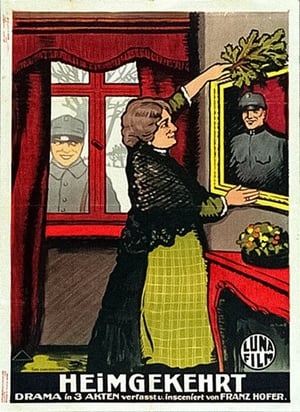
Carl Behrend, son of a wealthy businessman, marries Pauli Arndt, daughter of a pacifist professor. When World War I breaks out, Carl is drafted. Pauli and her family and friends are left behind to experience the suffering which befell civilians during the war. Her luck worsens when her father is dismissed from his professorship for teaching that war is evil. Her father argues violently with Carl's father, and degradation and despair descend on Pauli and her family as they await Carl's return from the front.
An English explorer disturbed by the practices of an isolated tribe attempts to rescue a native girl he has become fascinated with. THE DEVIL DANCER was highly praised at time of release for its exquisite cinematography, especially in the use of light and shadow. The film received an Academy Award nomination in this category. Sadly, it is among the lost. No prints or negatives are known to survive.
The Magic Flame (1927) is a feature film directed by Henry King, produced by Samuel Goldwyn, and based on the play Konig Harlekin by Rudolph Lothar. George Barnes was nominated at the 1st Academy Awards for Best Cinematography. The film promoted itself as the Romeo and Juliet of the circus upon its release.
Come and Swallow is the newest film in the big swallow universe. Being a piss take on the original “The Big Swallow (1901)” and “Come and See (1985)”. When the young boy (Josh Killoh) has his village burned down and destroyed by an army of troops, a few soldiers (Angus Rhind, Finlay Doney and Quillan Hepburn) pose to take a photo with the boy. As the camera man (Finlay Esslemont) prepares to take the photo, the boy suddenly decides that he has had enough of this tyranny and swallows all the soldiers.
Adrift in the vast expanse of the ocean, a solitary boat carries three castaways—a man and two women. Stranded and devoid of any glimmer of rescue, they find solace in recounting the tales of their lives to one another. As they delve into their personal narratives, reminiscing about the circumstances that led them to this desolate predicament, they navigate through the depths of three distinct destinies. Bound by the confines of their shared space, every aspect of their existence becomes a boundary, underscoring their plight.
In 1921, we follow two women - Marie and Grete - from the same poor Viennese neighborhood, as they try to better the lives of themselves and their families during the period of Austrian postwar hyperinflation.
A gangster falls for a blind violinist, only for his mobster rivals to kidnap her.
A hobo takes revenge to a miller who didn't give him something to eat.
This film begins with the invocation of 'almighty god' at a river where several people are gathered. The child god Krishna rises out of the water astride the demon snake Kaliya. Then we see Yashoda as she rocks the sleeping Krishna's crib and imagines the god as Gopala. The next scene shows Kamsa fantasizing about Krishna threateningly duplicated many times around him. Kamsa then imagines himself dead as his severed head rises up and descends again. People of all castes pay obeisance to the deity with the title-card: 'may this humble offering be accepted by the Lord'.
Alraune and the Golem
A 1920 film directed by Roy William Neill.
A gold prospector in Alaska struggles to survive the elements and win the heart of a dance hall girl.
The Man With The White Mask
When housewife Trina wins the lottery, her comfortable life with her dentist husband John slowly deteriorates, in part by her own increasing paranoia and partly by the machinations of villainous acquaintance Marcus.