A documentary of explorer Richard Halliburton's travels on the Indian sub-continent, featuring a mix of real and staged footage.
In 1975 French Oscar-winning documentary filmmaker Pierre Dominique Gaisseau traveled to Panama to make a film on the indigenous island-dwelling Kuna people. Accompanied by his wife and their daughter, Gaisseau lived with the Kuna for a year, gaining their trust and filming their most intimate ceremonies. He promised to share the resulting film with the community, but that never happened. Fifty years later, the Kunas are still waiting to discover “their” film, now a legend passed down from the elders to the new generation. One day, a hidden copy is found in Paris…While uncovering this fascinating story with humility and warmth, Swiss-Panamanian filmmaker Andrés Peyrot succeeds in capturing a true sense of culture and place. The result is simultaneously a cautionary tale raising questions around how and why documentaries are made and for whom, and a testament to the power of what it means to see yourself on the big screen.
Lost film from 1888, directed by William Friese-Greene.
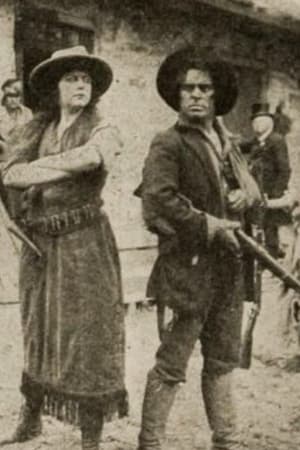
LeGrande, an old trapper, refuses to vacate his favorite hunting grounds when ordered to do so by Sampson and other settlers, and his life is only saved through the intervention of his daughter, Joan. The rascals soon learn to fear the girl's keen wit and daring, and Sampson, already pledged to marry Sanchezza, a Mexican girl, falls in love with Joan.
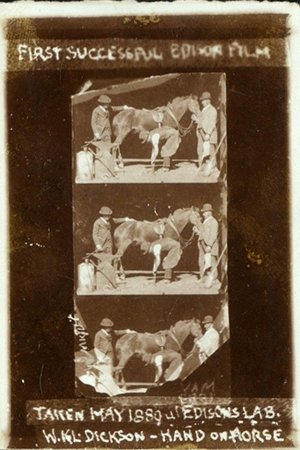
One of the pictures to be seen in the machine, for example, was that of a blacksmith shop in which two men were working, one shoeing a horse, the other heating iron at the forge. One would be seen to drive the nail into the shoe of the horse's hoof, to change his position and every movement needed in the work was clearly shown as if the object was in real (life). In fact, the whole routine of the two men's labor and their movements for the day was presented to the view of the observer.
Scene from a Trilby-themed stage play. Lost.
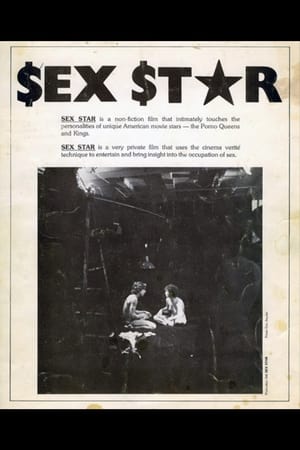
Sex star gives an explosive behind the scenes view of the people who make sexual fantasies come true on the silver screen. Sex Stars is the first feature documentary made by Lech Kowalski.
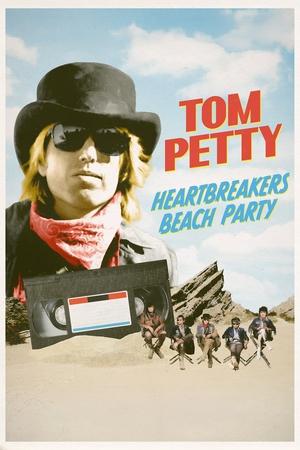
Documentary that captures Tom Petty and the band in 1982-1983 as they finish, promote, and tour around the “Long After Dark” album (their final with legendary producer Jimmy Iovine). It aired only once on MTV in 1983. After the long lost 16mm reels were finally found, a restored version with 19 minutes of extra footage was released in 2024.
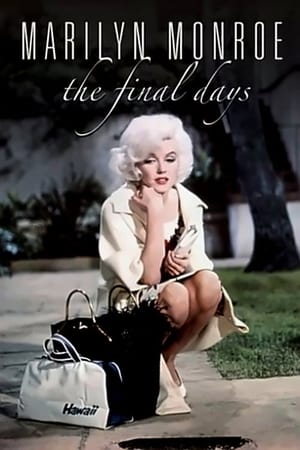
Marilyn Monroe's final project, "Something's Got to Give", has become one of the most talked about unfinished films in history. The story of the film and Marilyn's last days were seemingly lost… until now. Through interviews, never-before-seen footage and an edited reconstruction of "Something's Got to Give", Marilyn Monroe: The Final Days provides a definitive and fascinating look at the last act in the life of the world's most famous and tragic superstar.
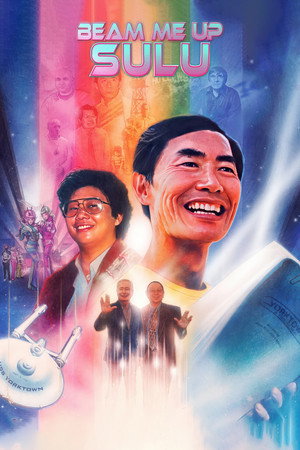
In 1985, Star Trek's George Takei joined a group of dedicated fans to make a student film deep in the California forest—only for the footage to mysteriously vanish. Nearly 40 years later, Beam Me Up, Sulu unearths this lost film, revealing not just a piece of fan history but a broader story of representation, resilience, and the ongoing fight for inclusion in media and society. The film was released as Yorktown: A Time to Heal (2022)
Vitagraph’s Battle of Santiago Bay (1898) blended real Spanish–American War footage with tabletop trickery. Albert E. Smith’s authentic San Juan material looked underwhelming, so he and partner J. Stuart Blackton staged the naval clash on a miniature set: cardboard ships afloat in shallow water, firecracker “explosions,” and clouds of smoke from cigars and cigarettes. Spliced together, the hybrid film was embraced as genuine by audiences and became one of the most popular war films of its day.
A Football Match at Newcastle-on-Tyne refers to a one-minute film recorded in October 1896 by English film pioneer Robert William Paul. According to several film and sports historians, it was the first known recording of a football match.
Silas Croft was a kindly old Englishman who had a farm in South Africa. With him resided his two nieces, whom he had taken from their drunken, worthless father when they were of a tender age. Jess, the elder, was brilliant and educated; Bess, the younger was beautiful, but frankly admitted that she did not possess the mental attainments of Jess. The two were great friends, and Jess, although the senior by only three years, had almost a motherly affection for her pretty little sister. Croft, finding old age stealing upon him, advertised for a partner, stipulating that he must be a gentleman. Probably it was his secret idea that the right man might come along, and fall in love with his favorite, beautiful Bessie.
Jirón is the story of “Jirón de niebla” (Shred of Fog), the last film made by Mexico’s duque of horror, Carlos Enrique Taboada, which, for several reasons, was never shown or premiered. The mistery behind the disappearance of this film will be revealed in a series of interviews with the people who worked on it.
Captain Kleinschmidt leads an expedition sponsored by the Carnegie Museum to the arctic regions of Alaska and Siberia to study the natives and the animal life.
During the COVID-19 pandemic, two college students set out to make a revolutionary television show. The pilot episode was uncovered and presented alongside exclusive interviews with the cast and crew.
The good people of the Solax community realize that they have cause to make merry before the New Year because the Almighty has guided their breadwinning footsteps toward the Solax Studio's happy atmosphere, bank together like the big happy family they are, to give expression to their happiness in the form of a gift to the immediate cause of their good fortune and sunshine.
A showcase of trapeze artist Alciede Capitaine, billed as “The Perfect Woman,” whose daring feats on the flying bar combined grace with breathtaking athleticism. Produced by Edison in 1898, this title should not be confused with Dickson’s earlier 1894 short Mlle. Capitaine, which also featured the performer.
At the opening of the film Pennsylvania Avenue is shown, nearly blocked by a motley mob of sightseers looking at the marching Suffragettes. The big banner demanding a Constitutional amendment guaranteeing equal rights to American women makes a pathway along which the Suffragettes are seen marching steadily and persistently, although still hemmed in by the mob.
Commissioned by the U.S. Treasury Department, the film follows an inspector conducting surprise inspections. Note: As of now, the film is considered lost and no known copies are publicly available.