A low budget, comedic documentary following a young man trying to take a deeper look into water, its purpose, and how we, as a society have chosen to use it.
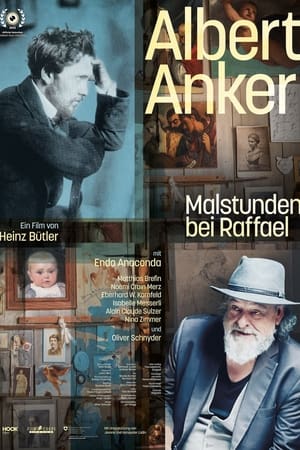
An intimate portrait of a peasant-turned oil painter transitioning from making copies of iconic Western paintings to creating his own authentic works of art.
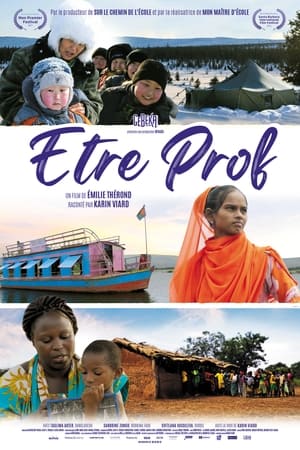
A documentary feature film which aims to expand the usually one-sided conversation between students and teachers. During its runtime, raw experiences heard from all sides of the conversation are laid bare during its 77 minute runtime. From all of these interviewees, including a student, a school psychiatrist, and five teachers, the viewer shouldn't expect to be confronted with a narrow perspective but rather a question: "where do I stand?"
Marc Chagall was an artist caught between two worlds, between traditional art and modernism, figuration and abstraction. The film accompanies him on an important stage of his life from 1910 to 1930, between Paris and Vitebsk. Chagall's home town was a laboratory for the artistic avant-garde in Belarus, while Paris was the center of modern art movements.
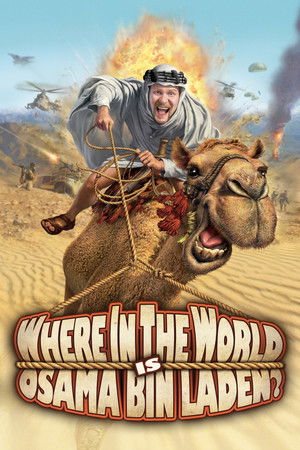
Morgan Spurlock tours the Middle East to discuss the war on terror with Arabic people.
In American Sign Language (ASL) with subtitles available in English, Spanish and Canadian French. This powerful documentary uses real life experiences from Deaf people of varied social, racial, and educational boundaries showing how this form of oppression does lasting and harmful damage. Bonus materials include directors' comments from Ben Bahan and H-Dirksen Bauman and additional scences. Teachers: This film is a wonderful tool for beginning ASL students, as an introduction to a side of Deaf culture that cannot be found in any textbook.
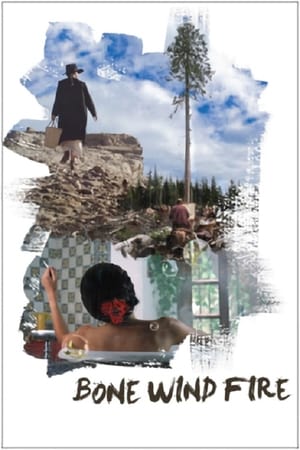
A journey into the hearts, minds and eyes of Georgia O’Keeffe, Emily Carr and Frida Kahlo - three of the 20th century’s most remarkable artists.
Leonardo da Vinci is acclaimed as the world’s favourite artist. Many TV shows and feature films have showcased this extraordinary genius but often not examined closely enough is the most crucial element of all: his art. Leonardo’s peerless paintings and drawings will be the focus of Leonardo: The Works, as EXHIBITION ON SCREEN presents every single attributed painting, in Ultra HD quality, never seen before on the big screen. Key works include The Mona Lisa, The Last Supper, Lady with an Ermine, Ginevra de’ Benci, Madonna Litta, Virgin of the Rocks, and more than a dozen others.
For the first time in history the Royal Academy of Arts in London, in collaboration with the Museum of Fine Arts in Boston, is bringing together Lucian Freud’s self-portraits. The exhibition will display more than 50 paintings, prints and drawings in which this modern master of British art turned his unflinching eye firmly on himself. One of the most celebrated painters of our time, Lucian Freud is also one of very few 20th-century artists who portrayed themselves with such consistency. Spanning nearly seven decades his self-portraits give a fascinating insight into both his psyche and his development as a painter, from his earliest portrait painted in 1939 to the final one executed 64 years later. When seen together, his portraits represent an engrossing study into the dynamic of ageing and the process of self-representation. This intensely compelling exhibition creates a unique opportunity for EXHIBITION ON SCREEN to reveal the life’s work of a master in one show.
Five years in production, this is the most extensive film ever made about one of the greatest artists of all time – Caravaggio. Featuring masterpiece after masterpiece and with first-hand testimony from the artist himself on the eve of his mysterious disappearance, this beautiful new film reveals Caravaggio as never before. Multi-award-winning filmmakers David Bickerstaff and Phil Grabsky delve into the hidden narratives of Caravaggio’s life, piecing together clues embedded within his incredible art. The intriguing self-depictions within his works — sometimes disguised, sometimes in plain sight — offer a rare window into his psyche and personal struggles. Join us as we unravel the story of one of history’s most brilliant, complex and controversial figures.
Young members of 3 New Orleans school marching bands grow up in America's most musical city, and one of its most dangerous. Their band directors get them ready to perform in the Mardi Gras parades, and teach them to succeed and to survive.
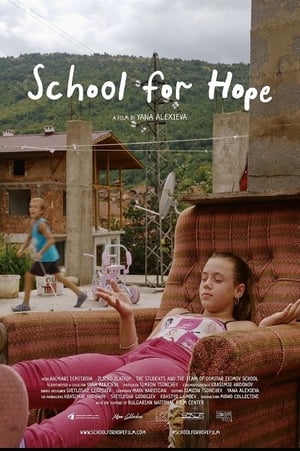
In the vast expanse of desert East of Atlas Mountains in Morocco, seasonal rain and snow once supported livestock, but now the drought seems to never end. Hardly a blade of grass can be seen, and families travel miles on foot to get water from a muddy hole in the ground. Yet the children willingly ride donkeys and bicycles or walk for miles across rocks to a "school of hope" built of clay. Following both the students and the teachers in the Oulad Boukais Tribe's community school for over three years, SCHOOL OF HOPE shows students Mohamed, Miloud, Fatima, and their classmates, responding with childish glee to the school's altruistic young teacher, Mohamed. Each child faces individual obstacles - supporting their aging parents; avoiding restrictions from relatives based on traditional gender roles - while their young teacher makes do in a house with no electricity or water.
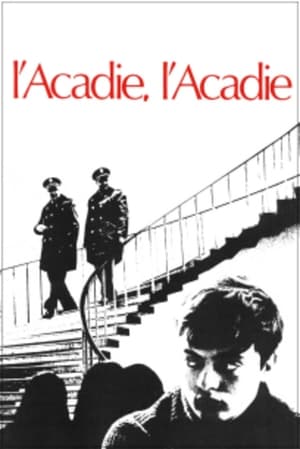
In the late 1960s, with the triumph of bilingualism and biculturalism, New Brunswick's Université de Moncton became the setting for the awakening of Acadian nationalism after centuries of defeatism and resignation. Although 40% of the province's population spoke French, they had been unable to make their voices heard. The movement started with students-sit-ins, demonstrations against Parliament, run-ins with the police - and soon spread to a majority of Acadians. The film captures the behind-the-scenes action and the students' determination to bring about change. An invaluable document of the rebirth of a people.
The documentary's title translates as "to be and to have", the two auxiliary verbs in the French language. It is about a primary school in the commune of Saint-Étienne-sur-Usson, Puy-de-Dôme, France, the population of which is just over 200. The school has one small class of mixed ages (from four to twelve years), with a dedicated teacher, Georges Lopez, who shows patience and respect for the children as we follow their story through a single school year.
On the creative collaboration and friendship between the staff and students of a children's music school in Leningrad and organ master Justin Prončketis.
The Movie Movie shows how the camera, editing techniques, make-up and sound can be used in film and video to deliberately manipulate our perceptions and emotions. Drama, action and slapstick humour are combined in a simple, family-oriented plot. There is no dialogue, but there is an explanatory song. Behind-the-scenes vignettes highlight the message that in a movie everything is not quite as it seems.
Known for his vibrant reinterpretations of classical portraits featuring African-American men, New York-based painter Kehinde Wiley has turned the practice of portraiture on its head and in the process has taken the art world by storm.
The Kiss by Gustav Klimt is one of the most recognised and reproduced paintings in the world. It is perhaps the most popular poster on student dorm walls from Beijing to Boston. Painted in Vienna around 1908, the evocative image of an unknown embracing couple has captivated viewers with its mystery, sensuality and dazzling materials ever since it was created. But just what lies behind the appeal of the painting – and just who was the artist that created it? Delving into the details of real gold, decorative designs, symbolism and simmering erotica, a close study of the painting takes us to the remarkable turn of the century Vienna when a new world was battling with the old.
Alma W. Thomas lived a life of firsts: the first Fine Arts graduate of Howard University (1924), the first Black woman to mount a retrospective at the Whitney Museum of American Art (1972), and the first Black woman to have her paintings exhibited in the White House (2009). Yet she did not receive national attention until she was 80.
THE STORY WON’T DIE, from Award-winning filmmaker David Henry Gerson, is an inspiring, timely look at a young generation of Syrian artists who use their work to protest and process what is currently the world’s largest and longest ongoing displacement of people since WWII. The film is produced by Sundance Award-winner Odessa Rae (Navalny). Rapper Abu Hajar, together with other creative personalities of the Syrian uprising, a post-Rock musician (Anas Maghrebi), members of the first all-female Syrian rock band (Bahila Hijazi + Lynn Mayya), break-dancer (Bboy Shadow), choreographer (Medhat Aldaabal), and visual artists (Tammam Azzam, Omar Imam + Diala Brisly), use their art to rise in revolution and endure in exile in this new documentary reflecting on a battle for peace, justice and freedom of expression. It is an uplifting and humanizing look at what it means to be a refugee in today’s world and offers inspiring and hopeful vantages on a creative response to the chaos of war.