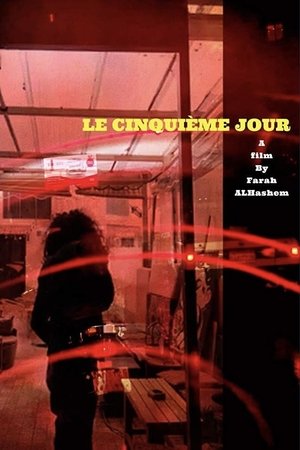
Driven by an intimate quest, this choral film reveals the meeting of individuals who inhabit the territory of Manicouagan and who together contribute to defining its geomorphological and socio-cultural imprints through time in a dreamlike manner.
Behind closed doors in a car, three friends from the small town of Sept-Îles discuss their desire to reconnect with the North Shore, the region where they grew up. As the hours lenghten on the road 138, the young women reflect on the quest for identity that accompanies the regional exodus and reveals a social landscape decentralized from the metropolises.
L’histoire de la Côte-Nord: une histoire commune
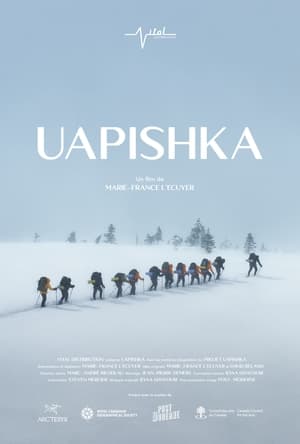
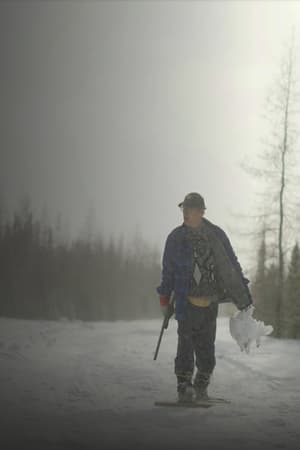
North of the 51st parallel, where the dense boreal forest opens onto an arctic islet, the snow-capped peaks of the Uapishka Mountains watch over the Nitassinan of Pessamit. In the heart of winter, a group of Innu and non-Innu adventurers attempt to cross this vast mountain range on snowshoes, completely independently. Faced with the vastness of the territory, the rigors of the northern climate and the impetuous breath of the tundra, they discover each other in a different way, form friendships and unite to better chart their course. Over the kilometres, the adventure reveals a space for meeting, sharing and reconciliation.
Filmmaker Éli Laliberté explores Nitassinan, an Innu territory north of Sept-Îles. His camera follows Clément and Tekuanan. The first is a modern-day coureur des bois, the other returns to Nutshimit, his ancestral family territory.
In the 1970s, young people from Baie-Comeau – Hauterive sought to take their place in an industrial society dedicated to work and consumption. Often left to their own devices while waiting to enter the job market, many of them seek their paths in artistic creation. The feast of St. John 74 gives them an opportunity to shout their existence loud and clear and to shake up the existing order. We follow them here in their adventure and their reality.
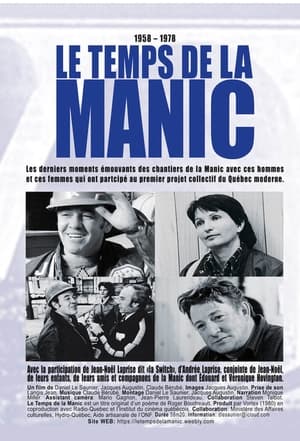
Documentary filmed at the end of the Manic-Outardes hydroelectric projects on the North Shore of the St. Lawrence (1978) to pay tribute to the men and women who participated, for 20 years, in the first collective project in modern Quebec. Le Temps de la Manic allows us to follow live the moving end of this era in the company of Jean-Noël Laprise nicknamed “the Switch”, Andrée Laprise (Grenier) his partner, their 4 children Carole, Serge, Yvan and Hélène, by Édouard Hovington and Véronique Hovington, by Camille Brisson, Léo Boisclair, Denis Ouellet, Gérard Debigaré and Fernande Buissière. Everyone has experienced the time of the Manic adventure from the inside. The Prime Minister, Mr. René Lévesque, also appears in the film.
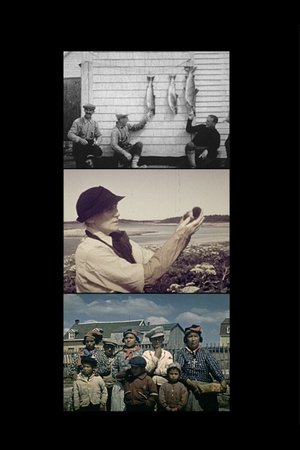
For over thirty summers, Mrs. Fife, an exceptional woman of our time, lived in the village of Baie-Johan-Beetz, where her great gentleness and generosity left their mark on people. This documentary is therefore intended as a tribute: it brings together both numerous testimonies and a collection of archival films and photos, signed by Mary Fife.
Pouvoir Oublier is a political documentary first constructed from the words of the speakers whose lives changed on the tragic day of May 10, 1972 in Sept-Îles. Their word will be juxtaposed with archival material from the events, some of which are unpublished, which will reflect the collective euphoria in which Sept-Îles and all of Quebec were then bathed.
At the age of eight, José shows us his village, Nutashkuan, and everything he loves there.
Betsiamites
La vieille réserve
In 1981, an unusual person arrives in Natashquan, marking the beginning of an unlikely love story between this small Quebec village and the young man they call “The Punk”. Five years later, he vanishes without a trace, forever impacting the community.
Tout est ori
In a remote stretch of Patagonia, Argentina, there is a family - the Dickasons - who speak a language from a country 7,000km to the east. They are part of a 114-year-old Afrikaans Boer community - South Africans of Dutch descent who sailed across the ocean to South America after the destruction of a war with the British. Today, less than 50 still speak the language and they struggle to keep their culture alive. Patriarch "Ty" Dickason, 82, is a cowboy who has never flown in a plane - and yet he yearns to one day visit the country of his blood before he and his compatriots pass away. This multiple SAFTA award-winning documentary is a portrait of the last days of the community - a parallel world where Afrikaans was never linked to Apartheid - and one family's journey to reconnect with South Africa.
As a poster boy for hedonism, his whole life was one big party. A journalist, filmmaker, director, producer, actor, novelist, ladies' man and prolific father... Roger Vladimir Plémiannikov, a.k.a. Roger Vadim, tried everything until his death in 2000. Portrait of a man at the cutting edge of fashion and trends.
Follow ocean legend Sylvia Earle, renowned underwater National Geographic photographer Brian Skerry, writer Max Kennedy and their crew of teenage aquanauts on a year-long quest to deploy science and photography to inspire President Obama to establish new Blue Parks to protect essential habitats across an unseen American Wilderness.
A 16 year old girl recalls the last moments of her summer vacation, spent with friends in the Laurentians north of Montreal. She reminisces about their talks on life, death, love, and God. Shot in direct cinema style, working from a script that left room for the teenagers to improvise and express their own thoughts, the film sought to capture the immediacy of the youths presence their bodies, their language, their environment.
A look back at the girl-group craze of the 60's through archival footage and interviews with those involved.
In the almost six decades that Bown worked for The Observer, she became renowned for insightful, highly individualistic portraits of the famous. Some of these portraits are now regarded as classics of the genre - Samuel Beckett, Queen Elizabeth II, The Beatles, Bertrand Russell, Mick Jagger and Margaret Thatcher. For the first time, she spoke candidly about her career and revealed how her very personal approach to the taking of portraits is informed by a deep sense of loss and abandonment. This private portrait is enhanced by a series of insightful interviews with Jane’s peers, family, colleagues, friends, and of course some of her subjects.