This Traveltalk series short celebrates San Francisco, past and present.
Pilot JP Schulze and filmmaker Louis Cole set off to circumnavigate the world in a single-engine, 1974 Cessna T210L airplane named Balloo. They had 90 days to complete the journey, and as they traveled they met people from many different cultures and asked them - is what divides us greater than what brings us together?
A Place of Our Own
This Traveltalk series short visit to the province of Ontario begins in Ottawa, Canada's capital, then proceeds to Algonquin Park, Toronto, and Niagara Falls.
This Traveltalk series short visits an array of locations associated with England's heritage. Included are Runnymede, Windsor, Ascot, Lincoln, Wells, Salisbury, Glastonbury, and the ancient Stonehenge site.
Located in the United Kingdom, the Principality of Wales, home to 2.5 million people, is filled with rolling mountains, and green valleys. Because of its culture and language, it is unique within the UK. Much of the economy is based on small independent farms, but also includes coal and slate mining. Its many castles - including Caernarfon and Conwy - comprise its most famous built landmarks. Another landmark is the Menai suspension bridge - spanning the Menai Straits - the longest such structure in the UK. As Wales is a largely coastal jurisdiction, the Welsh have taken advantage of water opportunities, whether it be for fishing, or for recreation at one of the many coastal resorts, such as the most famous, Llandudno. There are also mountain resorts, such as Betws-y-Coed. Mount Snowdon, the highest peak in Wales, offers great hiking and climbing opportunities.
This Traveltalk series short highlights rural areas of England. We stop at the village of Bradford-on-Avon, with its thatched roofs, also Stoke Poges, the burial place of British poet Thomas Gray.
This FitzPatrick Traveltalk short visits the cities of Casablanca, Rabat, and Marrakesh in Morocco, as well as the city of Algiers in Algeria.
The Andes Mountains travel the western side of South America. Unlike many other mountain ranges of their altitude, the Andes do support human life on their high altitude slopes. Modern life is slowly making its way to the high altitude Andes, but the natives for the most part continue with the traditional ways of their ancestors, growing limited crops such as beans and potatoes - where the crop originated - raising sheep and pigs, and living in crude huts. The llama is the most useful of their work animals. The most conspicuous aspect of the native dress is their derby hats, the origins which are unknown. Further down the slopes, agriculture and ranching is more productive and is carried out by descendants of the Spanish settlers. There is a famous lake district in the Chilean part of the Andes, where resort hotels are located.
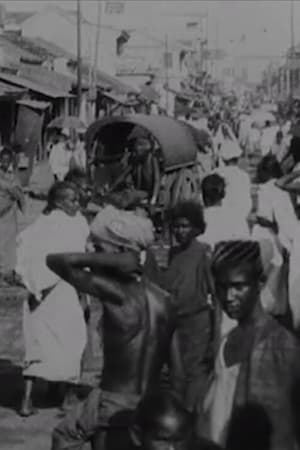
In this travelogue of Ceylon, the first stop is Colombo, the capital and chief seaport of this island nation. A short train ride from Colombo is Mount Lavinia, one of the country's most popular pleasure resorts. The next stop is the Peradeniya Gardens, the highlight of which is a magnificent avenue of majestic royal palms. Another botanical item of interest in Ceylon is the manufacture of rubber and the abundance of rubber trees in cultivation. The final stop is the city of Kandy, the primary attraction of which is the Temple of the Tooth.
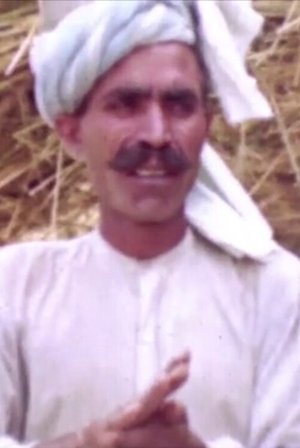
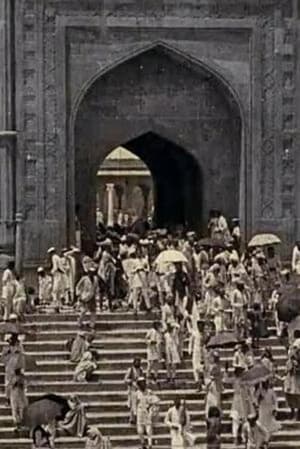
This Traveltalk series short visits a few locations where the centuries-old traditions of ancient India are kept alive in contemporary times.
The ugly duckling of the title is Hans Christian Andersen, the author who wrote fairy tales that still delight readers to this day. This Traveltalk series entry tells the story of Andersen's life. We visit the city of his birth and journey to other places important in his life.
This Traveltalk series short discusses how Johannesburg began as a farming community, but with the discovery of gold in the area, the city embraced mining as its primary industry. Native workers came to the area to train to be miners, and even after their work in the mines ended, many decided to remain in Johannesburg. The natives' music and dance are highlights.
This travelogue begins with the vast agricultural wealth of the country, whose farmers can produce four times the amount required to feed the country's population. As such, the export of these agricultural products is a vital part of the country's economy. This agricultural tradition extends to its food consumption, as Denmark's vast array of open faced sandwiches is world renowned. It also extends to flower production and the Dane's love of flowers, which are sold in public markets. Denmark has a strong social support system, as witnessed by the free and mandatory public schooling, free medical services for expectant mothers and children, the provision of cooperative housing and housing for seniors, and the provision of old age pensions without premiums.
This Traveltalk series short looks at four of Spain's most famous cities, Granada, Seville, Toledo, and Madrid, with an emphasis on the Moors and their influence on the country.
This Traveltalk series short visits The Grand Canyon and Bryce Canyon.
A short documentary about Thailand, formerly known as Siam.
A woman narrates the thoughts of a world traveler, meditations on time and memory expressed in words and images from places as far-flung as Japan, Guinea-Bissau, Iceland, and San Francisco.
La rosa dei nomi
A powerful depiction of war in infamous global conflict zones. Directed by Oscar/Emmy documentary makers Buddy Squires and Graeme Scott (know for Sam Smith), this film provides a rare and powerful insight into humanity and hope in the depth of war and the greatest global humanitarian crisis of the last several decades.