This first film of Cyprus' first director, Giorgios Filis, depicts music and dance customs in the form and style of a folk opera, with traditional Cypriot dances and songs. The film consists of a folkloric inventory based on the folk culture of Cyprus, as well as on similar ritual happenings. The narration and dialogue are entirely in the Cypriot dialect and are characterized by a rhetorical and poetic mood.
France, 1792. Chenier is an idealistic poet, in love with the aristocratic Maddalena. While Chenier supports such notions as "liberte, fraternite egalite," his sympathies do not extend to the current Reign of Terror. Likewise, the Revolutionary Tribunal has no need for poets or their girlfriends, especially those judged to be an Enemy of the State. Heads will roll.
In honor of Leonard Bernstein’s 100th birthday, Tanglewood—the famed summer home of the Boston Symphony Orchestra—dedicated its entire 2018 season to the iconic composer, conductor, performer, educator and humanitarian. The festivities culminated on Bernstein’s centennial birthday on August 25, 2018, in a special celebrity-studded gala concert. Directed for the stage by James Darrah, The Bernstein Centennial Celebration at Tanglewood illuminates the breadth of Bernstein’s incredible life and career, which inspired generations of music lovers around the globe – from his talent as a composer to his generosity in mentoring other composers and musicians, his inimitable role as a driving musical force at Tanglewood for over 50 years and more.
Third day of the trilogy "Der Ring des Nibelungen" by Richard Wagner, in the production by Peter Konwitschny (Stuttgart State Opera 2000, recorded live on October 3, 2002 and January 12, 2003). Albert Bonnema as Siegfried, Luana DeVol as Brünnhilde, Roland Bracht as Hagen. Lothar Zagrosek conducts the Stuttgart State Orchestra and the Stuttgart State Opera Chorus.
An orphan (Eight-year-old boy soprano Bobby Breen) gets a chance to sing opera in New York.
Jerry runs into the Metropolitan Opera, trying to evade Tom.
Tom, famous baritone Signor Thomasino Catti-Cazzaza, enthralls a concert audience with his rendition of "Largo al factotum", from Rossini's "Il Barbiere di Siviglia", while Jerry strives for sleep under the stage.
The Graham Vicks production of FALSTAFF opened the new Covent Garden Royal Opera House, and was not to everybody's taste; the garish primary colours of the costumes. The staging is effective--the complicated counterpoint of the ensembles is reflected in unobtrusive blocking that keeps the vocal lines clear and separate, especially in the final fugue. Bryn Terfel's Falstaff is a memorable creation, self-mocking and self-aggrandising at the same time--so much so, in fact, that he almost does not need the vast prosthetic body he has to wear for the part. Desiree Rancatore is an admirably sweet-toned Nanetta; Bernadette Manca di Nissa an appropriately sardonic Mistress Quickly; Roberto Frontali as Ford, in his Act 2 scena, perfectly distils and parodies every jealousy aria ever written, including Verdi's own. Haitink's conducting is exemplary in the lyrical passages, gets almost everything out of the fast and furious comic sections.
A filmed version of Tchaikovsky's opera. Onegin visits a friend, his fiancee and her sister Tatiana, who believes Onegin is her fated love. She writes a note telling him so, but he rejects her. Years later he returns, finding her married, but now he's smitten with her.
At the beginning of 1964, the music world experiences something completely unexpected. Maria Callas returns to the opera stage as the prima donna. Her “Tosca” at the Royal Opera House becomes a sensation. Maria Callas wants to show everyone once again that she deserves the title of “prima donna assoluta.” On the condition that star director Franco Zeffirelli take over the direction, the exceptional singer agrees to sing the role of Tosca. The BBC recorded the 2nd act of the opera for television. It is one of the most dramatic acts in opera history: in order to free the painter Cavaradossi from the hands of torturers, Tosca ends up murdering the police chief Scarpia. The film footage is one of the rare opportunities to see Maria Callas in an opera performance and to experience her highly emotional performance art and vocal abilities...
Ring Cycle, pt 4. Siegfried is drugged and tricked into kidnapping his wife, since she has the Ring now. More double-crossings, Siegfried ends up dead. Brunnhilde has had enough of this, tosses the Ring into the river and torches the place.
Adaptation of John Gay's 18th century opera, featuring Laurence Olivier as MacHeath and Hugh Griffith as the Beggar.
After Tosca (2019), which marked Puccini’s entry into its repertoire, the Festival celebrates the centenary of the composer’s death this year by putting on his ‘Japanese tragedy’ Madame Butterfly: the cruel story of a vulnerable but strong and wilful heroine, driven by her blind perseverance to ritual suicide. By enveloping her with a bright lyricism and a supremely refined orchestration, Puccini reaches the heart of his artistic identity – reminding us of the real pleasure of tears. Conducting the orchestra of the Opéra de Lyon, Daniele Rustioni offers the finest of backdrops to Ermonela Jaho, whose rare combination of force and delicacy has made her a go-to choice in this wonderful yet harrowing role, in which she is making her prized debut in Aix.
When the most voluptuous, sought-after courtesan in the world meets an ascetic monk whose life is devoted to God, you know erotic sparks are going to fly. And when the clash takes place in a glorious, but rarely performed, opera by Massenet, it’s a delight to the ear just as much as to the eye. Renée Fleming is every inch the glamorous Thaïs, swathed in elegant gowns designed by Christian Lacroix. Thomas Hampson is Athanaël, the tortured man of God. This production by John Cox, which premiered in December 2008, brilliantly sets the stage for a confrontation as old as civilization itself.
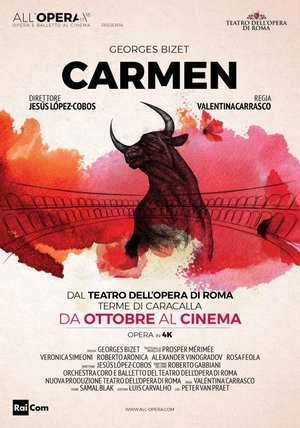
Richard Eyre’s stunning new production of Bizet’s opera was the talk of the town when it was unveiled on New Year’s Eve 2009. Elīna Garanča leads the cast as the iconic gypsy of the title—a woman desired by every man but determined to remain true to herself. Roberto Alagna is Don José, the soldier who falls under her spell and sacrifices everything for her love, only to be cast aside when the toreador Escamillo (Teddy Tahu Rhodes) piques Carmen’s interest. With dances created by star choreographer Christopher Wheeldon and conducted by rising maestro Yannick Nézet-Séguin, this Carmen brings every aspect of Bizet’s tale to thrilling life, from its lighthearted beginning to its inevitably tragic climax.
Robert Lepage’s remarkable Met Opera production of Wagner’s Der Ring des Nibelungen, the 2013 Grammy Award Winner for Best Opera Recording, is now available as individual DVDs. Siegfried features Bryn Terfel, Jay Hunter Morris, and Deborah Voigt, with Fabio Luisi conducting.
Alone in the woods, a young man is pursued by a horrifying specter and by visions of his deceased sisters. A meditation on the precarious uncertainty of the American Dream and the role that uncontrollable forces play in our lives, The West is a Land of Infinite Beginnings is inspired by a harrowing scene from the opera Proving Up, by composer Missy Mazzoli and librettist Royce Vavrek.
One of opera's most vivid and compelling characters, a vengeful court jester, desperately tries to protect his daughter from disaster in this heart-wrenching tragedy. The first of two world-class casts led by Music Director Nicola Luisotti stars Željko Lučić, "whose vocal artistry is exceptional" (The New York Times); Aleksandra Kurzak, "a superstar in the making" (The Guardian, London); and, as the lecherous Duke, Francesco Demuro, "whose open, bright, superbly focused tone was reminiscent of Pavarotti" (Opera News).
From the gorgeous scene deep in the river Rhine that opens the opera, up to the magic Rainbow Bridge that appears at the end, leading to a glistening Valhalla, Otto Schenk’s production captures the scenic world of Wagner’s Ring as brilliantly as James Levine and the Met orchestra capture the musical world. The cast is incomporable: an astounding James Morris as the young god Wotan, the great Christa Ludwig as his wife Fricka, incandescent Siegfried Jerusalem as Loge, the wily god of fire, and Ekkehard Wlaschiha as a complex Alberich.
Envy and conspiracy, but also passionate loves, jealousy, revenge and final forgiveness come together in the masterpiece of Verdi, which aroused the anger and prohibitions of censors of the time until the composer and librettist was compelled to make changes in it: from the original Sweden to far away Boston. The great Polish tenor Piotr Beczala returns to the Liceu with one of his opening credits, accompanied by the soprano Keri Alkema. Vincent Boussard’s sets reinforce the dark and mysterious atmosphere surrounding the piece, which features costumes by Christian Lacroix and Vincent Lemaire’s sober staging, which allows one to focus their attention on the dramatic core of the score. The cast, directed by a true specialist like Renato Palumbo, also presents a leader in Verdian song: Dolora Zajick.