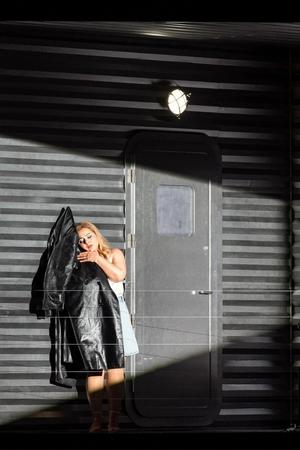
Since its premiere on 2 June 1937 in Zurich, Alban Berg's second opera "Lulu" has the reputation of being surrounded by scandals. On the one hand, this is due to the dubious character of the subject, the man-eating femme fatale, which Berg had taken from Frank Wedekind's two Lulu tragedies – "The Earth Spirit" and "Pandora's Box" – and combined into one opera libretto. On the other hand, Berg's widow had (for personal reasons) repeatedly refused to have the opera completed, which was unfinished when Berg died. This video is of the unfinished two-act torso of "Lulu."
A collaboration between award-winning American filmmaker Sofia Coppola and Italia haute couture king Valentino comes in the form of a revival of Giuseppe Verdi's classic opera, La Traviata. Captured live from the Teatro dell'Opera di Roma.
Discover Grace Bumbry’s inspiring rise to global opera fame. Spotlighting her historic performances, the film explores the racial barriers she overcame to triumph in her 1966 performance as "Carmen."
This is an effective staging, though the set looks medieval and the costumes are modern. It’s well paced, well played, well sung. Jonas Kaufmann is an ideal Tito. His voice is not only beautiful and flexible, it’s also ample, retaining warmth and sweetness when he sings out. The character of Tito is too good to be true, but Kaufmann makes him intense, noble, and beliveable. Vesselina Kasarova is riviting as Sesto. Her voice is gorgeous and multi-colored, her technique exquisite, her immersion in the role complete.
This all-star cast is framed by Peter Hall’s gritty, realistic production and conducted by James Levine, who brings out all the surging emotion and gripping drama in Bizet’s score. At the center of the story is Agnes Baltsa, whose smoky mezzo is tailor-made for the gypsy Carmen, an independent woman who glories in obeying only her own rules, but who is haunted by fate. Superstar tenor José Carreras is Don José, the solider from a small town who catches Carmen’s eye and is destroyed by his growing obsession with her. Samuel Ramey is the charismatic matador Escamillo, who lures Carmen away from Don José with tragic result. Leona Mitchell is Micaëla, the simple girl from Don José’s hometown who cannot save him. March 21, 1987 Matinee Broadcast.
Christmas is now more beautiful and cosy than ever! Experience Christmas in London, together with André Rieu. Decorated Christmas trees everywhere you look, beautifully lit streets, tempting Christmas window displays... Combine the unique London Christmas atmosphere with a magnificent Christmas concert by André Rieu, and you have all the ingredients for a lovely party in the dark December days. Together with fantastic soloists and his always joyful Johann Strauss orchestra, André Rieu provides a fabulous evening with the most beautiful and moving Christmas carols, but also with emotional songs such as Leonard Cohen's Hallelujah, The Holy City and the classic Concierto de Aranjuez. Christmas in London means an evening enjoying lovely music, beautiful costumes and plenty of London cosiness.
The Met’s spectacular production of Verdi’s Egyptian epic captures both the grandeur and the intimacy of this powerful tale of love and politics. Liudmyla Monastyrska is Aida, the Ethiopian princess-turned-slave in love with the Egyptian warrior Radamès, sung by Roberto Alagna. Olga Borodina is her rival, Amneris, daughter of the Pharao, and George Gagnidze sings Aida’s father, Amonasro, the King of Ethiopia. Principal Conductor Fabio Luisi is on the podium.
An Egyptian military commander, Radamès, struggles to choose between his love for the enslaved Ethiopian princess Aida, and his loyalty to the Pharaoh. To complicate the story further, the Pharaoh's daughter Amneris is in love with Radamès, although he does not return her feelings.
Soprano Anna Netrebko appears in her highly anticipated Met role debut as Leonora, the tortured heroine who sacrifices her own life for the love of the Gypsy troubadour. Dmitri Hvorostovsky sings Count di Luna, Yonghoon Lee is Manrico in his Met role debut as the title character, Dolora Zajick sings her signature role of the gypsy Azucena, and Štefan Kocán is Ferrando. Marco Armiliato conducts Sir David McVicar’s Goya-inspired production.
Renée Fleming sings one of her signature roles, the title character in Dvořák’s sumptuously melodic Rusalka. The story of the opera, which is about a water spirit’s tragic romance with a human prince, is drawn from several folktale sources including Hans Christian Andersen’s “The Little Mermaid.” Star conductor Yannick Nézet-Séguin leads a cast that also includes Piotr Beczala as the handsome Prince whom Rusalka yearns to love; Dolora Zajick as the cackling swamp witch Ježibaba; Emily Magee as the Foreign Princess, Rusalka’s rival; and John Relyea as Rusalka’s father, the Water Sprite.
Radiant mezzo-soprano Susan Graham and dashing Italian tenor Marcello Giordani are unlucky lovers in La Damnation de Faust, Hector Berlioz’s classic take on dancing with the devil.
Valery Gergiev conducts Mariusz Trelinski’s thrilling new production of these rarely heard one-act operas. Anna Netrebko stars as the blind princess of the title in Tchaikovsky’s lyrical work, opposite Piotr Beczala as Vaudémont, the man who wins her love—and wakes her desire to be able to see. Nadja Michael and Mikhail Petrenko are Judith and Bluebeard in Bartók’s gripping psychological thriller about a woman discovering her new husband’s murderous past.
The World Orchestra for Peace, conducted by Sir Georg Solti, performs pieces by Rossini, Bartók, and Beethoven in Victoria Hall, Geneva in July 1995 in celebration of the fiftieth anniversary of United Nations.
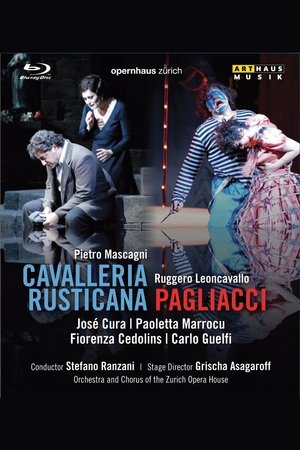
Franco Zeffirelli directs these two legendary La Scala productions telling tragic tales of jealousy. Mascagni's Cavalleria Rusticana features performances by Elena Obraztsova, Plácido Domingo, and Renato Bruson. Leoncavallo's I Pagliacci stars Teresa Stratas, Plácido Domingo, and Juan Pons. Both are conducted by George Pretre. This production of Pagliacci earned director Franco Zeffirelli the coveted Emmy as Best Director in the category of Classical Music Programming.
Although he is unanimously credited with having democratised opera, making it accessible to the greatest number, focus is rarely put on the strategy he devised and implemented in order to carry out his actions, nor what his actions reveal of the man and artist, and of the resulting metamorphosis from opera singer to pop artist. Through this angle, this film sets out to pay tribute to the man who summed up his credo, obsession and life’s work, in the following way: “They led the public to believe that classical music belonged to a restricted elite. I was the way to prove to the world that was wrong.
Prince Abesalom runs into an orphaned Eteri while hunting, falls for her and brings the woman to his palace as his fiancé. The Prince’s aid Murman loses his self-control at Eteri’s beauty and gives her a spelled necklace as a wedding gift. Eteri contracts a mysterious disease that only Murman is capable to heal.
One night in Judea, a disabled shepherd boy-turned-beggar and his mother are visited by three strangers. They are the Three Kings, and they are on their way to Bethlehem to visit the Christ Child, who has just been born.
As Blanche’s fragile world crumbles, she turns to her sister Stella for solace – but her downward spiral brings her face to face with the brutal, unforgiving Stanley Kowalski. This is the world premiere performance by the San Francisco Opera on September 19, 1998.
Ten short pieces directed by ten different directors, including Ken Russell, Jean-Luc Godard, Robert Altman, Bruce Beresford, and Nicolas Roeg. Each short uses an aria as soundtrack/sound, and is an interpretation of the particular aria.
A collectively made filmic opera in 35 parts. The Black and predominantly queer art collective, an evolving line up of poets and artists from across the world, abstracts and reimagines opera in any traditional conception. Set to hip-hop, blues, noise, R&B and electronica, the piece uses the voice (chanting, singing, screaming; written by poet and activist Dawn Lundy Martin) as its primary tool, verbalising centuries of alienation, vulnerability and protest in the global African diaspora through its disruptive libretto.