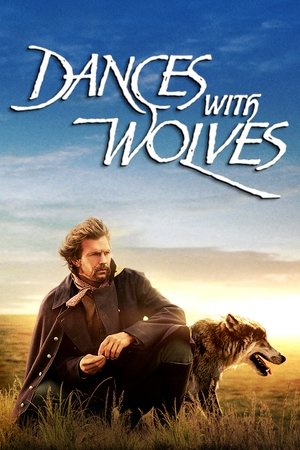
Wounded Civil War soldier John Dunbar tries to commit suicide—and becomes a hero instead. As a reward, he's assigned to his dream post, a remote junction on the Western frontier, and soon makes unlikely friends with the local Sioux tribe.
A polemic against Werner Herzog and the making of "Fitzcarraldo", exploring the question of the filmmaker's ethical and moral responsibility.
True story of a former British soldier on trial for murder in the 19th century Northwest.
It is 1879 in the Dakota Territories, a band of men who set out to find and recover a family of settlers that has mysteriously vanished from their home. Expecting the offenders to be a band of fierce natives, but they soon discover that the real enemy stalks them from below.
A wanted-fugitive, called "Nevada," is wounded by a pursuing posse of lawmen, and is left to die on the desert by his companion, Bill Hall. He is rescued by a young rancher, Ben Ide, who is in love with Ina Blaine, daughter of a neighboring rancher. While "Nevada" is recovering, he and Ina fall in love but, through his loyalty to Ben, he sends her away. Going home, Ina falls into the clutches of Bill Hall, now heading a gang of rustlers, but the real leader is Les Setter who is posing as an honest rancher, and he has designs on Ina himself.
While a few Hollywood celebrities such as James Stewart and Clark Gable saw combat during World War II, the majority used their talents to rally the American public through bond sales, morale-boosting USO tours, patriotic war dramas and escapist film fare. Comedian David Steinberg plays host for this star-studded, 90-minute documentary, which looks at the way Tinseltown helped the United States' war effort.
Beginning just after the bloody Sioux victory over General Custer at Little Big Horn, the story is told through two unique perspectives: Charles Eastman, a young, white-educated Sioux doctor held up as living proof of the alleged success of assimilation, and Sitting Bull the proud Lakota chief whose tribe won the American Indians’ last major victory at Little Big Horn.
This excellent feature-length documentary - the story of the imperialist colonization of Africa - is a film about death. Its most shocking sequences derive from the captured French film archives in Algeria containing - unbelievably - masses of French-shot documentary footage of their tortures, massacres and executions of Algerians. The real death of children, passers-by, resistance fighters, one after the other, becomes unbearable. Rather than be blatant propaganda, the film convinces entirely by its visual evidence, constituting an object lesson for revolutionary cinema.
In 1879, the British suffer a great loss at the Battle of Isandlwana due to incompetent leadership.
PsiQuis: Un Giro Decolonial is a documentary that presents and discusses the psychological impact that colonialism has had on the Puerto Rican people. The director analyzes the traumas generated in Puerto Rican society by that colonial experience.
In the 1820s, a frontiersman, Hugh Glass, sets out on a path of vengeance against those who left him for dead after a bear mauling.
Three centuries of Venezuela's history as a Spanish colony are considered from economic, political and social standpoints; evocations of the past are compared to the present. Based on the ideas and research of Federico Brito Figueroa, Alfredo A. Alfonso, Miguel A. Saignes, Josefina Jordan, and Thaelman Urgelles among others.
The ruthless dictator Teodoro Obiang has ruled Equatorial Guinea with an iron hand since 1979. Juan Tomás Ávila Laurel is the most translated Equatoguinean writer, but he had to flee the country in 2011, after starting a hunger strike denouncing the crimes of the dictatorship. Since then, he has lived in Spain, feeling that, despite the risks, he must return and fight the monster with words.
In 1825, English peer Lord John Morgan is cast adrift in the American West. Captured by Sioux Indians, Morgan is at first targeted for quick extinction, but the tribesmen sense that he is worthy of survival. He eventually passes the many necessary tests that will permit him to become a member of the tribe.
In Inukjuak, an Inuit community in the Eastern Arctic, a baby boy has come into the world and they call him Timuti, a name that recurs across generations of his people, evoking other Timutis, alive and dead, who will nourish his spirit and shape his destiny.
An experimental look at the origin of the death myth of the Chinookan people in the Pacific Northwest, following two people as they navigate their own relationships to the spirit world and a place in between life and death.
Two hapless explorers lead an ill-fated 1804 expedition through the Pacific Northwest in a hopeless, doomed effort to reach the Pacific Ocean before Lewis and Clark.
Three intrepid women battle for Indigenous women's treaty rights.
While being pursued by the U.S. Cavalry, Indians and the white family they have kidnapped learn about each other.
Ka Hoʻina documents members of Hui Mālama I Nā Kūpuna O Hawaiʻi Nei's final repatriation of over 140 sets of iwi kupuna and provides an intimate look into the legacy forged by these committed and passionate few, ensuring that Hawaiians will mālama or care for kupuna for generations to come.