Composer Thomas Adès conducts the Met premiere of his powerful opera based on Shakespeare’s last play, in Robert Lepage’s brilliantly inventive production. Simon Keenlyside is the magician Prospero, who conjures the storm that shipwrecks his enemies and sets in motion the course of events. Rising Met stars Isabel Leonard and Alek Shrader are the young lovers, Miranda and Ferdinand, Alan Oke sings the sinister Caliban, and Audrey Luna gives a memorable performance as the sprite Ariel.
Director David McVicar’s new production brings opera’s favorite double bill to new life, setting the two operas in the same Sicilian setting, separated by two generations. Marcelo Álvarez takes on the rare feat of singing both leading tenor roles. In Cavalleria, he is Turiddu, the young man who abandons Santuzza (Eva-Maria Westbroek) in his pursuit of the married Lola (Ginger Costa-Jackson)—and ends up being killed in a duel with her husband, Alfio (George Gagnidze). In Pagliacci, Álvarez is Canio, the leader of a traveling vaudeville troupe. Patricia Racette sings Nedda, his unfaithful young wife, whose plans to run away with her lover are foiled by her spurned admirer Tonio (George Gagnidze)—with equally tragic consequences. Met Principal Conductor Fabio Luisi is on the podium.
This all-star cast is framed by Peter Hall’s gritty, realistic production and conducted by James Levine, who brings out all the surging emotion and gripping drama in Bizet’s score. At the center of the story is Agnes Baltsa, whose smoky mezzo is tailor-made for the gypsy Carmen, an independent woman who glories in obeying only her own rules, but who is haunted by fate. Superstar tenor José Carreras is Don José, the solider from a small town who catches Carmen’s eye and is destroyed by his growing obsession with her. Samuel Ramey is the charismatic matador Escamillo, who lures Carmen away from Don José with tragic result. Leona Mitchell is Micaëla, the simple girl from Don José’s hometown who cannot save him. March 21, 1987 Matinee Broadcast.
The creative processes of avant-garde composer Philip Glass and progressive director/designer Robert Wilson are examined in this film. It documents their collaboration on this tradition breaking opera.
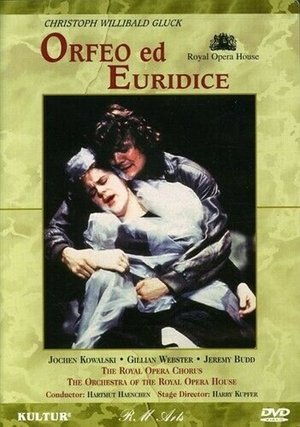
From the Baroque Theater at Český Krumlov Castle: Christoph Willibald Gluck's Orfeo ed Euridice (Orpheus and Eurydice) starring Regula Mühlemann, Bejun Mehta and Eva Liebau, with Collegium Vocale 1704 & Collegium 1704 under the baton of Václav Luks. Directed by Ondřej Havelka A co-production of Clasart / Unitel / ORF in association with Czech Television / SVT / YLE / RSI / Arthaus Music
Christmas is now more beautiful and cosy than ever! Experience Christmas in London, together with André Rieu. Decorated Christmas trees everywhere you look, beautifully lit streets, tempting Christmas window displays... Combine the unique London Christmas atmosphere with a magnificent Christmas concert by André Rieu, and you have all the ingredients for a lovely party in the dark December days. Together with fantastic soloists and his always joyful Johann Strauss orchestra, André Rieu provides a fabulous evening with the most beautiful and moving Christmas carols, but also with emotional songs such as Leonard Cohen's Hallelujah, The Holy City and the classic Concierto de Aranjuez. Christmas in London means an evening enjoying lovely music, beautiful costumes and plenty of London cosiness.
Soprano Anna Netrebko appears in her highly anticipated Met role debut as Leonora, the tortured heroine who sacrifices her own life for the love of the Gypsy troubadour. Dmitri Hvorostovsky sings Count di Luna, Yonghoon Lee is Manrico in his Met role debut as the title character, Dolora Zajick sings her signature role of the gypsy Azucena, and Štefan Kocán is Ferrando. Marco Armiliato conducts Sir David McVicar’s Goya-inspired production.
Renée Fleming sings one of her signature roles, the title character in Dvořák’s sumptuously melodic Rusalka. The story of the opera, which is about a water spirit’s tragic romance with a human prince, is drawn from several folktale sources including Hans Christian Andersen’s “The Little Mermaid.” Star conductor Yannick Nézet-Séguin leads a cast that also includes Piotr Beczala as the handsome Prince whom Rusalka yearns to love; Dolora Zajick as the cackling swamp witch Ježibaba; Emily Magee as the Foreign Princess, Rusalka’s rival; and John Relyea as Rusalka’s father, the Water Sprite.
Radiant mezzo-soprano Susan Graham and dashing Italian tenor Marcello Giordani are unlucky lovers in La Damnation de Faust, Hector Berlioz’s classic take on dancing with the devil.
Valery Gergiev conducts Mariusz Trelinski’s thrilling new production of these rarely heard one-act operas. Anna Netrebko stars as the blind princess of the title in Tchaikovsky’s lyrical work, opposite Piotr Beczala as Vaudémont, the man who wins her love—and wakes her desire to be able to see. Nadja Michael and Mikhail Petrenko are Judith and Bluebeard in Bartók’s gripping psychological thriller about a woman discovering her new husband’s murderous past.
When Barbe-bleue loses his fifth wife, the turbulent Boulotte is selected at random to be the next one. But Barbe-Bleue falls in love with Hermia – who loves the shepherd Saphir – and soon wearies of Boulotte. So, he asks his alchemist to concoct for him an “anti-wife” philtre. But, as on the previous occasions, it is merely a sleeping potion and Boulotte wakes up the other five “dead” wives. They reappear, dressed up as gypsies and bring the truth to light.
Discover Grace Bumbry’s inspiring rise to global opera fame. Spotlighting her historic performances, the film explores the racial barriers she overcame to triumph in her 1966 performance as "Carmen."
The documentary draws a portrait of an opera director who is staging Richard Wagner’s Die Walküre. He is torn between the tragicomic routine of an opera house and his own perception of Wagner and the Ring cycle. The film witnesses the director’s drama in maintaining the fragile link between a well-constructed performance and his own vision that lies within the music and the narrative, and is seen as German expressionism-like nightmares.
The acclaimed Italian director, Emma Dante, presents a powerful, barbaric and at time frenzied Macbeth with great attention to detail. Staged and filmed in Italy's largest theatre, the Teatro Massimo in Palermo, Sicily, this production captures remarkable performances by the Italian soprano Anna Pirozzi as Lady Macbeth, the renowned Verdi specialist, baritone Roberto Frontali, in one of his signature roles, and the rising star, Croatian bass-baritone Marko Mimica as Banco (Banquo). The conductor, Gabriele Ferro, has opted to use the 1865 Paris version of the score, sung in Italian and without the ballets, for a production that received generous praise in Palermo and on tour.
This film takes you through the inspiring journey of Venezuela's Coro de Manos Blancas (White Hands Choir) while exploring their daily struggles and lives. Established in 1995 as part of Venezuela's El Sistema program, the White Hands Choir provides artistic opportunities for children, youth, and adults with disabilities, utilizing music for social development and inclusion.
At the Teatro Real in Madrid, director Laurent Pelly and conductor Giacomo Sagripanti get to grips with Gioachino Rossini’s Il Turco in Italia (The Turk in Italy) – a delightful opera buffa teeming with colourful characters!
Prodaná nevěsta
The deformed Phantom who haunts the Paris Opera House causes murder and mayhem in an attempt to make the woman he loves a star.
This is an effective staging, though the set looks medieval and the costumes are modern. It’s well paced, well played, well sung. Jonas Kaufmann is an ideal Tito. His voice is not only beautiful and flexible, it’s also ample, retaining warmth and sweetness when he sings out. The character of Tito is too good to be true, but Kaufmann makes him intense, noble, and beliveable. Vesselina Kasarova is riviting as Sesto. Her voice is gorgeous and multi-colored, her technique exquisite, her immersion in the role complete.
Written for exceptional singers, Il Trovatore has remained popular ever since its first performance at the Teatro Apollo in Rome on 19 January 1853, when even the toughest critics were convinced of its place in the repertoire. People are attracted to Il Trovatore because of its rousing melodies, its brutal, powerful plot, and its simple structure: elements that make it one of the best examples of Verdi’s theatre pieces. Recorded live at the Sferisterio theatre of Macerata in the summer of 2016, under conductor Daniel Oren's vibrant and incisive direction, this production boasts a first-rate cast and elegant direction from Francisco Negrin. The sets and costumes by Louis Désiré and lighting by Bruno Poet were well received by the Sferisterio audience.