A sudden gunshot shatters the dream of two lovers on their wedding day. The fate of Orpheus and Eurydice is cruel: on the very day they sought to seal their love, EurydiceΆs soul embarks on its journey to the underworld. Heartbroken, Orpheus embarks on a perilous journey to bring his beloved back from Hades. A journey that will lead the fearless hero to confront the depths of his emotions and face his greatest fears. This journey will take him through strange worlds and into encounters with some of the greatest musical pieces and arias in the history of music. Will love triumph over death?
Set in turn of the century Baku at the dawn of the 20th century, a young man wishes to marry. Since he is a rich and successful business man, despite his young age, he feels that he should have his pick of any bride that he fancies, however, Azerbanjani tradition dictates otherwise.
Celeste is a renowned opera diva who retired early for the man she loved to live on a crumbling and beautiful estate in the heart of a rainforest in Far North Queensland. Ten years after the tragic death of her husband, Mateos, in a boating accident, Celeste is set to return to the stage for her final performance. Her husband’s son Jack, still haunted by the past, arrives amidst the preparations for the performance and finds Celeste is as he remembered – beautiful, intoxicating and dangerous. Celeste wants Jack to stay at the estate, but needs him to perform one last request.
Moses und Aron is a three-act opera by Arnold Schoenberg with the third act unfinished. The 2015 Production was led by Romeo Castellucci in Paris. Moses und Aron was filmed for television by film director François-René Martin, in co-production with the Paris Opera, Bel air Media and Arte, with support from the CNC.
The history of the gypsy Aleko who couldn't forgive the betrayal of his wife.
Basia has already settled down in her life. She is a housewife and has a loving family. It seems as though she does not miss anything to be happy. Until a moment when an opera diva moves into an apartment upstairs. Basia is enchanted and seduced with her voice. A peculiar relationship is born between them. It develops into a feeling which is not particularly comfortable for either of the two women.
Notre Dame de Paris tells the story of Quasimodo, the hunchbacked bell-ringer of the cathedral of Notre-Dame and of his impossible and tragic love for Esmeralda, a beautiful gypsy. A love condemned by injustice and hypocrisy. Quasimodo forced by his ugliness to look at the world from the top of a tower one day he falls madly in love with Esmeralda who sees dancing and singing on the square in front of the cathedral. But Esmeralda is in love with Febo, the handsome captain of the King's guards. Febo is fiancé of Fiordaliso, a young and rich bourgeois, but the exotic and sensual beauty of the gypsy does not leave indifferent the man who immediately falls in love with her. Even Frollo, the archdeacon of the cathedral, is attracted by the gypsy and spying on the moves of the two lovers in a raptus of jealousy and repressed carnal desire to get rid of the rival stabbing Febo behind.
An Expanded Cinema Aktionpainting Performance at Museo Hermann Nitsch, Naples, Italy, where art, wrestling and food play important roles.
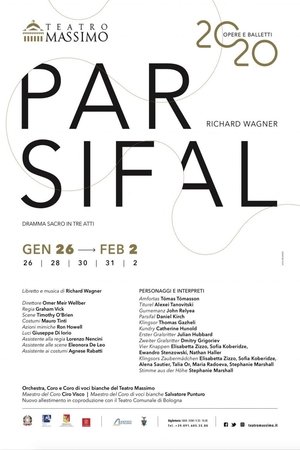
Richard Wagner's final opera Parsifal, staged 2012 by Stefan Herheim in Bayreuth. Conductor: Philippe Jordan
Opera in three acts, a prologue and an epilogue, by Jacques Offenbach (1819-1880), with a libretto in French by Jules Barbier (1825-1901), based on a work that Barbier himself and Michel Carré (1821-1872) had written based on stories by E.T.A. Hoffmann (1776-1822). Approximate duration: 2 h 45 min Recommended for those over 15 years old. The young poet Hoffmann, accompanied by Nicklausse, his alter ego and confidant, is in a tavern next to the theatre where Mozart's Don Giovanni is being performed. During the opera's intermission, some diners arrive at the bar who, upon seeing the poet, encourage him to sing and tell them the story of his famous love affairs. Hoffmann finally gives in and shares with them the stories of Olympia, Antonia and Giulietta. They, absorbed in the poet's stories, remain in the tavern, forgetting about the opera performance.
When a beautiful young woman in rural Moravia becomes unexpectedly pregnant, she learns that love is sometimes only skin-deep. Janáček took Gabriela Preissová's grim tale of infanticide and redemption, and condensed it into a masterful, spine-chilling drama. The tragic plight of the protagonists is presented with unsentimental realism that cannot help but trigger a response of deep compassion. Premiered at the National Theatre in the composer's hometown of Brno 115 years ago, the opera took him nine years to complete and is the first in which his distinctive voice can clearly be heard.
Running through Bartók’s disenchanted tale, whose haunting music was initially condemned as unplayable, and the expression of despair in Poulenc’s monologue, the director Krzysztof Warlikowski perceives a shared dramatic thread, a shared feminine consciousness and a shared sense of imprisonment and suffocation: for the woman who penetrates the confines of Bluebeard’s castle and Elle, the woman who clings to a telephone conversation with a man as the only thing worth living for, are condemned to share the same fate. And this man she speaks to, does he really exist? Unless the director has interpreted Cocteau’s words to the letter and the telephone has become a “terrifying weapon that leaves no trace, makes no noise”…
Drama lyrique in five acts, after the play by Maruice Maeterlink
"Despite the multitude of characters and situations, the plot is simple: the eternal flow of life. It is based on Les contes fantastiques d’Hoffmann, a play by Jules Barbier and Michel Carré, who were inspired by some of the stories of the German E.T.A. Hoffmann. On a drunken night in the city, Hoffmann tells how he courted and lost three girls, his impossible loves: Olympia, a mechanical doll that only he believes to be truly human; Giulietta, the courtesan who steals his reflection in a mirror; and Antonia, a young woman who sings until she literally dies." Venue & Opera Company: Teatro Regio di Parma Recorded: 1988 Singers: Alredo Kraus, Ruth Welting, Jonathan Omilian, Barbara Hendricks, Elena Zilio, Nicola Gjiuselev, Bruno Buulgarelli, Francis Egerton, Aldo Bottion Orchestra: Orchestra Sinfonica dell'Emilia-Romagna "Arturo Toscanini" Chorus: Coro del Teatro Regio di Parma Chorus Master: Adolfo Tanhzi Stage Director: Beppe de Tomasi
Experience the story of seamstress Esther who begins writing to a mysterious suitor laboring on the Panama Canal. Featuring a libretto by Pulitzer Prize winner Lynn Nottage, this powerful opera is directed by Tony winner Bartlett Sher.
Mélanie Prouvost, a ten-year-old butcher's daughter, is a gifted pianist. That is why she and her parents decide that she sit for the Conservatory entrance exam. Although Mélanie is very likely to be admitted, she unfortunately gets distracted by the president of the jury's offhand attitude and she fails. Ten years later, Mélanie becomes her page turner, waiting patiently for her revenge.
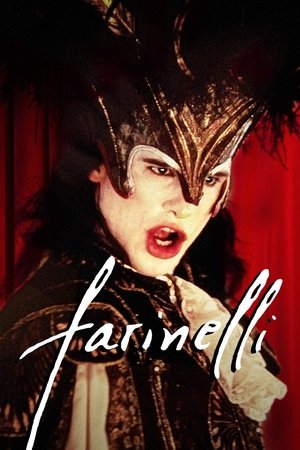
A musician is offered a job in Vienna as stage director, but his disagreements with the aristocratic opera manager end in abrupt firing in spite of a mutual attraction. He's quickly engaged by another theatre and becomes famous for his lavish stage productions and fine acting, which begins their golden age with Suppé and Strauss.
This telecast offers a rare opportunity to see the legendary Joan Sutherland in the role that first catapulted her to international stardom. She drove audiences wild by the way her opulent voice caressed the music’s long phrases and sprinted effortlessly through the fiendish runs, trills, embellishments and stratospheric high notes. One of the glories of the operatic world, her portrayal of Donizetti’s hapless heroine is a multifaceted and moving characterization. The incomparable tenor Alfredo Kraus is Edgardo, the man Lucia loves but cannot have. (Performance taped November 13, 1982. Broadcasted September 28, 1983.)
All the throbbing eroticism—and ultimate heartbreak—of Puccini’s youthful score is unleashed by James Levine and his top-flight cast. Plácido Domingo is Des Grieux, the handsome, headstrong young aristocrat who falls head over heels for the enticing, impetuous Manon Lescaut (Renata Scotto). Manon returns his love, but her obsession with luxury ruins them both. Gian Carlo Menotti’s opulent production, with sets and costumes by Desmond Heeley, superbly captures the colorful world of 18th century France.
A former champion rodeo rider is reduced to using his saddle skills to promote a breakfast cereal in a gaudy Las Vegas show. When he's asked to perform with a $12 million horse, he discovers it is being doped to remain docile. He flees into the desert astride the beast in an act of defiance. A story-hungry female reporter gives chase.