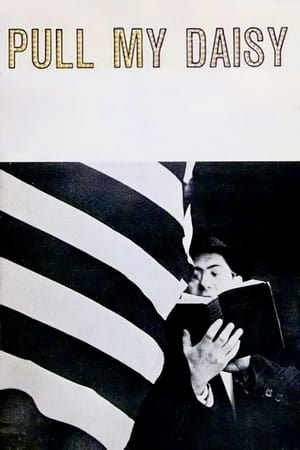
Based on an incident in the life of Beat icon Neal Cassady and his wife, the painter Carolyn, the film tells the story of a railway brakeman whose wife invites a respected bishop over for dinner. However, the brakeman's Bohemian friends crash the party, with comic results. Pull My Daisy is a film that typifies the Beat Generation. Directed by Robert Frank and Alfred Leslie, Daisy was adapted by Jack Kerouac from the third act of his play, Beat Generation; Kerouac also provided improvised narration.
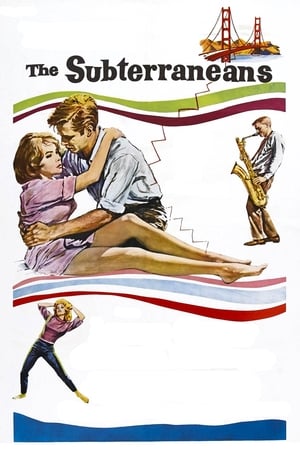
A disillusioned writer explores the subterranean depths of San Francisco's North Beach district.
Big Sur is a film adaptation of the Jack Kerouac autobiographical novel of the same name.
Beat poem parable to black youth.
Tinta Film
A child of the Beat Generation, Gérald Leblanc conjoined urban-ness and American-ness, wandering and belonging, far beyond the boundaries of taboo. In so doing, he helped propel Acadia into the modern era.
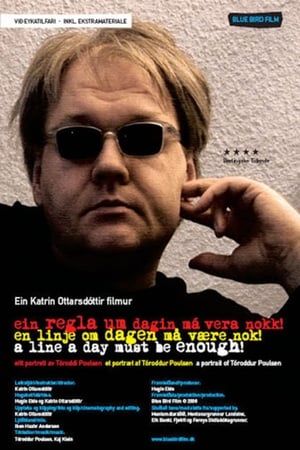
In a film bursting with lyrics, pictures, and music the director shows us a way into the peculiar universe of Tóroddur, and the otherwise not very talkative artist gives us a glimpse of his thoughts on art, God, life and death.
Set in a nightmarish Bardo, a place between death and rebirth, a tormented writer faces down demons of his own making. Forced to confront the darkest moment in his life, he mines fractured and repressed memories for a way out. A woman is at the center of all the writer’s afterlife encounters. She is the subject of his life’s greatest regret, and she materializes everywhere in this Otherworld. The writer cannot detach any thoughts of his life from her.
Archival footage, animation and music are used to look back at the eight anti-war protesters who were put on trial following the 1968 Democratic National Convention.
Howl is an homage to the reading rituals of the Beat poets, to Wholly Communion, to 1965, to Allen Ginsberg, to Jack Kerouac, to William Burroughs, to all those books that we believe to be published in heaven, and to all the restless spirits, from these lands. The film documents the translator of the poem Howl into Turkish, accompanied by a musician.
Visionary, radical, spiritual seeker, renowned poet, founding member of a major literary movement, champion of human rights, Buddhist, political activist and teacher. Extensive archival footage, interviews, and home movies cover Allen Ginsberg's life, activism, and influence on American culture through the Beat era, the 1960s, and beyond.
Private View Episode Three. Self care and razor blades.
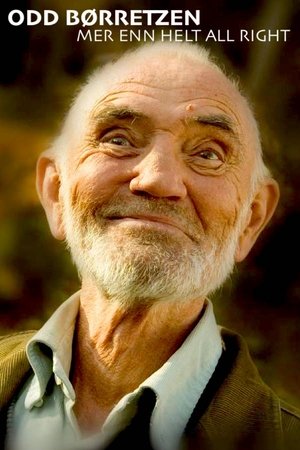
A portrait of Norwegian poet Odd Børretzen in his own words, featuring musical highlights from Børretzen's work with musicians Alf Cranner and Lars Martin Myhre.
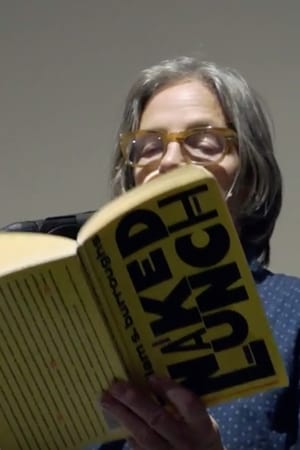
To celebrate the 100th birthday of America's most audacious writer, William S. Burroughs, Chicago Humanities Festival brings together a motley crew of poets, writers, and musicians. William Seward Burroughs (1914 - 1997) was an American writer and visual artist. He was a primary figure of the Beat Generation and a major postmodernist author whose influence is considered to have affected a range of popular culture as well as literature. Burroughs's needs took him across the United States, down into Mexico, to Europe and beyond. On his travels, he meets up with various members of the underground drug and "outcast" cultures.
The story of how Everett Leroy Jones became Amiri Baraka, from his childhood to the mid '60s, is told through interviews recorded in the late '90s.
An immersive beat poem written and created for the misunderstood, the marginalized, and the magical.
The day Kara turned 18, he had to lose everything, a gift from his grandfather that he would never forget in his lifetime. Taken in by a family who believes he is poor, he works towards supporting himself and new relationships.
In the first half of the 19th century there was a revolt in the central state of Hesse, led by Georg Büchner (Gregor Hansen), the well-known German writer, and a fellow rebel, Pastor Weidig (Franz Wittich). Büchner wrote a kind of declaration of peasant rights against the tyranny of the landholders of the time, and once that declaration ("Der Hessische Landbote") was made public, Büchner escaped to Strasbourg, and then to Zurich where he was killed in 1937, at the age of 23. Pastor Weidig was captured, sent to prison, tortured, and killed in prison. The revolution the two men had hoped for died on the vine due to an informer -- a planned uprising was brutally squelched -- and the peasants had to bide their time for another 12 years before the 1848 Revolution would bring them some of the rights demanded in Büchner's pamphlet.
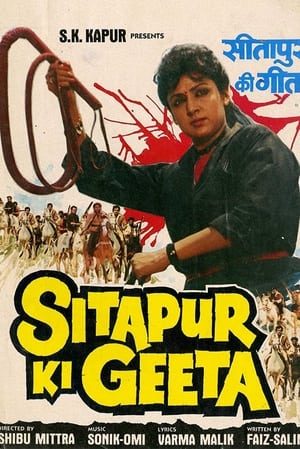
A poor widowed farmer, Dharma Singh, raises two children, a boy (Karan) and a girl (Geeta) on his own in a town called Rampur, and would like his son to grow up to be a police officer. Alas, that was not to be so, for heavy torrential rains strikes their region, separating the entire family, leaving Dharma wounded, and the two children ending up in a town called Sitapur. Geeta decides to work so that her brother can study. Her brother re-locates to Bombay city, and subsequently studies well, and becomes a Police Inspector. He is assigned his first major assignment to get rid of bandits near Sitapur, which he accepts, little knowing that the very people he is expected to get rid of are his very own sister, who is now a former jailbird, a notorious bandit who calls herself "Maut", and at odds with another bandit known as Daku Dharma Singh, who is none other than her father. Will Karan be able to fulfill his duties or will he end up joining his family in a life of crime.
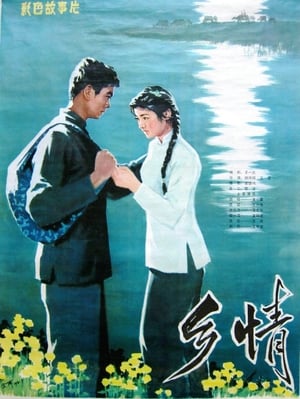
A 20-year old young man who has been brought up by a foster mother in the countryside has fallen in love with another foster child in the same "family" and the two have decided to get married. Just after this decision, the young man's real mother contacts him and asks him to come and stay with her and his father (she is a high-ranking Party official). She is against his marriage but her husband is not. In the end, the young man decides to marry at the home of his real parents, and when his foster mother shows up, his real mother treats her like dirt - it turns out that the foster mother was a concubine for awhile. Before things deteriorate any further, the husband has some news for his wife that helps her to see the foster mother in a different light.