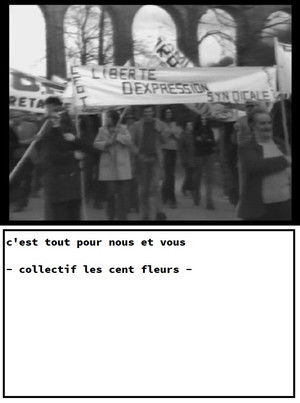
Between the end of the Second World War and the abolition of the "offence of homosexuality" in 1982, 10,000 sentences were handed down in France. Sentences in correctional courts, fines and sometimes imprisonment, the convictions were mainly against men. The last witnesses of this period speak out and tell of four decades of clandestine life, just before the tragedy of AIDS.
Women are sexually insulted and threatened by men every day. Experts around the world are registering an anti-feminist backlash that seems to be on the verge of becoming socially acceptable. Particularly affected: women in publicly visible positions – such as politicians, actresses or entrepreneurs. Who is behind the attacks and what are the motives?
From prehistoric times to our technologically accelerated present, this exciting and entertaining journey through time explores the thousands of ways in which mankind has perceived, measured and passed time over the course of its history.
In barely a century, French peasants have seen their world profoundly turned upside down. While they once made up the vast majority of the country, today they are only a tiny minority and are faced with an immense challenge: to continue to feed France. From the figure of the simple tenant farmer described by Emile Guillaumin at the beginning of the 20th century to the heavy toll paid by peasants during the Great War, from the beginnings of mechanization in the inter-war period to the ambivalent figure of the peasant under the Occupation, From the unbridled race to industrialization in post-war France to the realization that it is now necessary to rethink the agricultural model and invent the agriculture of tomorrow, the film looks back at the long march of French peasants.
A feature-length documentary about our complex relationship with manufactured objects and, by extension, the people who design them.
More faithful than ever to the spirit of the cult series that has been inspiring filmmakers for nearly thirty years, STRIP-TEASE INTEGRAL offers us, this time on the big screen, five sensitive, touching, sometimes absurd, often funny, sometimes dark, sometimes bright - but always the vanities of human society in all their marvelous banality.
A story of the LGBT struggle from the 1960s to the present, after the Stonewall riot sparked the militant action in New York that was to spread around the world. From San Francisco to Paris via Amsterdam, between the first Gay Pride, the election of Harvey Milk, the French "decriminalization", the AIDS epidemic and the first homosexual marriages, these few decades of struggle are embodied through numerous testimonies of actors and actresses of this revolution rainbow.
A family portrait in which the director profiles his grandmother, Odette Robert. Eustache includes in the film the conditions of its production — he is seated at the table with her, pours her some whiskey, speaks with the camera operator, manipulates the clapboard at the head and tail of the reels, and even takes a phone call. Robert, who was seventy-one, speaks rapidly and tells the story of her life, starting from her early childhood in villages in the Bordeaux region of France. A shorter version of the film ("Odette Robert") was edited in 1980 to be broadcast on television on TF1. The complete film only gained exposure in 2002, when it was salvaged by Boris Eustache, Thierry Lounas, João Bénard da Costa, Jean-Marie Straub, and Pedro Costa.
Are you a risky drinker? Nearly 70% of American adults drink alcohol and nearly 1/3 of them engage in problem drinking at some point in their lives. Produced with The National Institute of Alcohol Abuse and Alcoholism (NIAAA), Risky Drinking is a no-holds-barred look at a national epidemic through the intimate stories of four people whose drinking dramatically affects their relationships.
In the spotlight of global media coverage, the first transgender woman ever to perform as Don Giovanni in a professional opera, makes her historic debut in one of the reddest states in the U.S.
Guy Debord's analysis of a consumer society.
Documentary on Les Charlots, known as The Crazy Boys in the English-speaking world, a group of French musicians, singers, comedians and film actors who were popular in the 1960s, 1970s, and early 1980s.
An exploration —manipulated and staged— of life in Las Hurdes, in the province of Cáceres, in Extremadura, Spain, as it was in 1932. Insalubrity, misery and lack of opportunities provoke the emigration of young people and the solitude of those who remain in the desolation of one of the poorest and least developed Spanish regions at that time.
A look at the history of the Statue of Liberty and the meaning of sculptor Auguste Bartholdi's creation to people around the world.
Palermo, Sicily, Italy, 2017. Twenty-five years after the murders of anti-mafia judges Giovanni Falcone, on May 23, 1992, and Paolo Borsellino, on July 19, 1992; and on the occasion of the tributes held in memory of both heroes, skeptical photographer Letizia Battaglia, chronicler of their titanic combat, criticizes the opportunism of shady characters who, like businessman Ciccio Mira, profit from the commemoration of both tragedies.
A documentary on the expletive's origin, why it offends some people so deeply, and what can be gained from its use.
Following a heated debate on a French news television channel, Left wing MP François Ruffin defies a TV columnist and attorney, Sarah Saldmann, to work and live one month on the minimum-wage. This humanistic and humoristic documentary highlights the daily struggles and joys of the working-class compared to the fantasy the bourgeoisie has built up in the media. It also raises a thorny question : can the rich be socially reintegrated ?
What would American democracy look like in the hands of teenage girls? In this documentary, young female leaders from wildly different backgrounds in Missouri navigate an immersive experiment to build a government from the ground up.
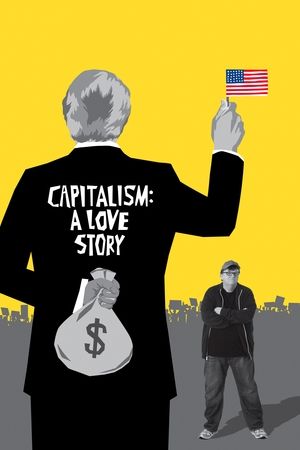
Michael Moore comes home to the issue he's been examining throughout his career: the disastrous impact of corporate dominance on the everyday lives of Americans (and by default, the rest of the world).
In the 1920s, former coal miner Harry Hoxsey claimed to have an herbal cure for cancer. Although scoffed at and ultimately banned by the medical establishment, by the 1950s, Hoxsey's formula had been used to treat thousands of patients, who testified to its efficacy. Was Hoxsey's recipe the work of a snake-oil charlatan or a legitimate treatment? Ken Ausubel directs this keen look into the forces that shape the policies of organized medicine.