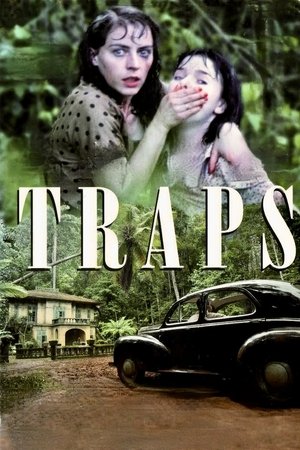
Anaïs is twelve and bears the weight of the world on her shoulders. She watches her older sister, Elena, whom she both loves and hates. Elena is fifteen and devilishly beautiful. Neither more futile, nor more stupid than her younger sister, she cannot understand that she is merely an object of desire. And, as such, she can only be taken. Or had. Indeed, this is the subject: a girl's loss of virginity. And, that summer, it opens a door to tragedy.
A fascinating insight into the life and works of photographer Imogen Cunningham. Coming into public attention around 1910, she was celebrated in the late sixties through awards, honorary degrees and exhibitions. Her photos are looked at from three focal points: nature, portraits and figure studies.
Elisabeth leaves her abusive and drunken husband Rolf, and goes to live with her brother, Göran. The year is 1975 and Göran lives in a commune called Together. Living in this leftist commune Elisabeth learns that the world can be viewed from different perspectives.
Starting with a long and lyrical overture, evoking the origins of the Olympic Games in ancient Greece, Riefenstahl covers twenty-one athletic events in the first half of this two-part love letter to the human body and spirit, culminating with the marathon, where Jesse Owens became the first track and field athlete to win four gold medals in a single Olympics.
Part two of Leni Riefenstahl's monumental examination of the 1938 Olympic Games, the cameras leave the main stadium and venture into the many halls and fields deployed for such sports as fencing, polo, cycling, and the modern pentathlon, which was won by American Glenn Morris.
Working men and women leave through the main gate of the Lumière factory in Lyon, France. Filmed on 22 March 1895, it is often referred to as the first real motion picture ever made, although Louis Le Prince's 1888 Roundhay Garden Scene pre-dated it by seven years. Three separate versions of this film exist, which differ from one another in numerous ways. The first version features a carriage drawn by one horse, while in the second version the carriage is drawn by two horses, and there is no carriage at all in the third version. The clothing style is also different between the three versions, demonstrating the different seasons in which each was filmed. This film was made in the 35 mm format with an aspect ratio of 1.33:1, and at a speed of 16 frames per second. At that rate, the 17 meters of film length provided a duration of 46 seconds, holding a total of 800 frames.
Just Ask Him is a romantic LGBT short film about an out high school kid gathering the courage to ask his soccer jock crush to a dance.
Reared by an abusive, pill-popping mother and an absentee playboy father, six-year-old Valentina must fend for herself. She does what she can to craft the illusion of normalcy: makes herself lunches that look just like the ones her classmates tote, dresses and grooms herself expertly, and lies to cover up for her mother Anita's erratic behavior.
A man wakes up from a bad dream only to realize he is in yet another nightmare. The most worrying thing is that it does not seem to stop. If only these dreams could stop... getting shorter and shorter!
A meditation on freedom and technological approaches to manifest destiny.
Although terrified of girls, Charley must take a job teaching at a girls school.
Arguing that advertising not only sells things, but also ideas about the world, media scholar Sut Jhally offers a blistering analysis of commercial culture's inability to let go of reactionary gender representations. Jhally's starting point is the breakthrough work of the late sociologist Erving Goffman, whose 1959 book The Presentation of the Self in Everyday Life prefigured the growing field of performance studies. Jhally applies Goffman's analysis of the body in print advertising to hundreds of print ads today, uncovering an astonishing pattern of regressive and destructive gender codes. By looking beyond advertising as a medium that simply sells products, and beyond analyses of gender that tend to focus on either biology or objectification, The Codes of Gender offers important insights into the social construction of masculinity and femininity, the relationship between gender and power, and the everyday performance of cultural norms.
Just 10 minutes from the center of Madrid (but also from Rome, Paris, London ...), hundreds of hungry men meet in a fortuitous and secret way. Some are looking for quick and easy sex, others are trying to escape loneliness, most are looking for themselves ...
Chris is embarrassed and shy about some problems with his ding dong. When he starts to catch feelings for Daisy, he fears the truth will finally come out.
Pulsar
Eric and Louise's honeymoon is disrupted by a stranger who claims he will perform a miracle. Meanwhile, Eric's brother and best friend are both experiencing trouble with their own relationships and want to warn him about challenges of marriage.
A tea master and his daughter Ogin are both Christians in feudal Japan. Ogin falls in love with a married feudal prince who shares her faith. When the Shogun bans Christianity, the situation worsens.
Based on the autobiographical work of New Zealand writer Janet Frame, this production depicts the author at various stage of her life. Afflicted with mental and emotional issues, Frame grows up in an impoverished family and experiences numerous tragedies while still in her youth, including the deaths of two of her siblings. Portrayed as an adult by Kerry Fox, Frame finds acclaim for her writing while still in a mental institution, and her success helps her move on with her life.
Tabloid reporters are sent by their editor to investigate after the paper recieves a letter from a woman claiming an angel is living with her.
Using every known means of transportation, several savants from the Geographic Society undertake a journey through the Alps to the Sun which finishes under the sea.