My grandfather fought alongside Pancho Villa, became Master Mason, was an elected official who represented Oaxaca three times, and president of the national Association of Cattle Hands. In 1942, he formed the Legion of Mexican Fighters, a group of 100,000 cattle hands training to repel a possible Nazi invasion in Mexico. His story of success, however, held a secret that affected my family, and that I discovered while making this documentary.
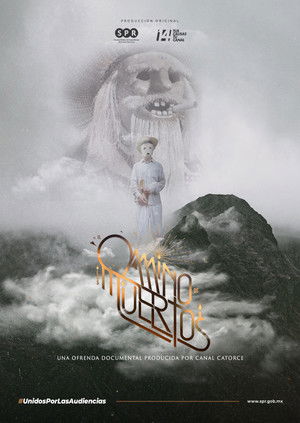
A portrayal of the Mexican Day of the Dead consisting of still shots and narration. Deals with the special objects and events surrounding the annual Mexican celebration of “All Souls Day”. It is not only a rich flood of folk art, but a view of the way that the Mexicans have come to terms with death. Searched out with the help of Alexander Girard and a moving guitar score by Laurindo Almeida.
Carlos Sainz: The Operator
La Coronela (1940). Punto de partida
Through both interviews and dramatic reenactments, this documentary chronicles the life of Paulina Cruz Suárez.In the 1950's, when Paulina was a child in a rural Mexican village, her parents traded her away for land rights. The villagers ostracized her and the town boss raped her, keeping her as his unwilling mistress throughout much of her adolescence. At 15, she took control of her destiny and escaped to Mexico City to begin a new life. Now middle-aged, Paulina returns to her village to confront her family about what happened and encounters a web of intrigue and denial. PAULINA interweaves documentary and fiction styles to explore the characters' radically different perspectives and memories, and those of this vital, resilient woman.
In some of the most extraordinary natural landscapes in Mexico, a group of mountaineers have set out to explore a world labeled as impossible, but from a space reserved only for birds.
A biographical documentary about Moisés Avendaño, artist, athlete, sportsman, adventurer, and doctor from Veracruz, Mexico. Seen from his golden years, until his imminent encounter with Parkinson's disease, in the present.
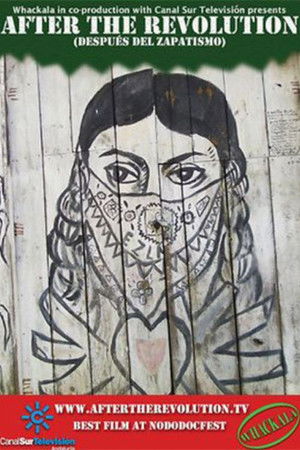
In the mountains of Chiapas, a rebel experiment in autonomy continues to thrive – thirty years after its declaration of war against the Mexican state. ¡Ya Basta! 30 Years of Zapatista Autonomy, a Modern Insurgent documentary, explores the legacy and future of the EZLN, reflecting on how a masked, rural rebellion reshaped Mexico’s political landscape and inspired activists across the globe. What does revolution look like when it refuses to seize state power? And what can the world learn from a community that continues to build its own system from the ground up?
La Farsa: Una Obsesión Sin Limites
A couple of artists travels through the Mexico desert to present their puppet show.
Corazones de tela
El Pantera is a documentary film that chronicles the rise of Mexican UFC star Yair Rodriguez as he strives to become the first ever Mexican born UFC champion.
Oaxaca - Zwischen Rebellion und Utopie
Chapter 11 of the series 18 decades of life in Mexico in the twentieth century. Images of the cultural, social and political life in Mexico between 1950 and 1954 Narrates the period of the history of Mexico from 1950 to 1954, marked by capitalism and exploitation of native peoples.
Chapter 12 of the series 18 decades of life in Mexico in the twentieth century. Images of the cultural, social and political life in Mexico between 1955 and 1959. At the end of the presidential term of Adolfo Ruiz Cortines and the beginning of the presidency of Adolfo Lopez Mateos, Mexico is experiencing political stability and economic recovery after the 1954 devaluation.
The first meeting of a U.S. president and a Mexican president took place when William Howard Taft met Porfirio Díaz on 16 October 1909, in El Paso. The meeting was celebrated in both El Paso and Juárez with parades, elaborate receptions, lavish gifts and large crowds. Shot by the pioneers of Mexican Cinema the brothers Alva. This is a typical example of newsreel material prior to the Mexican revolution. By hemerographical references we know that this footage was presented to the then president of Mexico General Porfirio Díaz in the Castle of Chapultepec, then residence of the president.
A short visual poetic film on a Haitian migrant stranded in Tijuana, Mexico.
In the Mexican state of Michoacán, Dr. Jose Mireles, a small-town physician known as "El Doctor," shepherds a citizen uprising against the Knights Templar, the violent drug cartel that has wreaked havoc on the region for years. Meanwhile, in Arizona's Altar Valley—a narrow, 52-mile-long desert corridor known as Cocaine Alley—Tim "Nailer" Foley, an American veteran, heads a small paramilitary group called Arizona Border Recon, whose goal is to halt Mexico’s drug wars from seeping across our border.
As unrestricted development threatens water sources in Baja California Sur, Mexico, local peoples are beginning to push back against global business interests.
The documentary by Mari Soppela focuses on glass ceilings, a metaphor for the invisible borders between men and women in work life. Talk about glass ceilings is usually associated with women’s opportunities to advance to well paid managerial positions, but the documentary connects itself more broadly to the structural problems of work life from women’s perspective. Glass ceilings are long trials about equal pay, having to continually prove one’s skills, and 85-cent euros. The topic cannot be handled without intersectional crossings: what are invisible glass ceilings for some, are solid concrete for others.