An elegy about ‘José Ð Almeida’s life and work. Along an intimate metamorphosis, this dreamlike and visually expressive world created by the visionary and insane dreamer is recreated and performed between a symbiosis of moving image, photography and painting- in a scenic, dramatic, symbolic and mystical tone.
A documentary about the sea and memory. Its movement is its form. Its strength.
"A l likeness is a gift... it avoids... or confuses time if your prefer." said John Berger. Following this premise, 81.92 is a structuralist inquiry into the notion of presence and absence as it reveals archival radio broadcasts from former Montreal radio host Mike Wolkow. The former (the audible) is left invisible while the later (the visible) seeks to find the missing elements that trace the passage of this vocal presence. Past and present interplay in this piece that shifts between epochs, thus mimicking a radio signal that is being tuned in.
On November 13, 2015, the attacks in Paris and Saint-Denis, carried out by three Islamist commandos and claimed by ISIS, were the deadliest in France since the end of World War II. In the months that followed, the November 13 Program was launched by the CNRS and Inserm to study the construction of individual and collective memory around an event that profoundly marked French society. Today, the testimonies of 27 volunteers—among some 1,000 people—who participated in the study form a mosaic of experiences that shows how trauma extends beyond the immediate circle to permeate the national collective memory.
Memory is a ghost. Lucio, a printing press worker, takes one last walk around the machines with whom he shared everything. He remembers when his mechanisms used to move and through that mechanical movement he reflects about his own life.
O tecido da memoria (My room number is cucumber)
A fake-diary film from memories of the time I couldn’t remember, using only the traces I could recall.
Staged as a series of voiceover sessions, written with gloriously off-balanced precision and dipped in the color green, THE FUTURE TENSE unfolds as a poignant tale of tales, exploring the filmmakers’ own experiences in aging, parenting, mental illness, along with the brutal history that lies submerged beneath Ireland’s heavy, moist earth.
This poetic film follows director Marialuisa's journey with Anita and Leticia, Central American women traveling with the Caravan of Mothers of Missing Migrants.
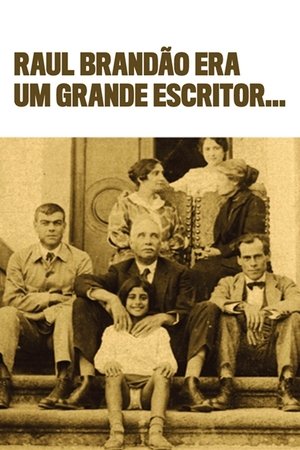
This film is an attempt to disclose if Raul Brandão has left any trace, in Nespereira, Gumarães.
Idak-Idak-Idak is a hybrid-documentary relating the stolen Lombok Treasures with the Sasak diaspora through three generations of women: a daughter, her mother, and her grandmother. Blending full-spectrum cinematography with personal footage, this film moves between Indonesia and the Netherlands to examine colonial legacies, displacement and healing the heart of home. In Sasak, "Idak" can be interpreted as both “heart” and “absence”, becoming a container for memory, loss, and the unseen layers of the self between generations.
Farmers in the Île-de-France region, they filmed life on the farm, working in the fields, and family and village celebrations on 8 mm or Super 8 film. From the 1950s to the 1980s, these testimonies unfold a history of rural life: we move away from a peasant and family model to industrial agriculture for export. Through these family images, I attempt to answer my own questions about our agricultural future. In the 1950s, the land of Île-de-France fed us.
This film is a poetic composition of recorded history and non-recorded memory. Filmmaker Rea Tajiri’s family was among the 120,000 Japanese and Japanese Americans who were imprisoned in internment camps after the attack on Pearl Harbor. And like so many who were in the camps, Tajiri’s family wrapped their memories of that experience in a shroud of silence and forgetting. This film raises questions about collective history – questions that prompt Tajiri to daringly re-imagine and re-create what has been stolen and what has been lost.
A dash of youth, a pinch of age, and an unrecorded recipe: Mudder's Hands is a charming documentary conversation about arthritis, centered around the tradition of baking Newfoundland raisin bread.
Con Traje y Sin Zapatos
The history and myth of a ghost island off the SW African coast are told through a dystopian parable, in which a character undergoes brainwashing to escape the burden of memory in a world he no longer relates to.
The veiled story of Japanese diaspora in Mexico and the endurable impact of historic silence in its descendants is portrayed through testimonies and an exploration of landscape and choreography, questioning the formation and theatricality of individual and collective identity. When everything that's left of history are memories, how are invisible wounds healed? Yurei goes through different zones in Mexico towards an exploration of memory.
In this film from late in his career, Kramer returns to Hanoi after nearly 25 years to re-envision the city’s struggle through an uncertain and daunting past, present, and future. The Vietnamese characters in the film are diverse: Kramer’s former guide from an earlier visit in 1969; a tight-rope walker in the national circus; a man who took photos of B-52s and another who lost his fingers shooting them down.
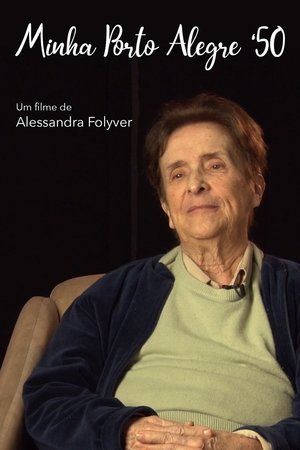
Minha Porto Alegre '50
The amnion – the fetal membrane protecting the embryo – becomes a metaphor in the film for an intimate space where pain can be shared and a path to healing sought. This sensitive portrait of three women whose lives have been marked by sudden separation is carried from the outset by a meditative soundtrack that shapes an environment in which personal experience becomes expressible. Ritual gestures – traditional costumes, cooking together, hugging – create a protective shell that allows pain not only to be expressed and shared, but also transformed.