Actor/director Sidney Poitier discusses his life and career. He tells of his upbringing in Jamaica; the difficulties he encountered in New York City at the start of his career; his involvement in the US civil-rights movement; and efforts to end apartheid in South Africa. Friends and acquaintances, as well as other performers, give their insights about what makes him so special.
When Forgotten Silver — the story of pioneer filmmaker Colin McKenzie — unspooled on 29th October 1995, in a Sunday TV slot normally reserved for drama, many believed the fable was fact. Controversy ensued as a public reacted (indignant, thrilled) to having the wool pulled over their eyes. Costa Botes, who originated the mockumentary, later made this doco, looking at the construction of McKenzie's epic, tragic, yet increasingly ridiculous story. He interviews co-conspirator Peter Jackson and other pranksters, and they muse on the film's priceless impact.
Nothing Like Before delves into the creation of the Clube da Esquina Album (Brazil, 1972). Considered by many music critics one of the best albums of all time, it presented to the world musicians like Milton Nascimento, Lô Borges, Toninho Horta, Beto Guedes and Wagner Tiso.
How could the Cannes Film Festival become the biggest cinema event in the world? For 75 years, Cannes has succeeded in this prodigy of placing cinema, its sometimes paltry splendors but also its requirements of great modern art, at the center of everything, as if, for ten days in May, nothing was more important than it. This film tells how Cannes has become the largest film festival in the world by opening up to cinematic modernity while never forgetting that cinema remains a performing art, a popular art.
A panorama of Brazilian popular music from the 60s and 70s through the musical group Novos Baianos. A retrospective of the community lifestyle adopted by its members and the influence inherited from singer João Gilberto.
Behind the scenes documentary short for the movie "Christopher Robin".
Documentary about the legendary American film director from his introduction to the film industry in its early years to his death in 1959.
A documentary that exposes the shocking truths behind industrial food production and food wastage, focusing on fishing, livestock and crop farming. A must-see for anyone interested in the true cost of the food on their plate.
This is not merely another film about cinema history; it is a film about the love of cinema, a journey of discovery through over a century of German film history. Ten people working in film today remember their favourite films of yesteryear.
An insider's account of Jack Warner, a founding father of the American film industry. This feature length documentary provides the rags to riches story of the man whose studio - Warner Bros - created many of Hollywood's most classic films. Includes extensive interviews with family members and friends, film clips, rare home movies and unique location footage.
Promotional documentary filmed at the London East End Docklands area and River Thames for the filming of the opening boat chase for The World Is Not Enough (1999).
Film journalist and critic Rüdiger Suchsland examines German cinema from 1933, when the Nazis came into power, until 1945, when the Third Reich collapsed. (A sequel to From Caligari to Hitler, 2015.)
In 1966, German film critic Theodor Kotulla — who would go on to become one of the New German Cinema's most uncompromising filmmakers — visited the set of Robert Bresson's "Mouchette" (1967) and created this half-hour documentary about the director. It won the 1967 German Film Award for best short documentary.
Omnibus: François Truffaut
Brought to life through archival material and the reflections of over 40 colleagues, friends and fans, BLOOD & FLESH is much more than the story of a moviemaking life most unusual. It beautifully captures the worlds of outsider filmmaker communities that existed in California in the ’70s, and the weird ways they intersected with Hollywood mainstream and union indies. On Adamson shoots, regular Orson Welles crew and cinematographers like Gary Graver, Vilmos Szigmond and Lazlo Kovaks worked alongside Bud Cardos — and at one point, Charles Manson! Director David Gregory (founder of Severin Films, director of LOST SOUL: THE DOOMED JOURNEY OF RICHARD STANLEY’S ISLAND OF DR. MOREAU) spent years making this film, speaking to everyone down to the cops who investigated Adamson’s murder, vividly encapsulating both a bold life and tragic demise, with alien conspiracies, go-go dancers and Colonel Sanders coming in along the way. If you’ve got even a passing interest in cinema, you want to see this
Where are you, João Gilberto? sets out in the footsteps of German writer Marc Fischer who obsessively searched for the legendary founding father of Bossa Nova and last great musical legend of our time, Brazilian musician João Gilberto, who has not been seen in public for decades. Fischer described his journey in a book, Hobalala, but committed suicide one week before it was published. By taking up Marc Fischer's quest, following his steps one by one, thanks to all the clues he left us, we pursue João Gilberto to understand the history, the very soul and essence of Bossa Nova. But who can tell whether we will meet him or not?
Documentary about filmmakers of the New German Cinema who were members of the legendary Filmverlag für Autoren (Film Publishing House for Authors). Among them are Werner Herzog, Rainer Werner Fassbinder, and Wim Wenders.
As Hong Kong's foremost filmmaker, Johnnie To himself becomes the protagonist of this painstaking documentary exploring him and his Boundless world of film. A film student from Beijing and avid Johnnie To fan, Ferris Lin boldly approached To with a proposal to document the master director for his graduation thesis. To agreed immediately and Lin's camera closely followed him for over two years, capturing the man behind the movies and the myths. The result is Boundless, a candid profile of one of Hong Kong's greatest directors and a heartfelt love letter to Hong Kong cinema.
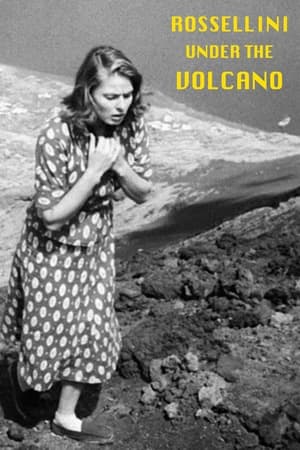
Documentary about master director Roberto Rossellini, who tells details of his life and childhood and visits the places where he has lived and shot some of his most famous movies.
Nagisa Oshima interviews Akira Kurosawa, leading him to share his thoughts about filmmaking, his life and works, and numerous anecdotes relating to his films and his various film activities.