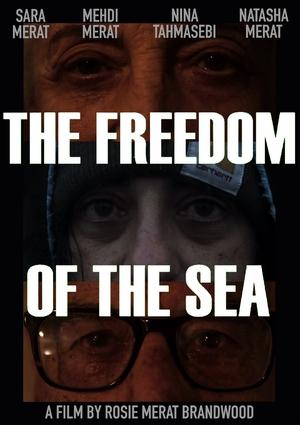
The Freedom of the Sea is a short documentary highlighting the freedom of living in the UK - in contrast to a more restrictive life in Iran - through the joy of daily sea swimming in Brighton.
After five years studying in Paris, Arash has not adjusted to life there and has decided to return to Iran to live. Hoping to change his mind, his two friends Hossein and Ashkan convince him to take a last trip through France.
Iran, January 16th, 1979. Shah Mohammad Reza Pahlavi flees after being overthrown. Ayatollah Khomeini returns to Tehran and proclaims the Islamic Republic on April 1st, 1979. In the same year, Saddam Hussein seizes power in Iraq and, after several border skirmishes, attacks Iran on September 22nd, 1980, initiating a cruel war that will last eight years. Since its outbreak, correspondent Saeid Sadeghi documented it from its beginning to its bitter end.
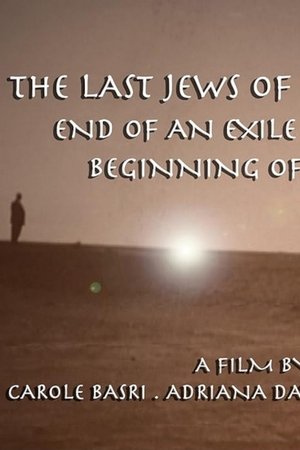
The Last Jews of Baghdad takes a historical and personal look at the persecution, torture, escape and exodus of over 160,000 Iraqi- Jews between the years 1940 through 2003. Hear from the survivors the real reasons why they left their beloved homeland of over 2500 years and if they will ever return.
Deng Xiaoping's economic and political opening in China. Margaret Thatcher's extreme economic measures in the United Kingdom. Ayatollah Khomeini's Islamic Revolution in Iran. Pope John Paul II's visit to Poland. Saddam Hussein's rise to power in Iraq. The Soviet invasion of Afghanistan. The nuclear accident at the Harrisburg power plant and the birth of ecological activism. The year 1979, the beginning of the future.
AMERICAN COUP tells the story of the first coup ever carried out by the CIA - Iran, 1953. Explores the blowback from this seminal event, as well as the coup's lingering effects on the present US-Iranian relationship. Includes a segment on the 1979 Iranian Hostage Crisis and its relation to the 1953 coup. Concludes with a section on the recent Iranian presidential election. Contains interviews with noted Middle East experts and historians and prominent public figures such as Stephen Kinzer (author, All The Shah's Men), Prof. Ervand Abrahamian, Trita Parsi, Col. Lawrence Wilkerson, Ted Koppel and Rep. Ron Paul of Texas. With Iranian cinematography by James Longley.
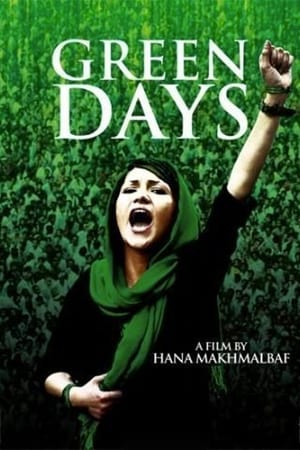
A playwright Iran tries to confront a creative crisis while political clashes erupt during her country's 2009 election.
Can we reinvent our lost queer histories? #Familiar #Touch #Lost #Figures is about queer ancestry and diaspora, a hybrid of cultural traditions and contemporary queer identity. It explores feelings of guilt and joy, and intimacy between femmes of colour.
Russia, China and Iran: three former empires are determined to take their revenge and reassert their power after centuries of humiliation. Since the start of the war in Ukraine, they have never been so aligned on the international stage. Their common goal: to put an end to Western hegemony, restore their zone of influence and propose a new model of society. To achieve this, they are waging a hybrid war against the democracies: military, technological, economic, informational and ideological. Are they on the verge of joining forces to create a new world order?
Planned by Britain’s MI6 and then executed by America’s C.I.A., the coup d’état which follows will destroy Iran’s last democracy, and relations between Iran and the West until the present day. Most shocking of all, the truth about Her Majesty’s role will be hidden from the Queen herself, and even the all-powerful Shah who will be used by Britain and American to replace Iran’s last democratic Prime Minister. The coup will lead to political upheaval all over the Middle East for decades to come, eventually resulting in the Islamic Revolution of 1979 which will end the reign of the Shah, and British and American influence in Iran, inspiring countless other Islamist revolutions around the world.
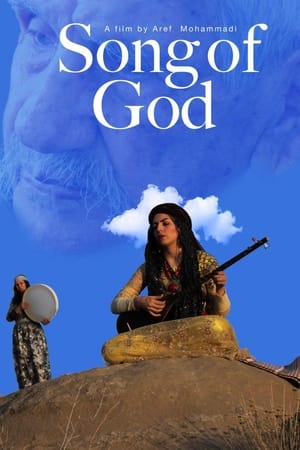
When an Iranian-Canadian filmmaker hears the story of Master Ghadamyar- a Kurdish 120-year-old Tanbur player, he takes off on a mission to discover more about this spiritual master's musical and enchanting life. The film follows his journey to Western Iran, where he unearths the ancient traditions and teachings of Ghadamyar's faith known as Yarsanism, and its relationship to the mysterious Tanbur as a meditative instrument. The film takes audiences on a musical and visual quest among rugged landscapes of Western Iran to experience undiscovered voices and spiritual awakening. We witness the collective prayer of Yarsani Tanburists, as a practice to maintain their spiritual identity and search for inner beauty.
Leyla and her six-year-old daughter Nila live in the holy city of Mashhad in Iran. Nila is the result of a temporary marriage, which allows a man to marry a woman even if he is already married. Children born from such a relationship are legally non-existent. As long as the father does not recognize the child, no birth certificate can be issued and Nila cannot attend school. The documentary depicts Leyla's tireless efforts to clarify Nila's legal status in order to offer her a perspective for her future. In a never-ending bureaucratic battle, Leyla fights not only against the legal system, but also against a judgmental society.
In 1972, Bahman Maghsoudlou made a short film about Iranian artist Ardeshir Mohasses. For 36 years, this remained the only film about this internationally acclaimed artist. In 2008, spurred by a New York retrospective of Mohasses's work and the artist's passing, Maghsoudlou finally began work on the extended film he knew its subject deserved. Thus was born, Ardeshir Mohasses: The Rebellious Artist.
A documentary about the life and works of the maestros of Imaginary Painting School who made Iranian popular old style Khialisazi or Coffee-House Painting.
Family videos are odd objects. You can sit around all together and for a few hours relive your life. Family videos are valuable. The older the videos are, the more valuable they become for us. Especially for those of us who have had complicated lives.
After seven years in prison, a female student in Tehran is hanged for murder. She had acted in self-defence against a rapist. For a pardon, she would have had to retract her testimony. This moving film reopens the case.
Case history of an Iranian patient bitten by a rabid wolf.
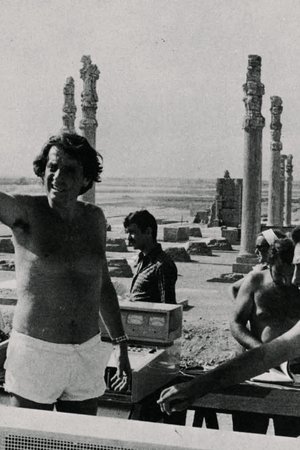
The creation of Iannis Xenakis’ « Persephassa » at the Shiraz-Persepolis Art Festival. There are only a few archives left of this piece, for its ring-like disposition around the audience made it difficult for people to record it or take pictures of it. When it was created in Persepolis, each percussionist was settled on the stump of a column of the Palace of Darius. The distance between them could go as far as 164 feet (50 metres).
In 1979, after the Soviet Union attacked Afghanistan, millions of Afghans were forced to leave their homeland to save their lives, and in the meantime, a huge wave of them immigrated to Iran.
"Everybody should have a home. If you punish a nation, this is so abstract, it's very mean to use your power to put another country in your control... Instead of punishment, maybe we should have love." Eliane from Chile, Milad from Iran, and Georgia from Greece, three migrants in the UK and their thoughts on love, home, family, and Shakespeare's Romeo and Juliet.