Strange Trace presents a micro-opera by composer Greg Nahabedian. Emails From Gary uses transcriptions of the actual emails and phone calls exchanged between the composer and a former boss as they tried to quit an honestly dangerous working situation. Our presentation ends with a dramatic reading of actual Yelp reviews of the business in question.
A look at the entire process of creating and developing Patrice Chéreau’s third staging of "In the Solitude of Cotton Fields" by Bernard Marie Koltès with Pascal Greggory and Chéreau himself. From the first reading around the table through the first contact with the performance space, rehearsals and lighting to opening night, the entire creative process unfurls in front of our eyes. The film shows us the evolving and ongoing dialogue between Greggory and Chéreau, a dialogue full of crises and magical moments of harmony and insight via which the truth, intensity, complexity, mystery and depth of Koltès’ text gradually emerge to form an implicit bond between these two men. The film also shows Chéreau directing rehearsals for Mozart’s "Don Giovanni" in Salzburg, revealing both the unity of and profound differences between his opera and theater work.
A dejected husband exiles himself to the Moon with his cat. He sends back transmissions to Earth.
La Bohème (Sydney Opera House)
It Takes Three is a CG-and-traditionally-animated short film included on the home media releases of Trolls Band Together. Taking place after the events of the film, the short follows Poppy, Viva, and Tiny Diamond as they get sucked into the Hustle-verse, only to discover that it is devoid of hustle.
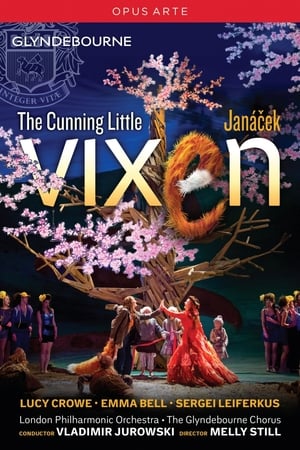
The tale of a quick-witted fox and her escape from confinement for a life in the forest.
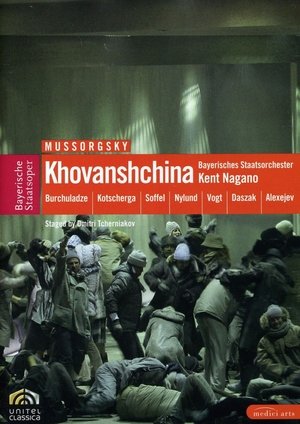
Kent Nagano superbly masters the challenges presented by this score, shapes the dynamics with subtle intensity, and casts the score in a mellow glow. As Marfa, the spurned lover of Ivan Khovansky‘s son Andrei, Doris Soffel unfolds such a rich palette of sonorities, from the pathos of the lower ranges to shaded discant heights, that “one is tempted to speak of a Russian mezzo”. The final chorus, which Mussorgsky did not compose, is played in the orchestrally transparent version of Igor Stravinsky – the third great Russian composer who contributed to making “Khovanshchina“ a timeless, gripping stage work. With his stripped-down sets and historicising costumes, director Dmitri Tcherniakov, one of the new voices of contemporary Russian theatre, builds a bridge to the political present. A lesson in history and music!
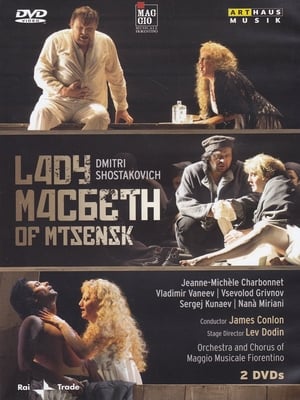
At first glance, the title of Shostakovich’s opera seems to speak for itself: Katherina, neglected and unhappy in her marriage, commits the most heinous crime just like the Shakespearian Lady Macbeth. But Nikolai Leskov’s short novel, which portrays Katherina as a monster, was only the starting point for Shostakovich to elicit understanding for an oppressed woman whose pursuit for self-determination is suppressed by society. Through combining satiric, grotesque and tragic elements in his music, Shostakovich succeeds in striking the balance between repulsion at Katherina’s immoral acts and sympathy for her. Violence, eroticism and the paralysing boredom of Russian society in the 19th century are the founding elements of this composition. The choir and orchestra of the Maggio Musicale Fiorentino conducted by James Conlon accompany tremendous soloists such as Jeanne-Michèle Charbonnet, Vladimir Vaneev and Vsevolod Grivnov in the original language in this live recording.
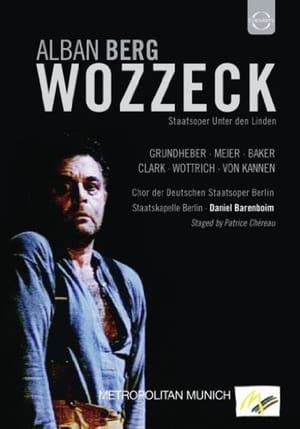
Franz Woyzeck, a lowly soldier stationed in a mid-nineteenth century provincial German town, is the father of an illegitimate child by his mistress Marie.
If silent pictures were still the only style of film making, how would they look today? What would Charlie Chaplin's 'Tramp' look like? Would Buster Keaton's love story always involve a man and a woman? SILENT CITY is a modern day silent film that weaves together a series of vignettes depicting life in New York City. Illustrating change in society since the original silent film era, as well as the diversity of the Big Apple.
A brief journey through the art of Megadeth's discography.
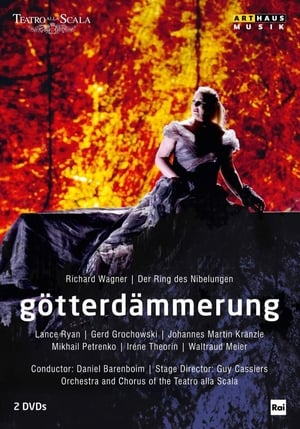
Götterdämmerung, the final instalment of Wagner’s Ring of the Nibelung, is a story of human passions. Two essentially benevolent creatures, involved with and possibly doomed by their traffic with the gods, find treachery and evil in the world of the humans, and are ruined by the dark side of humanity. Iréne Theorin, acclaimed worldwide for her portrayal of Wagner’s heroines, stars as Brünnhilde opposite Lance Ryan, who continues his radiant portrayal of the tragic hero Siegfried. The strong cast also includes Mikhail Petrenko as the dark antagonist Hagen and Johannes Martin Kränzle, who once again shines as his father Alberich. Waltraud Meier has a memorable appearance as Brünnhilde’s sister Waltraute. With this 2013 recording of Götterdämmerung, the musically and visually compelling Scala Ring Cycle by Daniel Barenboim and Guy Cassiers was completed and proved to be one of the highlights of the Richard Wagner bicentenary.
In Siegfried, the “Second Day” or third evening of the Ring Cycle, we meet the pivotal hero of the epic tale. The energetic drive from Die Walküre is pursued here while Siegfried finally recaptures the mighty ring from Fafner the Dragon and awakens Brünnhilde from her penal sleep on the great rock. Lance Ryan, having interpreted this role on the greatest stages of the world including the Bayreuth Festival, portrays the naïve hero. His antagonists are Peter Bronder, great and agile as Mime, Terje Stensvold, an experienced Wanderer and Johannes Martin Kränzle, who continues his mean and deceitful depiction of Alberich. The leading ladies are Nina Stemme, once again unrivalled as Brünnhilde and Anna Larsson, moving as the God-mother Erda.
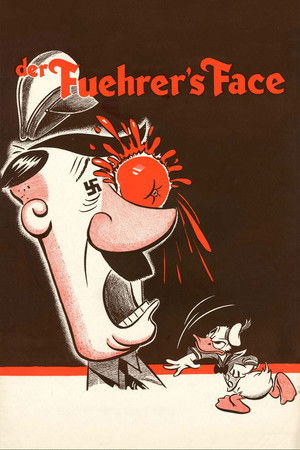
A marching band of Germans, Italians, and Japanese march through the streets of swastika-motif Nutziland, serenading "Der Fuehrer's Face." Donald Duck, not living in the region by choice, struggles to make do with disgusting Nazi food rations and then with his day of toil at a Nazi artillery factory. After a nervous breakdown, Donald awakens to find that his experience was in fact a nightmare.
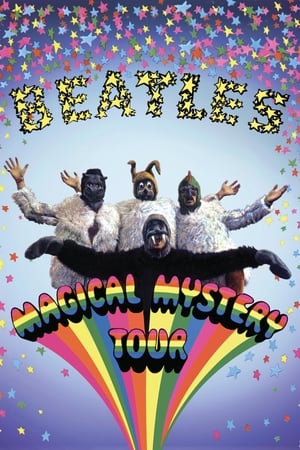
While on a coach tour, The Beatles and a few dozen friends experience strange happenings caused by magicians.
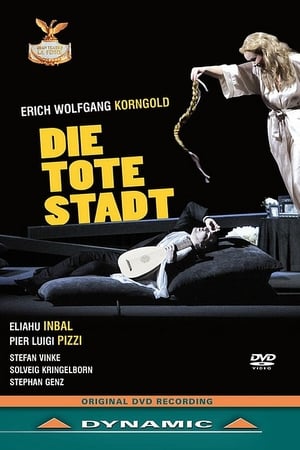
"Die tote Stadt" is a psychologically layered drama with Hitchcock-like features, about Paul who, after the loss of his beloved Marie, slowly but surely becomes entangled in a dream world of obsessions and delusions. This impressive opera is a passionate as well as a surrealistic plea for mourning. "He who cannot live with death has no life."
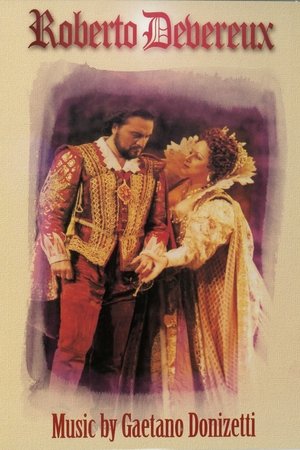
A lyric tragedy in three acts by Gaetano Donizetti, libretto by Salvatore Cammarano. Roberto Devereux was composed in the summer of 1837, the year, according to biographers, in which Donizetti seems to have suffered most, having lost his third son and his adored wife Virginia Vasselli. The opera made its debut at the San Carlo Theatre in Naples on October 28th in the same year and was a great success. The rehearsals of the original performance were postponed for a month due to censorship of the decapitation scene of the leading actor.
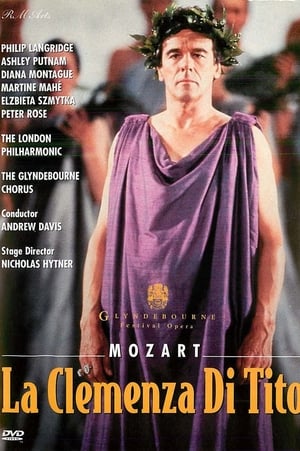
Mozart's La Clemenza Di Tito was originally commissioned to celebrate the coronation of the Emperor Leopold II as King of Bohemia in 1791. This rarely-seen masterpiece was Mozart's last opera. Nicholas Hytner's elegant staging for the Glyndebourne Festival Opera sheds new light on the compelling story of passion that overrides loyalty and integrity that is tested to the extreme.
Charles Mackerras teases the romantic beauty from Gounod's score, which has been widely admired since its first performance at the Théâtre Lyrique, Paris, in 1867. In this 1994 recording, the youthful Roberto Alagna as Roméo and Leontina Vaduva as the unattainable Juliette lead an excellent cast in this touching portrayal of impossible love, based on Shakespeare's play.
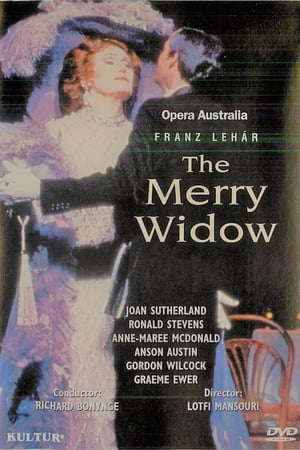
Turn of the century Paris provides the glittering setting for this light hearted tale of political and amorous intrigue amidst the gaiety of Parisian high society.. First performed in Vienna in 1905 and here performed in the English version by Christopher Hassal.