A reflection on the fate of humanity in the Anthropocene epoch, White Noise is a roller-coaster of a film, a whirlwind of sounds and images. The fourth feature-length work by Simon Beaulieu, this film essay plunges viewers into a subjective sensory adventure—a direct physical encounter with the information overload of daily life. White Noise transforms the imminent collapse of our civilization into a visceral aesthetic experience.
Ten years after the death of iconic French filmmaker, Chris Marker. A filmmaker, hoping to rediscover that unique sensibility against the uncertainty of the new century, returns to the places synonymous with those incomparable and unforgettable films-- From the cat cemetery of Sans Soleil, to the mausoleum of The Last Bolshevik; The caves of Level Five to the rooftops of The Case of the Grinning Cat. A biographical portrait of one of the 20th century's greatest and most misunderstood filmmakers.
Twenty-five films from twenty-five European countries by twenty-five European directors.
A look into the career and impact of "classical liberal" talk show host Dave Rubin.
Belfast-born actor Stephen Rea explores the impact of Brexit and the uncertainty of the future of the Irish border in a short film written by Clare Dwyer Hogg.
It has been a lifelong dream of Kyrgyz director Melis Ubukeyev to create an elaborate film version of the Kyrgyz national epic 'Manas'. He spent years working with the National Academy of Sciences of Kyrgyzstan to gather material for this film project, which would ultimately remain a dream. However, the director's efforts were not in vain: Not only did he make films in 1962 and 1988 about Manasçı – the revered oral storytellers who have preserved the epic for generations through melodic recitation –, but in 1995, to mark the 1,000th anniversary of 'Manas', he also created a beguiling essay film that not only recounts the epic’s sweeping narrative through a mix of breathtaking imagery and opulent costumes, but also weaves it into a semi-documentary exploration of Kyrgyz history and identity. Once almost impossible to find, the film has recently been restored by the film studio Kyrgyzfilm and uploaded to YouTube in 4K.
This film essay about mushrooms and their connections to other living things tries to use the structure of mushrooms to explain nature, science, and civilization, all the while searching for various analogies, such as the similarities between mycorrhiza and other structures.
If cinema is the art of time, Linklater is one of its most thoughtful and engaged directors. Unlike other filmmakers identified as auteurs, Linklater’s distinction is not found on the surface of his films, in a visual style or signature shot, but rather in their DNA, as ongoing conversations with cinema, which is to say, with time itself. A visual essay produced by Sight and Sound.
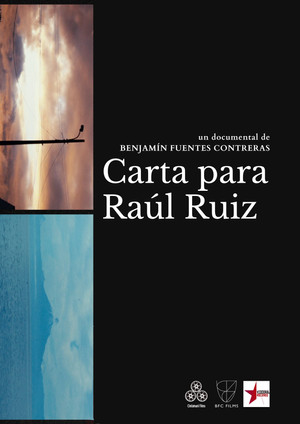
A youngster writes a letter to his grandmother about his last trip to Donosti (Spain). This city inspires him to ponder about the language of cinema, time, cities, and sharing memories with our loved ones.
The mind process behind the film, Transformers the Premake, explained by Kevin B Lee himself.
Every image in The Fall of Communism as Seen in Gay Pornography comes from gay erotic videos produced in Eastern Europe since the introduction of capitalism. The video provides a glimpse of young men responding to the pressures of an unfamiliar world, one in which money, power and sex are now connected.
Diario ruso
A scientific expedition travels to an alternative Earth in hope of finding a new home for humanity, which has destroyed its own planet. But is it even possible to escape old patterns?
Pole, who are you? This film collage that combines archival and contemporary materials, documentary and staged pictures, press reports, social announcements, sale offers and speech excerpts is an attempt to answer this question. Referring to the Polish tradition of a creative documentary in the style of Wojciech Wiszniewski, the film presents various manifestations of Polishness: patriotic and religious rituals, everyday traditions as well as characteristic landscapes or intimate memories from childhood.
Rastros que Deixamos
Four filmmakers working in the region of Galicia (in the northwest of Spain) follow and portray on the screen Galician artists working in disciplines of different nature. The result is four pieces around the creative process of these artists. Lois Patiño film their parents working on their paintings in their studio in Vigo, Jaione Camborda films dancer Janet Novás rehearsing for one of her pieces, Xisela Franco follows film director Margarita Ledo revisiting the location of her latest film Nation and Alfonso Zarauza reflects on the relationship between actress-director by putting together the work of Melania Cruz in two of their collaborations.
For a long time they were an integral part of our society, today they live neglected in our cities and are deemed a problem. The pigeon is a relic of the past that still affects us today.
Building on Forensic Architecture’s previous investigation into herbicidal warfare and its effects on Palestinian farmers along the eastern perimeter of the occupied Gaza Strip, this investigation marks Land Day in Palestine by examining the systematic targeting of orchards and greenhouses by Israeli forces since October 2023. Our analysis reveals that this destruction is a widespread and deliberate act of ecocide that has exacerbated the ongoing catastrophic famine in Gaza and is part of a wider pattern of deliberately depriving Palestinians of critical resources for survival.
An experimental portrait of Fernando Fernán Gómez, one of the most renowned Spanish artists of all time.
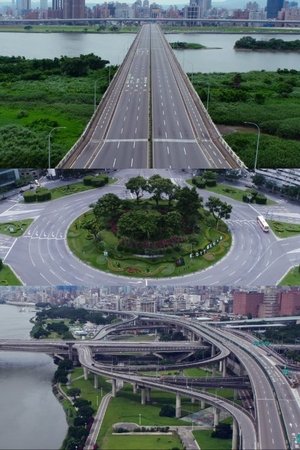
In 2010, an obsessed gamer designed the perfect game of Sim City. Achieved through a repeating pattern of clustered high rises, “Magnasanti” exposes the hellish consequences of top-down civic design. In his new documentary, John Wilson explores how New York City is creeping closer and closer to realizing this fictional metropolis.