Filmmaker Alain Resnais documents the atrocities behind the walls of Hitler's concentration camps.
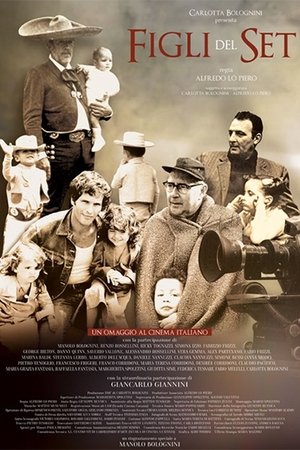
Jean Rochefort, Jean-Pierre Marielle, Philippe Noiret - This is the story of a bunch of friends. Comedian buddies. Actors who dreamed of the Conservatory and the National Theater of Paris. The theater was their ideal, cinema will be their paradise. Their friend Jean-Paul Belmondo, the relaxed Parisian, who failed the entrance exam, will make sparks fly. Rochefort, Marielle and Noiret, the three provincials, will climb the steps of recognition one by one. From the little cabarets on the Left Bank to the TV shows of the Buttes-Chaumont pioneers. From the second roles to the first and from the B movies to the classics.
A documentary on "The Life and Death of Colonel Blimp."
A young man living with his parents in Wisconsin comes face to face with a terrifying monster while searching for the elusive cryptic known as the Hodag.
Paparazzi explores the relationship between Brigitte Bardot and groups of invasive photographers attempting to photograph her while she works on the set of Jean-Luc Godard's film Le Mépris (Contempt). Through video footage of Bardot, interviews with the paparazzi, and still photos of Bardot from magazine covers and elsewhere, director Rozier investigates some of the ramifications of international movie stardom, specifically the loss of privacy to the paparazzi. The film explains the shooting of the film on the island of Capri, and the photographers' valiant, even foolishly dangerous, attempts to get a photograph of Bardot.
A portrait of American actress Uma Thurman, muse of legendary filmmaker Quentin Tarantino and courageous voice for the many victims of despotic producer Harvey Weinstein.
The life of Bruce Springsteen has been told many times, from the angle of the adored rock star, American icon.
He is considered to be one of the greatest German film stars, Hans Albers, known as "Der blonde Hans", a man made for the cinema. He was an actor, singer, idol of the Germans - and darling of the Nazis. Nevertheless, he could not protect his great love, the Jewess Hansi Burg. In 1938 she had to flee to London from anti-Semitism in Germany. But Albers himself stayed in Germany and continued to film, driven by a desire for a career and the call of money. In 1946, one year after the end of the Second World War, they meet again: Hansi Burg returns to the land of the murderers of her parents in the uniform of the British Army and visits Hans Albers in his villa on Lake Starnberg. He lives there with another woman. The rival has to go, then there is a tense debate. For a day and a night, the blonde Hans has to face uncomfortable questions and even more uncomfortable truths.
In August 1936, the Olympic Games, orchestrated by Joseph Goebbels, the Third Reich's Minister of Propaganda, took place in Berlin. This was a vast charm offensive designed to present Germany as a nation that respected the Olympic principles of equality and fraternity. This documentary reveals the political strategies of the Third Reich, which benefited from the complicity of the International Olympic Committee in thwarting calls for a boycott by several countries. Once the games were over, Nazi policy intensified. How could the civilized world turn a blind eye to this "great illusion"? Gretel Bergmann, the German Jewish athlete at the center of a bargaining chip between the German authorities and the US government, and Noël Vandernotte, who won a bronze medal in rowing, share their stories.
Four lives that could not be more different and a single passion that unites them: the unconditional love for their cinemas, somewhere at the end of the world. Comrades in Dreams brings together six cinema makers from North Korea, America, India and Africa and follows their efforts to make their audiences dream every night.
Documentary about master director Roberto Rossellini, who tells details of his life and childhood and visits the places where he has lived and shot some of his most famous movies.
A documentary that details the process of restoring 270 of the 520 lost films of pioneering director Georges Méliès, all orchestrated by a Franco-American collaboration between Lobster Films, the National Film Center, and the Library of Congress.
The history of Frankenstein's journey from novel to stage to screen to icon.
The dramatised story of the Irish civil rights protest march on January 30 1972 which ended in a massacre by British troops.
A tour of the the Exotic Locations of 'Tomorrow Never Dies'.
In depth look at the life and death of INXS frontman Michael Hutchence (1960-1997), who took his own life at an Australian hotel room at the age of 37 on November 22, 1997. Featuring interviews with his family, bandmates and friends such as Bono.
Music is an integral part of most films, adding emotion and nuance while often remaining invisible to audiences. Matt Schrader shines a spotlight on the overlooked craft of film composing, gathering many of the art form’s most influential practitioners, from Hans Zimmer and Danny Elfman to Quincy Jones and Randy Newman, to uncover their creative process. Tracing key developments in the evolution of music in film, and exploring some of cinema’s most iconic soundtracks, 'Score' is an aural valentine for film lovers.
The lives of Stan Laurel (1890-1965) and Oliver Hardy (1892-1957), on the screen and behind the curtain. The joy and the sadness, the success and the failure. The story of one of the best comic duos of all time: a lesson on how to make people laugh.
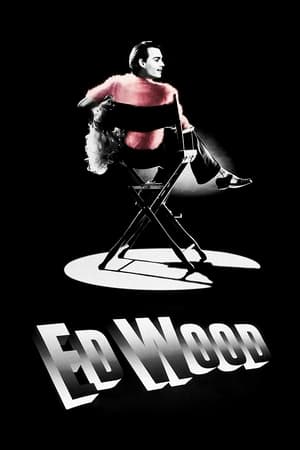
The mostly true story of the legendary "worst director of all time", who, with the help of his strange friends, filmed countless B-movies without ever becoming famous or successful.
After World War II, 4,000 Polish families came to Australia. They were Jews, Fascists, anti-Communists, and others dispossessed. In a large hostel, where even married men and women were housed in separate barracks, the adults lived for two years while they worked off the government's payment of their passage. Even though he is married to Anna and has a son, Julian falls in love with Nina and she with him. As they and others face the new situations and prejudices that await immigrants and as they take on aspects of Australian culture, old-country values reassert themselves. Julian decides what to do about love and family, and Nina must find a way to move on.