A short documentary on how people view art and its value in today's society.
Bas Jan Ader rides his bike into a canal in Amsterdam.
This short film is part of a mixed media artwork of the same name, which also included postcards of Ader crying, sent to friends of his, with the title of the work as a caption. The film was initially ten minutes long, and included Ader rubbing his eyes to produce the tears, but was cut down to three and a half minutes. This shorter version captures Ader at his most anguished. His face is framed closely. There is no introduction or conclusion, no reason given and no relief from the anguish that is presented.
“Christo: Works in Progress” takes us around the world on a showcase of the artist’s grand environmental installations. With both critique and praise from members of the communities that have hosted Christo and his works, the film takes a deep look into the process and outcome of pieces such as Wrapped Coast, Running Fence, and Wrapped Walkways. While discussing his inspirations and motives, Christo states, “The work of art is not the fabric, steel poles and cable, the work of art is the hills and the ocean, the sky, the gates, the rocks, the people, the light- this is the work of art.” (Christo Vladimirov Javacheff) Though his work may appear to be visually distracting from the landscapes he creates in, Christo’s aim is to bring attention to the land itself and encourage people to take note of their surroundings.
Brenda Way, founder and artistic director of ODC, is a recipient of the San Francisco Foundation Community Awards "for creating a community hub through dance. She built the largest, most comprehensive contemporary dance center in the nation, and through it she inspires dancers and audiences, cultivates artists, and engages the community. Brenda is a choreographer, writer, and community activist who strengthens our region's cultural connections." - San Francisco Foundation
RROMANI SOUL traces the true origin of the Rroma people. Through rituals, song and dance we follow emblematic figure and "Queen of the Gypsies" Esma Redzepova to Macedonia, south of France and finally to India. The film reveals for the first time ever that the true and unique origin of the Rroma is Kannauj in Uttar Pradesh, India.
A journey back through Dacia Maraini's and her trips around the world with her close friends cinema director Pier Paolo Pasolini and opera singer Maria Callas. An in-depth story of this fascinating woman's life. Maraini's memories come alive through personal photographs taken on the road as well as her own Super 8 films shot almost thirty years ago.
In this unique, compelling film, those who knew him speak freely, some for the first time, to reveal the many mysteries of Francis Bacon.
The Sophisticated Misfit is a long-awaited must-have for fans of the artist Shag and Tiki culture alike. This documentary traces the artist’s roots growing up in Hawaii, his artistic journey in college, his early work designing album covers, to his modern-day role as an art-world phenom. In addition to exclusive footage of Shag painting in his home studio, the film features intimate interviews with the artist, his family, artistic influences, tiki-philes, celebrity collectors, and fans.
This retrospective exhibition gives brilliant insight into the artist’s work of the last 4 decades. Credit for this highly sensitive selection of Morris’ work goes to Rosalind Krauss, who curated the exhibition. We invited artist and curator to come back to the Guggenheim Museum for a second look at the exhibition. The filmed walk-through gives a vivid sense of the artist’s progress and documents the views of the artist and Rosalind Krauss, one of the most significant critics of our time.
Chet Baker silently wanders through an Antonioniesque landscape in a Felliniesque state of wonderment as his improvised trumpet solos alternate between earnestly offering the obvious and mocking the artiness of the whole affair.
An installation film that consists of a six-hour-long monologue performed by Edith Clever, who reads texts by Syberberg and many different authors, such as Johann Wolfgang von Goethe, Heinrich von Kleist, Plato, Friedrich Hölderlin, Novalis, Friedrich Nietzsche, Eduard Mörike, Richard Wagner, William Shakespeare, Samuel Beckett, and Chief Seattle.
For nearly half a century, Dale Chihuly has traveled the world, creating and installing his artwork. From sculptures to large-scale installations, his blown-glass works revolutionized the American studio glass movement. In Short Cuts III, Chihuly's role as both artist and teacher is revealed, uncovering the stories and the process behind some of his most celebrated projects, from working with students in his hometown of Tacoma, Washington, to exhibitions in prominent botanic gardens worldwide.
Vincent Castiglia paints in human blood.
What does it mean to be Black in America in the 21st century? The recently formed Black American film group TNEG™ has set out to elucidate this very question. Hearing from the likes of fine artist Kara Walker and musical artist Flying Lotus, the film is based on a deceptively simple approach -- asking a refined list of black 'specialists' as well as 'uncommon folks' questions about what they think, and more importantly as lead director Arthur Jafa states, 'What they KNOW' -- the film is an unprecedented 'stream of the black consciousness' and a strikingly original and rarefied look at black intellectual and emotional life. What's so unorthodox about this simple approach is that the interviews were recorded separately from the images in the film. What results is a breathtaking, kaleidoscopic look of American black life from the dawn of three original filmmakers.
To be in Venice and see the architecture of New York, to perceive in a painting by Tintoretto the birth of animated images, to look at the burlesque Cretinetti as the ancestor of montage - so many shifts, displacements, and striking telescopings that Philippe-Alain Michaud proposes in this film dedicated to him. To follow this art historian, curator of the cinema collections at the Centre Pompidou, is to go from the oriental carpet to the film, or from the first fireworks to the cinema. And everywhere the animation of the images - projections of Antony McCall, or of Paul Sharits, Column without end of Brancusi, Pasolini's Accatone - everything moves! Under the tutelage of Aby Warburg, the great art historian of the early twentieth century, precursor of iconology and image comparison, to whom Philippe-Alain Michaud was the first in France to devote an important essay, eleven images are placed on the table to describe the singular journey of this art historian.
94-year old Esther, a pensioner with bad sight, is in search of her artist daugther’s public decoration. Endless phone conversations takes her through municipal bureaucracy and lost culture secretaries. Will she ever get an answer to the eternal question: Where does the art really go?
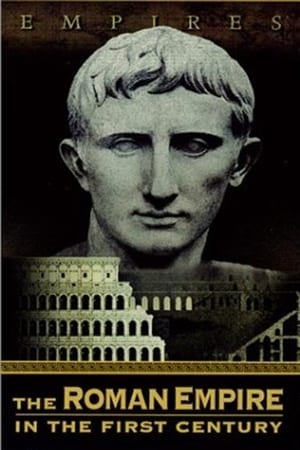
Narrated by Sir Derek Jacobi - star of the landmark television series "I, Claudius" - this documentary explores art and culture around the Bay of Naples before Mount Vesuvius erupted in AD 79. The bay was then the most fashionable destination for vacationing Romans. Julius Caesar, emperors, and senators were among those who owned sumptuous villas along its shores. Artists flocked to the region to create frescoes, sculpture, and luxurious objects in gold, silver, and glass for villa owners as well as residents of Pompeii and other towns in the shadow of Vesuvius. The film concludes with the story of the discovery of Pompeii and Herculaneum from the 18th century onward.
With a pair of scissors and some paper, he turned his art into a weapon the Nazis feared. A look back at the eventful career of satirist John Heartfield (1891-1968), pioneer of photomontage and modern graphic design.
Joe Brainard (1941-1994) was an artist particularly noted for his work in collage and comics. Brainard’s artistic career took off during his teenaged years in Tulsa, Oklahoma where, along with Ron Padgett and Dick Gallup, he produced The White Dove Review, an art and culture magazine. Both Brainard and Padgett serendipitously moved together to New York City, where Brainard was a prolific artist whose work was showcased in varied spaces such as the Museum of Modern Art and the Whitney Museum. He also frequently collaborated with members of the New York School of Poets, supplying book and cover art and bringing to life visual representations of poetry. Brainard’s writing also received acclaim, particularly his 1975 memoir I Remember.