The cultural roots of coal continue to permeate the rituals of daily life in Appalachia even as its economic power wanes. The journey of a coal miner’s daughter exploring the region’s dreams and myths, untangling the pain and beauty, as her community sits on the brink of massive change.
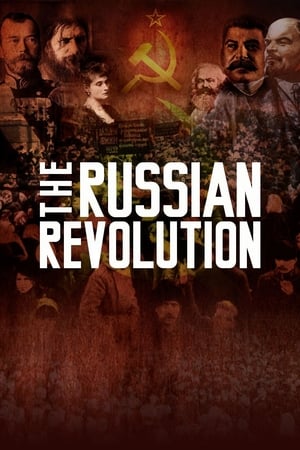
Starting in 1881 this film shows the personal battle between Lenin's Ulyanov family and the royal Romanovs that eventually led to the Russian revolution.
A documentary about a teacher who sends a group of pupils out of the classroom when one of them does not own up to talking behind the master's back.
Nefertiti's Daughters is a story of women, art and revolution. Told by prominent Egyptian artists, this documentary witnesses the critical role revolutionary street art played during the Egyptian uprisings. Focused on the role of women artists in the struggle for social and political change, it spotlights how the iconic graffiti of Queen Nefertiti placed her on the front lines in the ongoing fight for women's rights and freedom in Egypt today.
An asylum seeker from Hong Kong builds a new life for himself in Glasgow, using his passion for street food to maintain his cultural identity.
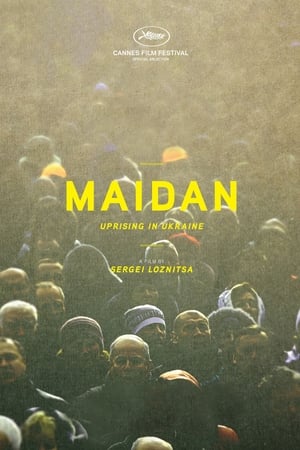
A chronicle of the civil uprising against the regime of Ukrainian president Viktor Yanukovych that took place in Kyiv in the winter of 2013/14. The film follows the progress of the revolution: from peaceful rallies, half a million strong in the Maidan square, to the bloody street battles between protesters and riot police.
Dr. Helen Caldicott is the most prominent anti-nuclear activist in the world. She's been featured on CNN, 60 Minutes, CBC and Democracy Now. In the 80s, Helen Caldicott campaigned against nuclear weapons testing in the pacific (still responsible today for the majority of tritium we're exposed to), and against the notion of a winnable nuclear war. She was nominated for a Nobel Peace Prize for her efforts. She has always made inaccurate statements regarding civilian nuclear power. But, since the Fukushima-Diachii radiation release has caused (and is projected to cause) zero fatalities... http://www.unis.unvienna.org/unis/en/... ...her tone has changed when speaking to supporters. This has not been acknowledged by prime-time media, as they continue to use her as a source. Any person or media outlet should check Caldicott's history of statements (on any subject) against a domain expert before using her as a source.
Everyone knows the story of Paul Revere and his famous midnight ride to warn colonial forces of the British approach. But history books don't tell of the man who sent Revere on his mission: Joseph Warren, America's least remembered founding father. Uncover the forgotten history of Warren and stories of other unsung heroes in our fight for independence in The American Revolution.
Documentary film about the path to Lithuania's energy independence.
It is the early 70s, and oil has been discovered in the North Sea. The UK needs rigs and needs them fast. Their search for a location to build the platforms settles on the sleepy Highland bay of Nigg on the Cromarty Firth, and a way of life is changed for ever.
Follow the shocking, yet humorous, journey of an aspiring environmentalist, as he daringly seeks to find the real solution to the most pressing environmental issues and true path to sustainability.
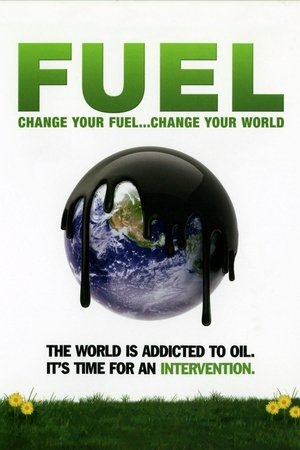
Record high oil prices, global warming, and an insatiable demand for energy: these issues define our generation. The film exposes shocking connections between the auto industry, the oil industry, and the government, while exploring alternative energies such as solar, wind, electricity, and non-food-based biofuels.
Documentary filmmaker Robert Kenner examines how mammoth corporations have taken over all aspects of the food chain in the United States, from the farms where our food is grown to the chain restaurants and supermarkets where it's sold. Narrated by author and activist Eric Schlosser, the film features interviews with average Americans about their dietary habits, commentary from food experts like Michael Pollan and unsettling footage shot inside large-scale animal processing plants.
October 2018, France. Macron’s government decrees a tax increase on the price of fuel. A wave of protests starts to grow. Citizens mobilize throughout the country: this is the beginning of the Yellow Vests movement. In Chartres, a group of men and women gather daily. Among them, Agnès, Benoît, Nathalie and Allan commit themselves to the collective struggle. Like a whole nation, they discover that they have a voice to be heard...
Oriana Fallaci, the Italian journalist who is noted for her provocative interviews, interviews the leader of the Islamic Revolution, the Ayatollah Ruhollah Khomeini, on Sept 12, 1979. For 10 days Oriana Fallaci waited in the holy city of Qum for her interview with the 79 year old Ayatollah, who is the de facto ruler of Iran. On Sept. 12, she was led into the Faizeyah religious school, where Khomeini holds his audiences. She was accompanied by two Iranians Nyho and Iran prime minster Banisadr who had helped set up the interview and who served as translators. Oriana Fallaci, barefoot, enveloped in a chador, the head to toe veil of the Moslem woman, was seated on a carpet, when the Ayatollah entered, and the recorded interview could begin.
In the mountains of Córdoba hides a historical scar. In 1575, hundreds of Hênia-Kâmîare women, children and elders jumped off in order to avoid slavery. A free, poetic view at the very place where the largest mass suicide in the history of the territory known today as Argentina took place. The film is a phantasmagoric trip within this geographical extension, taking it as a vast, green cemetery.
What happens to two dying coal towns in British Columbia when an American corporation provides a contract for millions of tons of coking coal? The film follows the consequences for the towns of Natal and Michel, suggesting that industrial growth has its price, especially with regard to the environment.
Follows Bradley - only the third American coach to manage a foreign team - his wife, Lindsay, his staff and his players. In gaining access to the training camps and providing in-depth coverage of the Pharaohs' games in Africa, the filmmakers document the team's personal and professional struggles to keep their eyes on the prize of getting to the World Cup while living in and representing a country in turmoil.
Every New Year, and in celebration of their Independence, Haitian families gather together to feast in honor of a line of ancestors that fought for their freedom. The centerpiece of the festivity is the joumou soup—a traditional soup dating back centuries ago. The joumou soup is a concretization of war and victory, oppression and emancipation, and the deeply rooted celebratory traditions of the Haitian culture.
It is happening all across America-rural landowners wake up one day to find a lucrative offer from an energy company wanting to lease their property. Reason? The company hopes to tap into a reservoir dubbed the "Saudi Arabia of natural gas." Halliburton developed a way to get the gas out of the ground-a hydraulic drilling process called "fracking"-and suddenly America finds itself on the precipice of becoming an energy superpower.