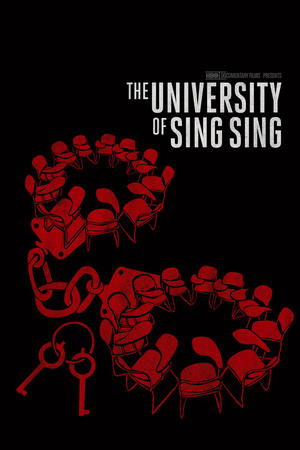
A documentary about juveniles who are serving life in prison without parole and their victims' families.
A documentary about Goran Ivandic 'Ipe', the drummer of most popular Yugoslav rock band of all time, Sarajevo-based "Bijelo dugme" (White Button). Ivandic's fatal jump from the balcony of hotel Metropol in Belgrade in 1994 sparked much controversy around his fate.
Chennu committed his first crime when he was 15 years old: being a street kid. And he entered hell: Pademba Road. The adult prison in Freetown. In hell, Mr. Sillah is in charge, and there is no hope. Chennu got out after four years. Now he wants to go back.
Metamorphosis is a documentary-style film giving the true account Bill Troester and the transformation he experienced by Jesus out of a life of violence, crime and drug addiction.
An absurd game of “finding happiness” is being played by local Latvian coyotes* and illegal immigrants on the Russian and the European Union border. It is a game with no winner – all participants are driven to play by the sense of despair. While one side leaves home and undertakes a perilous journey to the other side of the globe, hoping to spend the rest of their lives in a free country, the other side risks their freedom to earn a chance to stay right where they are, in their homeland. *coyote – someone who smuggles illegal immigrants
The Big One is an investigative documentary from director Michael Moore who goes around the country asking why big American corporations produce their product abroad where labor is cheaper while so many Americans are unemployed, losing their jobs, and would happily be hired by such companies as Nike.
Errol Morris examines the incidents of abuse and torture of suspected terrorists at the hands of U.S. forces at the Abu Ghraib prison.
For the third time, HBO cameras go inside Trenton State Maximum Security Prison--and inside the mind of one of the most prolific killers in U.S. history--in this gripping documentary. Mafia hit man Richard Kuklinski freely admits to killing more than 100 people, but in this special, he speaks with top psychiatrist Dr. Park Dietz in an effort to face the truth about his condition. Filled with more never-before-revealed confessions, it's the most chillingly candid Iceman special yet as it combines often-confrontational interview footage between Kuklinski and Dietz with photos, crime reenactments and home movies that add new layers to this evolving and fascinating story.
Que Esse Grito Não Seja em Vão!
On a blustery January day bishops arrive for the opening of the new Knutsford Test School.
An early Patwardhan documentary completed in 1978, Prisoners of Conscience focuses on the state of emergency imposed by Indira Ghandi from June 1975 through March 1977. During this time over 100,000 people were arrested without charge and imprisoned without trial. They were released only by the government that replaced Ghandi's. The film also shows that political prisoners existed in India before the state of emergency and continued after the new government was elected.
How to Fix the World? is a comprehensive and informative documentary about direct action in the 1990s and 2000s, directed by Jouko Aaltonen. In the documentary, anarchists, climate activists, and squatters openly describe their experiences and link them to mainstream phenomena in society. A wide range of archive material sheds a light on the history of direct action and activism in the Finnish society.
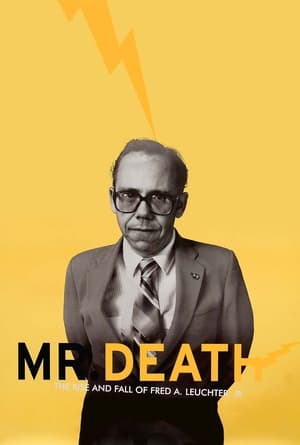
A portrait of the life and career of the infamous American execution device designer Fred A. Leuchter, Jr. Mr. Leuchter was an engineer who became an expert on execution devices and was later hired by holocaust revisionist historian Ernst Zundel to "prove" that there were no gas chambers at Auschwitz. Leuchter published a controversial report confirming Zundel's position, which ultimately ruined his own career. Most of the footage is of Leuchter, working in and around execution facilities or chipping away at the walls of Auschwitz, but Morris also interviews various historians, associates, and neighbors.
In the documentary Last To Know political prisoners, sent to jail for openly opposing the East German regime that existed until the German reunification in 1990, talk about their times of trial and their lives today. Neither they, nor their families have come to terms with what happened.
During the most celebrated cultural event on the island of Guam, USA (the annual Liberation Day Parade), a group of brave and determined youth come together to effect policy change on the use of alcohol and tobacco signage island-wide.
Impressionistic glimpses of London life from early morning to rush hour.
The warden of Halden, Norway's most humane prison, tours the U.S. prison system to urge a new approach emphasizing rehabilitation.
While locked-up for six years in federal prison, artist Jesse Krimes secretly creates monumental works of art—including an astonishing 40-foot mural made with prison bed sheets, hair gel, and newspaper. He smuggles out each panel piece-by-piece with the help of fellow artists, only seeing the mural in totality upon coming home. As Jesse's work captures the art world's attention, he struggles to adjust to life outside, living with the threat that any misstep will trigger a life sentence.
Building Communism isn’t just about destroying the status quo, it’s about bringing people together in the process.
The Stanford prison experiment was a landmark psychological study of the human response to captivity, in particular, to the real world circumstances of prison life, and the effects of imposed social roles on behaviour. It was conducted in 1971 by a team of researchers led by Philip Zimbardo of Stanford University.