In the final days of the American Civil War, an emigre Hungarian military officer attempts to map the situation of the enemy. Many veterans of the 1848 War of Independence in Hungary fought on the northern side. Experienced Fiala, Boldogh who struggles with homesickness and the reckless Vereczky all experience their enforced emigration in different ways and news of impending peace elicits different reactions from them all.
A taxi driver, a young girl and a backpacker simultaneously experience a wonderful journey in Tokyo, where they find connections to their own homes in Africa, Europe and Southeast Asia.Throughout their journey, they run into the same Japanese woman named Akiko. Meanwhile, a writer in Paris recalls her encounter with Akiko in Tokyo.
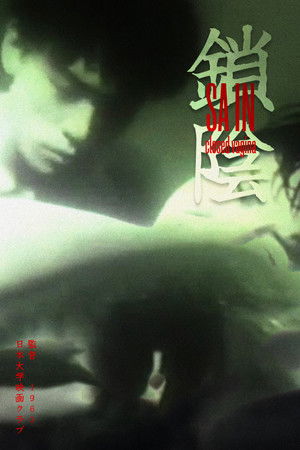
Adachi's follow-up to Bowl using the figure of a woman suffering from an unusual sexual aliment has often been taken as a controversial allegory for the political stalemate of the Leftist student movement after their impressive wave of massive fiery protests failed to defeat the neo-imperialist Japan-US Security Treaty. The ritualistic solemnity of the charged sexual scenes contribute to the oneiric qualities of Closed Vagina which Adachi would later insist was an open work, not meant to deliver any kind of deliberate political message. - Harvard Film Archive
The final 17 years of American singer and musician Karen Carpenter, performed almost entirely by modified Barbie dolls.
Miguel, a debutant director, and his young team live a series of tribulations during the shootings of their first film, which unrolls between Lisbon, Venice, Paris and Madrid.
Engel und Puppe is the first film by Italian filmmaker and writer Ellis Donda. Screened at Oberhausen in 1975, Engel und Puppe is a political adaptation of some lines from Rilke's Duino Elegies, featuring the French poet Jacqueline Risset and a young Rossella Or (soon to become an avant-garde theatre actress).
The daily lives of three young women that live together in a big city in Brazil and go through crucial moments in their lives.
Lacking a formal narrative, Warhol's mammoth film follows various residents of the Chelsea Hotel in 1966 New York City. The film was intended to be screened via dual projector set-up.
Colossal explores the complexities of grief and the process of grieving as understood through the myth of a Man as he ventures through shifting landscapes ruminating.
Basically an artist is also a terrorist, the protagonist thinks in an unguarded moment. And if he is a terrorist after all, then he might just as well be one. Not an instant product, but an experimental feature in which diary material is brought together to form an intriguing puzzle.
In the nineteenth century, a French adventurer sets off to establish a kingdom in the inhospitable South of Chile, uniting the feared Mapuche under him. The response of the Chilean army is devastating.
Sarah is a debt collector who lives among the inhabitants of the village of Guimbal on the island of Panay. She wants to find the young man who appeared to her in a dream and goes to the island of Negros. Here, as she interacts with the inhabitants, Sarah continues her search, gathering memories of life and war, dreams, myths, legends, songs and stories that she takes part in and at times revolve around her. She is the daughter of an ancient mermaid, a revolutionary, a primordial element, a virgin who was kidnapped and hidden away from the sunlight. “The film is a retelling of fragments of the American occupation. Dialogue, shot in the Hiligaynon language, is not translated but used as a tonal guide and a tool for narration. Using unscripted scenes shot where the main character was asked to merely interact with the villagers, I discard dialogue and draw meaning from peoples’ faces, voices, and actions, weaving an entirely different story through the use of subtitles and inter-titles.”
An anthology of one-minute films created by 51 international filmmakers on the theme of the death of cinema. Intended as an ode to 35mm, the film was screened one time only on a purpose-built 20x12 meter public cinema screen in the Port of Tallinn, Estonia, on 22 December 2011. A special projector was constructed for the event which allowed the actual filmstrip to be burnt at the same time as the film was shown.
A Hollywood actor grows tired of making the same corporate movies, so he moves to Argentina to find more experimental and meaningful work.
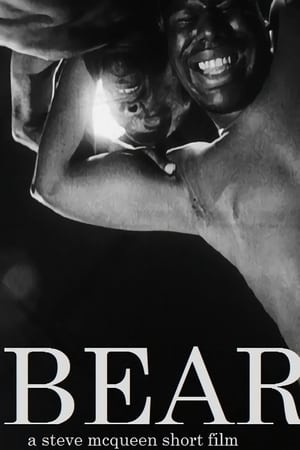
Bear (10 minutes, 35 seconds) was Steve McQueen's first major film. Although not an overtly political work, for many viewers it raises sensitive issues about race, homoeroticism and violence. It depicts two naked men – one of whom is the artist – tussling and teasing one another in an encounter which shifts between tenderness and aggression. The film is silent but a series of stares, glances and winks between the protagonists creates an optical language of flirtation and threat.
A Japanese salaryman finds his body transforming into a weapon through sheer rage after his son is kidnapped by a gang of violent thugs.
A divorced journalist Marko Požgaj starts his working day by taking his son to the school. During the day many thoughts and images pass through his mind - the memories of childhood, ex-wife, current girlfriend, but mostly his father who died in a war.
A bereaved epileptic ditches her pills and follows a mysterious woman to the outskirts of her town, where she slips back into the fearsome yet ecstatic throes of the seizure.
A surreal, moody short about the fetishisation of automobiles and auto accidents.
This is a time when we learn afresh that nothing lasts forever and that the variability is an integral part of everyday life. What is a river today does not mean that tomorrow will not become a sea. Life itself is one large metamorphosis, and the human being is its variable shape...