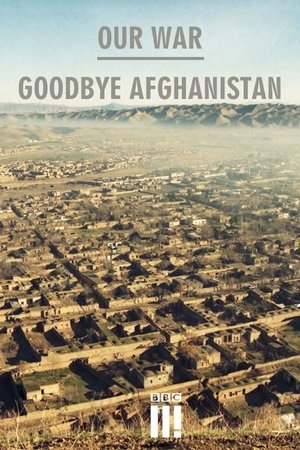
Annie Goldson and Kay Ellmers’ doco, expanded from the film they made for Maori Television, takes a timely look at New Zealand’s military and media, notably journalist Jon Stephenson, in Afghanistan.
French documentarist Sonia Kronlund follows actor and director Salim Shaheen, an Afghan movie star who produced more than 110 low-budget movies in a country devastated by war.
Afri, a three-time World Surfing Games participant, has spent a lifetime searching for the world's best coastlines for surf, but never in his home country of Afghanistan. Filmed in three continents, this documentary follows Afridun's journey back to his home country with the help of some river surfers to find surfable waves and bring a drop of joy to the people there. The group battles with continual challenges on their 10-day journey from raging whitewater to culture clash. Their inspiring mission uncovers a long lost mystical side of a country battling with conflict through breathtaking landscapes and the desire to discover something new.
Jung is a narrative documentary that follows the human and professional adventure of its protagonists, the Afghan people in the midst of civil war.
Amir, shot during the height of the Afghan civil war in the 1980s, investigates and portrays the life of Afghan refugees living in and around the city of Peshawar in northern Pakistan through the experiences of the musician Amir. The aspirations of Afghan refugees are expressed through their political songs dealing with the civil war in Afghanistan, with exile, with Afghan nationalism and with the Islamic revolution. In highly charged and tragic circumstances, music can be used in very direct ways, both to promote solidarity and as an agent of catharsis.
An in-depth look at the torture practices of the United States in Afghanistan, Iraq and Guantanamo Bay, focusing on an innocent taxi driver in Afghanistan who was tortured and killed in 2002.
According to the official history of Afghanistan, ruthless destruction has always prevailed over art and creation; but there is another tale to be told, the forgotten account of a diverse and progressive country, seen through the lens of innovative filmmakers, a story that survives thanks to a few brave Afghans, a small but very passionate group that secretly fought to save a huge film archive that was constantly menaced by war and religious fanaticism.
Fidelis Cloer is a self-confessed war profiteer who found The Perfect War when the US invaded Iraq. It wasn't about selling a dozen cars, or even a hundred, it was a thousand-car war where security would become the ultimate product.
In March 2001, the ruling Taliban destroyed Afghanistan's foremost tourist attraction, the 1600 year-old Buddhas of Bamiyan. This film follows the story of one of the refugees who now lives among the ruins….an eight-year-old boy named Mir.
The four Afghan refugees who have applied for asylum in Austria strike up the song, “The caravan moves on” again and again. Encouraged by the journalist Lucy Ashton to record their lives on their smartphone cameras as a video diary, the friends film their precarious daily routine between visits to authorities, small jobs, and changing accommodations. Yet even when hope is lost, one certainty remains: the power of friendship.
Recounted mostly through animation to protect his identity, Amin looks back over his past as a child refugee from Afghanistan as he grapples with a secret he’s kept hidden for 20 years.
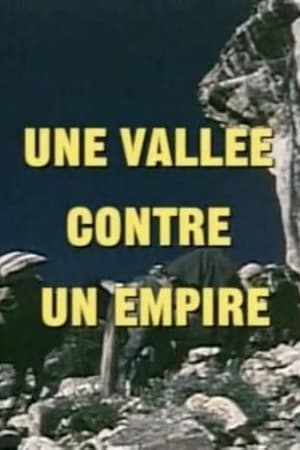
The friendship between Christophe de Ponfilly and Commander Massoud, a legendary figure of the Afghan resistance against the Soviet invader, goes back to the filmmaker's first film, "A Valley Against an Empire", made in 1981. Fifteen years later, weakened, isolated, betrayed by many of his own, the "Lion of Panshir" has not surrendered to his new and implacable enemies, the Taliban. While preparing his next offensive, he evokes his commitment and his fights, and bears witness to a history in which he has been one of the main actors for twenty years. At the same time, the director questions the role and power of the media, as well as his own approach as a filmmaker. Commander Massoud was killed in an attack in September 2001.
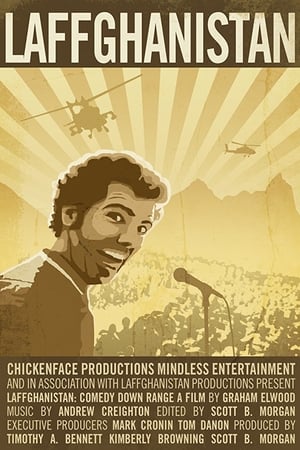
Stand up comedian Graham Elwood's journey physically, and emotionally, as he travels through Afghanistan's war zones to entertain the embattled U.S. troops.
Controversal documentary focusing on events in Afghanistan in 2002 in which Danish soldiers handed over prisoners to the US Army even though USA no longer treated prisoners of war according to the Geneva Convention. Further, the film questions the Danish Prime Minister's reasons for getting Denmark involved in the so-called War Against Terrorism in Afghanistan in the first place.
One of our biggest music stars Gary Barlow faces his toughest gig when he heads to the harsh terrain of Afghanistan to perform an exclusive concert for British troops.
A documentary that reveals the underbelly of the global aid and investment industry. It's a complex web of interests that span the earth from powerful nations and multinational corporations to tribal and village leaders. This documentary offers unique insights into a multi-billion dollar world by investigating how aid dollars are spent.
A journey through the parts of Afghanistan that don't normally feature in news coverage to meet some amazing people and see fascinating places. Lyse Doucet uses her many years experience in Afghanistan to show a different side of a country which has been at war for 30 years.
Against a backdrop of war and poverty, Out of the Ashes, traces the extraordinary journey of a team of young, Afghan men, as they chase a seemingly impossible dream, shedding new light on a nation beyond that of burqas, bombs, drugs and devastation. This feature-length documentary follows the Afghan cricket team in their quest against the odds to qualify for the 2011 World Cup, premiering at the Edinburgh International Film Festival on 17th June. Backed by BBC Storyville and Oscar-winning director and cricket fan, Sam Mendes, 'Out of the Ashes' follows the squad over two years as they go from playing in their shalwar-kameezes on rubble pitches to batting their way around the globe and up the international league tables.
What happens when a group of hairdressers from America travel to Kabul with the intention of telling Afghan women how to do hair and makeup? This engaging, optimistic documentary tracks a unique development project: a shiny new beauty school, funded in part by beauty-industry mainstays, which sets out to teach the latest cutting, coloring, and perming techniques to practicing and aspiring Afghan hairdressers and beauticians. The American teachers, all volunteers, include three Afghan-Americans returning home for the first time in over twenty years. The Beauty Academy of Kabul offers a rare glimpse into Afghan women’s lives, and documents the poignant and often humorous process through which women with very different experiences of life come to learn about one another.
When NATO troops withdrew from Afghanistan, the Afghan National Army (ANA) took over control of Helmand Province, an extremely dangerous region where attacks by Taliban fighters are the order of the day. Security, much less peace, would seem to be unattainable; it is even difficult to find a common language in a country where everyone mistrusts each other. The directors of this film accompanied an ANA company during a year of frontline duty in Helmand. The soldiers are paid irregularly, there are not enough supplies and their equipment is substandard. They cannot fight a war with the equipment left behind by the ISAF.