He described his love of art as his greatest inclination from his youth: Johann Joachim Winckelmann as a representative and rediscoverer of Greek and Roman antiquity. He was the father of European art history and was the victim of a robbery-murder in 1768. The documentary tells of his life, his work and his early death.
2010 documentary film on the Armenian Genocide by the Young Turk government of the Ottoman Empire during World War I. It is based on eyewitness reports by European and American personnel stationed in the Near East at the time, Armenian survivors and other contemporary witnesses which are recited by modern German actors.
From May 10, 1940, France is living one of the worst tragedies of it history. In a few weeks, the country folds, and then collapsed in facing the attack of the Nazi Germany. On June 1940, each day is a tragedy. For the first time, thanks to historic revelations, and to numerous never seen before images and documents and reenacted situations of the time, this film recounts the incredible stories of those men and women trapped in the torment of this great chaos.
Bombarded by thousands of images every day, are we still able to truly see them, especially those of conflict and its aftermath? Helen Doyle takes us on a quest for the meaning of images and discovers a vast palette of contrasting images which shock and compel.
How do you find your place in an ableist world as a person with a disability? Disabled Hugo Schmidt talks to the almost 90 year old Franz-Josef Sauer, who was left with a walking impairment by a tuberculosis infection in his childhood. In the 1990s Sauer received the German Federal Cross of Merit for his achievements in the disabled community. As a public servant in Münster and Düsseldorf he worked on several projects which still benefit his disabled peers. Sauer and Schmidt discover that, although they were born almost 70 years apart, their paths in life are not that different from each other.
There could hardly be a more telling contrast between the analog and digital eras than the beautifully blurry memories captured in a Polaroid picture and the thousands of pin-sharp photos on an iPhone. In this ambitious visual essay, Willem Baptist explores the visionary genius of Edwin H. Land, the inventor of the Polaroid camera. Even today, all sorts of people are keeping his instant dream alive. Former Polaroid employee Stephen Herchen moved from the United States to Europe to work in a laboratory developing the 2.0 version of Polaroid. Christopher Bonanos, the author of Instant: The Story of Polaroid, tells us, "When I heard Polaroid would stop making film, it felt like a close friend had died." Artist Stefanie Schneider, who is working with the last of her stock of Polaroid film, is using the blurring that occurs with expired film as an additional aesthetic layer in her photographic work.
A photoshoot on the roofs and in the streets of Paris, under the astonished eyes of the inhabitants.
NUDE explores perceptions of nudity in art by chronicling the creative process of photographer David Bellemere as he's commissioned by NU Muses founder Steve Shaw to shoot a fine art calendar of nude photographs.
Errol Morris examines the incidents of abuse and torture of suspected terrorists at the hands of U.S. forces at the Abu Ghraib prison.
Blending drama with the explanations of passionate historians and specialists, this enriched historical reconstruction traces 60 years in the life a man who transformed the Middle Ages and laid the foundation of modern Europe, William The Conqueror.
In the mountains of Chiapas, a rebel experiment in autonomy continues to thrive – thirty years after its declaration of war against the Mexican state. ¡Ya Basta! 30 Years of Zapatista Autonomy, a Modern Insurgent documentary, explores the legacy and future of the EZLN, reflecting on how a masked, rural rebellion reshaped Mexico’s political landscape and inspired activists across the globe. What does revolution look like when it refuses to seize state power? And what can the world learn from a community that continues to build its own system from the ground up?
A team of scientists search for the lost island of Testerep in front of the Belgian coast, venturing into artificial landscapes and virtual realities.
Legendary photographer and director Anton Corbijn is responsible for many of the most indelible and important images of the past two and a half decades. His recently released book U2 & I is a photographic retrospective of his 25 year collaboration with U2. Later this year, Anton will direct his first feature film, Control, based on the life of the late Joy Division lead singer Ian Curtis.
In the 1970s, the Spanish dictatorship opened up to the outside world and allowed a group of Danes to build Tivoli World, the first amusement park on the Costa del Sol, a copy of Tivoli Garden in Copenhagen.
People looking at the Mona Lisa in the Louvre – or are they just looking at themselves?
Filmed in IMAX, a young Mayan boy who lives close to the ruins becomes acquainted with an archaeologist (Guerra) and asks her to tell him about his ancestors. The crew travelled to over 15 locations in Mexico and Guatemala, including Tulum and Chichén Itzá.
A documentary about Academy Award-winning costume designer Cecil Beaton. A respected photographer, artist, and set designer, Beaton was best known for designing on award-winning films such as 'Gigi' (1958) and 'My Fair Lady' (1964). The film features archive footage and interviews with a number of models, artists, and filmmakers who worked closely with Beaton during his illustrious career.
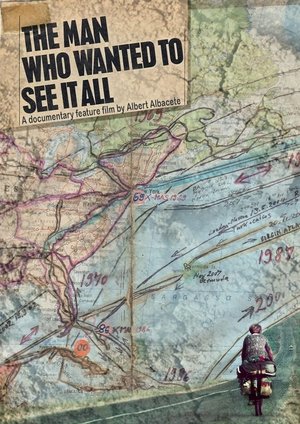
Heinz Stücke left Germany in 1962 with a bike, a tent and a goal: to see everything in the world. Now for the first time in 50 years, he's come home.
Bandera, Texas (THE COWBOY CAPITAL OF THE WORLD) is a captivating documentary that explores the vibrant history, unique culture, and enduring values of the small town of Bandera, Texas.
Vignettes of life in the village Kryvorivnya in the Carpathian Mountains of Ukraine, where once the novel "Shadows of Forgotten Ancestors" was written and later filmed and where, to this day, the passage of time has its own pace.