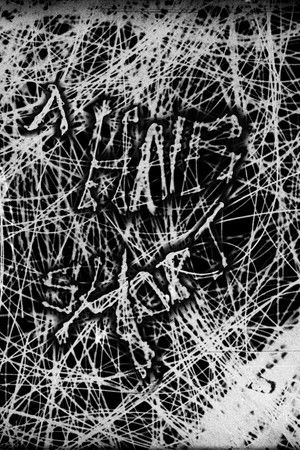
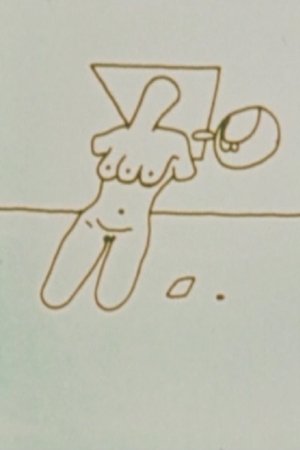
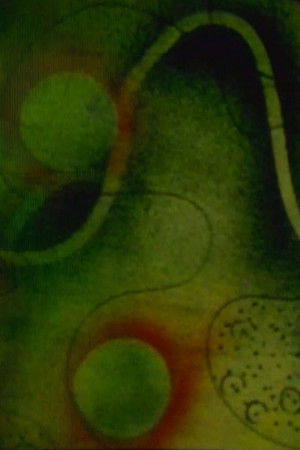
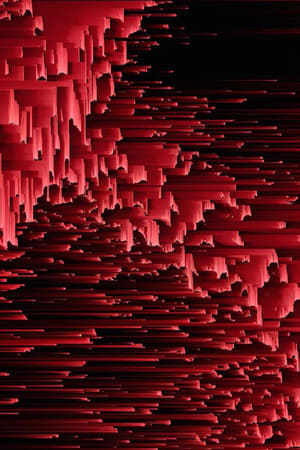
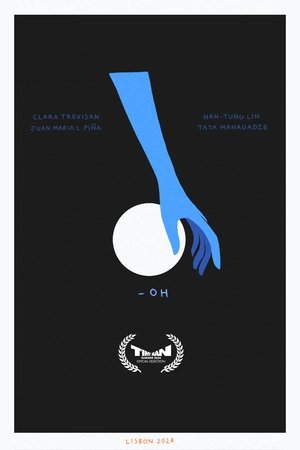
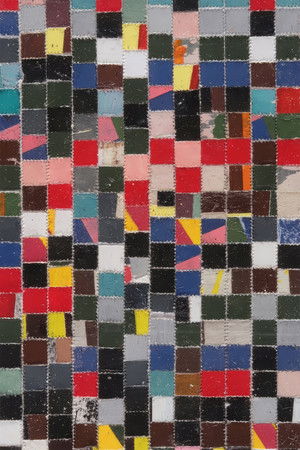
Confined to an endlessly burning waiting room, a dying sedentary woman experiences herself blurring in and out of her body. In her last remaining fragments she tries to make amends with her spirit before her remaining fragments either decay or create.
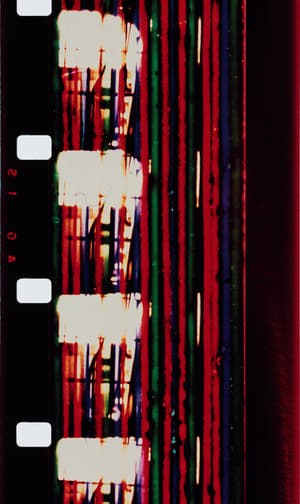
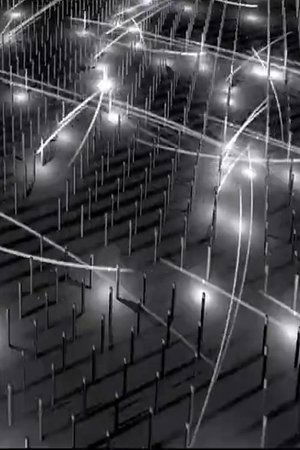
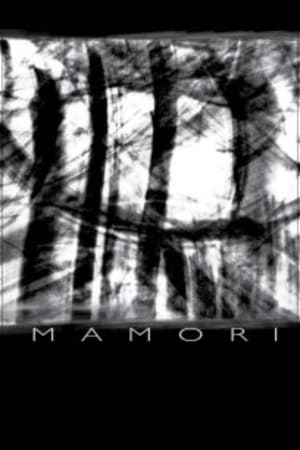
Mamori transports us into a black-and-white universe of fluid shapes, dappled and striated with shadows and light, where the texture of the visuals and of the celluloid itself have been transformed through the filmmaker’s artistry. The raw material of images and sounds was captured in the Amazon rainforest by filmmaker Karl Lemieux and avant-garde composer Francisco López, a specialist in field recordings. Re-filming the photographs on 16 mm stock, then developing the film stock itself and digitally editing the whole, Lemieux transmutes the raw images and accompanying sounds into an intense sensory experience at the outer limits of representation and abstraction. Fragmented musical phrases filter through the soundtrack, evoking in our imagination the clamour of the tropical rainforest in this remote Amazonian location called Mamori.
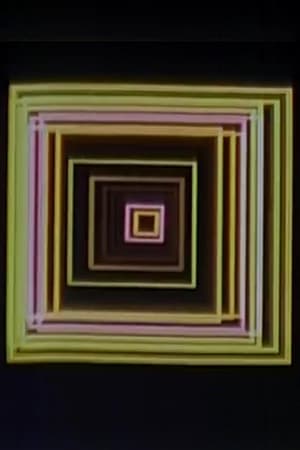
High Voltage is constructed from footage James Whitney contributed to Belson for use in one of his Vortex concerts.
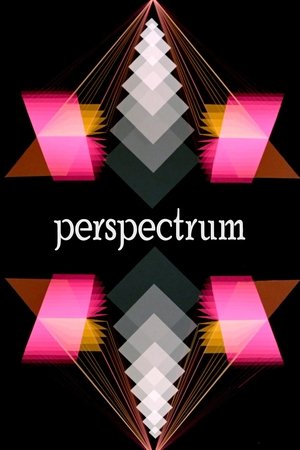
An attempt to visualize higher dimensions and unearthliness, taking into account these concepts' heightened awareness, when attempting to process or predict the end of the world.
This is no animation, it's one picture. Short experimental film by Mirai Mizue
This short experiments with the flow of oil ink over the surface of the water. Mizue manipulated the ink by blowing with straws or stirring with toothpicks and used stop motion animation techniques to shoot the resulting effects.
An abstract animated film inspired by the work of jazz musician Chico Hamilton.
This newly rediscovered short was created in Jim's home studio in Bethesda, MD around 1961. It is one of several experimental shorts inspired by the music of jazz great Chico Hamilton. At the end, in footage probably shot by Jerry Juhl, Jim demonstrates his working method.
The weird hand creatures undergo different transformations in synchrony with the music.
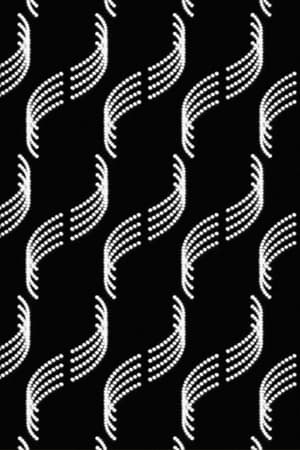
A mathematical play on one repeated movement. It imparts a sense of possibilities: that something simple can produce complex and unexpected patterns. As with an atom, the variety of possibilities from a base movement is potentially infinite.
Repetition and distortion drive this audiovisual collaboration between composer Lux Prima and visual artist Max Hattler, where fuzzy analogue music and geometric digital animation collide in an electronic feedback loop, spawning arrays of divisional articulations in time and space.
Enigma is something of a more glamorous version of White Hole, with a wide variety of elaborate textures (often composed of iconographic and religious symbols) converging towards the centre of the screen.
In this surrealistic and free-form follow-up to the Monkees' television show, the band frolic their way through a series of musical set pieces and vignettes containing humor and anti-establishment social commentary.
In the darkness of a cave, one man who had never seen even his own figure found a hollow flooded with light. An expression of a chaotic world. This experimental graduation film is a mixture of different animation techniques
Abstract animation by Boris Labbé
The working-class Smiths change their initially sunny views on World War I after the five boys of the family witness the harsh reality of trench warfare.
Jane Conger Belson Shimane's first film, Logos, premiered in 1957 and was screened at festivals in North America, Europe, and Latin America. The animated film featured an electronic score by Henry Jacobs. Preserved by the Academy Film Archive in 2001.
Astract stop-motion short film using "lightning doodles" by Tochka.
A film unmade-- That is, Survage's film was never realized in the traditional sense-- At the time, such a project was beyond technological possibility. His pioneering efforts to combine luminous, expressive painting and the moving picture were further curtailed by the outbreak of WWI. Some have taken it upon themselves to 'animate' his watercolor plates in attempts to set his dream into motion.
Len Lye usually timed his films with great care to match their soundtracks, but for All Souls Carnival, he and composer Henry Brant worked separately, preferring to see if the score and visual track would synchronise by chance. Lye also experimented with a new Direct Film technique, drenching the filmstrip in colourful paint and marker pen.