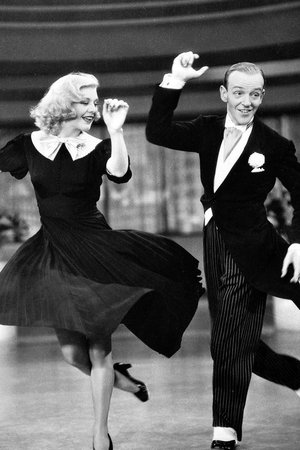
The remarkable spirit of tap dancers and their history provides a joyous backdrop for intimate portraits of hoofers Sandman Sims, Chuck Green, and Bunny Briggs.
The documentary portrayed one of the most established dance companies in Hong Kong which has a history of over four decades. With a tradition of blending Chinese dance and ballet together in the training, the dance company has set sail to re-evaluate its artistic essence by adapting new physical disciplines and philosophy, picking up different cultural traces, meditation and Chinese martial arts. Through monologues of the company members, the film unveiled their fears, self-doubts, and findings in their quest to refine their dance forms and express their cultural roots. It's an uncertain journey towards the cultivation of inner peace and the essence of movement and stillness.
This intimate ethnographic study of Voudoun dances and rituals was shot by Maya Deren during her years in Haiti (1947-1951); she never edited the footage, so this “finished” version was made by Teiji Ito and Cherel Ito after Deren’s death.
A documentary on the surviving syncretic pagan midwinter customs of the British Isles, focusing on nine ritual celebrations ranging from the Moray Firth in the north, the Somerset Levels in the south, Humberside in the east, and County Kerry in the west. Featuring music by the Albion Band and narration by John Tams.
The Art of Ohad Naharin - Volume 2 (Sadh21)
Matisse & Lydia
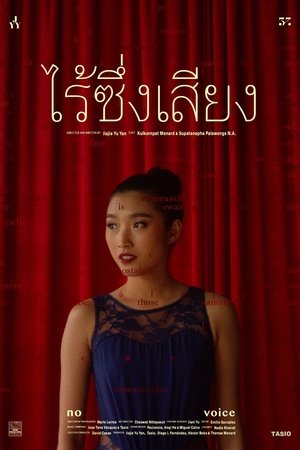
Around six to 15 percent of all people (study by John Hearst 2011) hear voices at some point in their lives. Many of them even live with their invisible companions for their entire lives. Well over half of voice hearers are mentally healthy and lead a completely unremarkable life. Despite this, voice hearers continue to be stigmatized and are subject to prejudice. As a result, few speak openly about their experiences. In recent decades in particular, however, voice hearing has been regarded as a symptom of impaired brain function. The documentary sheds light on the phenomenon. Sufferers describe the voices in their heads, as well as the thoughts and feelings they trigger in them, and scientists explain the causes that lead people to hear voices.
This documentary follows three couples to see how things turned out several years after their weddings. The film presents challenging ideas about relationships, as it answers the question: Why is marriage so difficult?
Sociologist David W. Wahl explores the identity work involved in Kay Parker shifting from being a legend of the adult film industry to her current occupation as a metaphysical counselor.
A brief history of the emergence and artistic innovations of tango in 19th-century Argentina and Europe. The film offers a mosaic of tango melodies, art works, dance performances, historical footage, photographs of Buenos Aires at the turn of the 20th century, and texts by Celedonio Flores and Enrique Santos Discépolo.
A document of Tatsumi Hijikata's Butoh dance with Kazuo Ohno as the guest dancer shot in Hijikata's early period when he was emerging as the originator of Butoh. All of the male dancers are dressed up with evening suits and move gracefully, yet an intruder breaks up the whole scene abruptly. The film is worth seeing, even if just to see a memorable gay duet of Hijikata and Ohno. Overexposed, washed out images are sandwiched among normal ones.
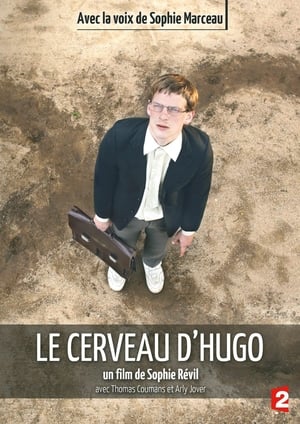
The Hugo's Brain is a French documentary-drama about autism. The documentary crosses authentic autistic stories with a fiction story about the life of an autistic (Hugo), from childhood to adulthood, portraying his difficulties and his handicap.
Follows the young people of Selma, Alabama's RATCo (Random Acts of Theatre Company) as they journey to New York City to share their story of hope, resilience, and overcoming.
Six California kids test their brains and talents against students in Odyssey of the Mind, a problem-solving competition requiring mechanical, creative and intellectual skills. With little money and zero adult participation, the teens build a robot to tell a story about bullying, exclusion and mental health. But how does their solution measure up?
The first woman to appear in front of an Edison motion picture camera and possibly the first woman to appear in a motion picture within the United States. In the film, Carmencita is recorded going through a routine she had been performing at Koster & Bial's in New York since February 1890.
After Awesome Tapes From Africa's Brian Shimkovitz found the energetic, ecstatic music of Ghanaian musician Ata Kak, the tunes became beloved around the world. It was all unbeknownst to the artist himself -- his music was even unknown to those living in his hometown in Ghana. Years of tireless searching ensued, and eventually the Los Angeles-based label owner found a lead. Ata Kak - Time Bomb follows the search that Shimkovitz undertook as well as the visit to Ghana that took place once he found him. It is a celebration of great tunes and how, when it hits the right audience at the right time, music can touch people in a way that you never imagined.
Four filmmakers working in the region of Galicia (in the northwest of Spain) follow and portray on the screen Galician artists working in disciplines of different nature. The result is four pieces around the creative process of these artists. Lois Patiño film their parents working on their paintings in their studio in Vigo, Jaione Camborda films dancer Janet Novás rehearsing for one of her pieces, Xisela Franco follows film director Margarita Ledo revisiting the location of her latest film Nation and Alfonso Zarauza reflects on the relationship between actress-director by putting together the work of Melania Cruz in two of their collaborations.
A debate about the presence of black culture in Brazilian contemporaneity, as well as the various paradoxes found in the environment of a society marked by a racist and slavery tradition.
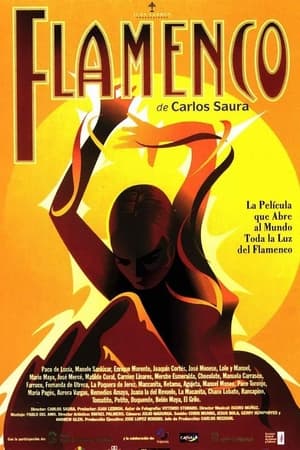
The film presents thirteen rhythms of flamenco, each with song, guitar, and dance: the up-tempo bularías, a brooding farruca, an anguished martinete, and a satiric fandango de huelva. There are tangos, a taranta, alegrías, siguiriyas, soleás, a guajira of patrician women, a petenera about a sentence to death, villancicos, and a final rumba.
"Something to Call Our Own" is a compelling documentary that delves into the origins, obstacles, and evolution of modern CHamoru dance. From the small island of Guam to the international stage of FestPAC, the documentary showcases the inspiring story of cultural revival, resilience, and the ongoing journey to reclaim and preserve a tradition that belongs to the CHamoru people. Once silenced by colonization, the CHamoru people rise—through song, chant, and dance. At the heart of this revival stands Master Frank Rabon, who dared to reimagine a lost tradition, giving it back to the generations who longed for it. From the shores of Guam to the world stage of FestPAC the CHamoru people reclaim their identity, their language, their pride. Through every movement, there’s a dance and with every dance they declare: We are still here and this is Something to Call Our Own.