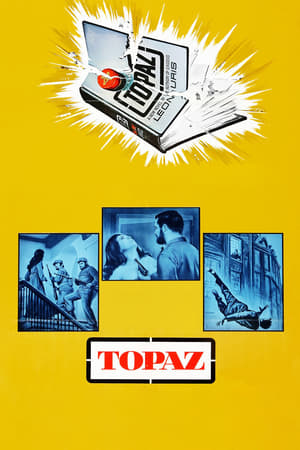
Copenhagen, Denmark, 1962. When a high-ranking Soviet official decides to change sides, a French intelligence agent is caught up in a cold, silent and bloody spy war in which his own family will play a decisive role.
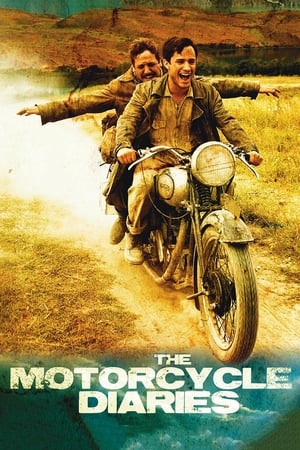
Based on the journals of Che Guevara, leader of the Cuban Revolution. In his memoirs, Guevara recounts adventures he and best friend Alberto Granado had while crossing South America by motorcycle in the early 1950s.
In pre-revolution Cuba, Katey Miller is about to defy everyone's expectations. Instead of a parent-approved suitor, Katey is drawn to the sexy waiter, Javier, who spends his nights dancing in Havana's nightclubs. As she secretly learns to dance with Javier, she learns the meanings of love, sensuality and independence.
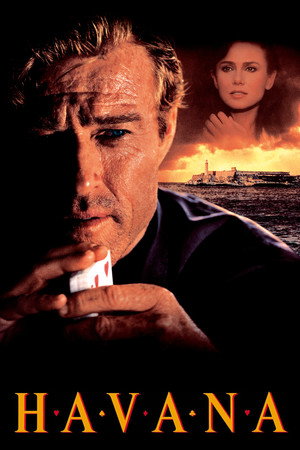
During the revolution, a high-stakes gambler arrives in Cuba seeking to win big in poker games. Along the way, he meets and falls in love with the wife of a Communist revolutionary.
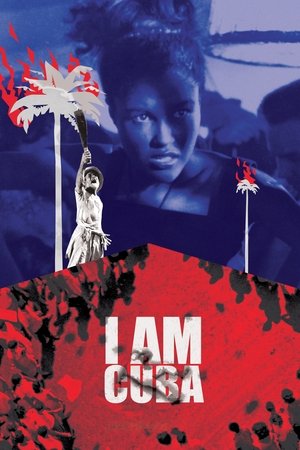
The Castro revolution was just consolidating its power when, in 1961, over 100,000 students were sent from their schools into the countryside to teach the peasants there how to read. Coinciding with the Bay of Pigs invasion, in this docudrama, 15-year-old Mario (Salvador Wood) has come to a tiny village in the Zapata swamps and gradually wins the villagers over to his task. At the same time, he receives an education in the realities of rural life from the hard-working peasants.
Ana Deborah Mola and Belkis Lescaille were among the first young teachers who started pilot programs around the island of Cuba in 1960, laying foundation for the massive National Literacy Campaign that would take place the following year.
The friendship between two children is threatened by their parents’ differences. Malú is from a family that was upper-class before the Revolution and remains well-to-do through remittances from relatives overseas, and her single mother (Larisa Vega Alamar) does not want her to play with Jorgito, as she thinks his background coarse and commonplace. Jorgito’s mother (Luisa María Jiménez Rodríguez),
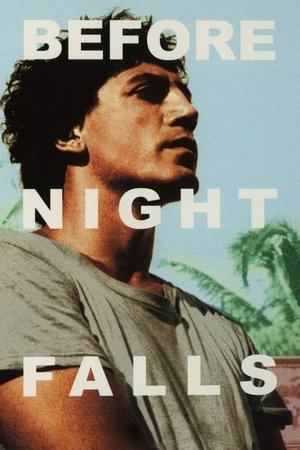
Spanning several decades, this powerful biopic offers a glimpse into the life of famed Cuban poet and novelist Reinaldo Arenas, an artist who was vilified for his homosexuality in Fidel Castro's Cuba.
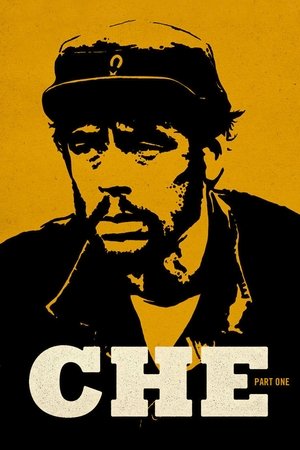
Ernesto Guevara, known as 'Che', leads a group of Cuban exiles under Fidel Castro in a revolution to overthrow Fulgencio Batista, the dictator of Cuba.
In 1672 Cuban revolutionaries launch an uprising against the Spanish who are occupying the country. Preserved by the Academy Film Archive in 2017.
GDR 1961: Tamara Bunke, daughter of Jewish exiles from Argentina, not only falls for the political goals of the rousing revolutionary Che Guevara during a state visit. She also meets Ulises Estrada, the commandant of Che's team. Ignited by the fire of the revolution, she gets involved in a diabolical espionage deal with the Stasi in order to cheat her way out of Cuba. In Cuba, she ends up caught between all fronts: under the watchful eye of the Stasi, which expects results from her, but in reality solely dedicated to Che's revolution, Tamara allows herself to be trained as a double spy by Che's troops. At the same time, her honest love grows for Commandante Ulises, who eventually gives her the choice of following her personal happiness and going into hiding rather than following Che's plans to liberate South America, which by now he considers a suicide mission. An unresolvable, deeply tragic conflict that ends fatally for Tamara in the battle of Bolivia's Rio Grande..
From millions of photos, posters, videos, t-shirts, postcards, records, books, phrases, testimonies, Che watches over us. Beyond all paraphernalia, he returns. Irreverent, mocking, stubborn - morally stubborn - Che will always be the subject of debate. The exclusive teleSUR series “Ernesto Guevara, also known as 'Che'”, aims to address the figure of Ernesto Guevara as it has never been told before. Conversing with the characters who were with him in important moments, visiting the real settings where Che spent his life.
After the triumph of the Revolution, the construction of a new society reshapes the lives of a group of characters, forcing each of them to confront a transformed future. Luis, a young, poor Black man; Fernando, an exiled professor returning to his homeland; Rafael, a labor leader, and his daughter Niurka; and Ricardo, a young bourgeois who fought against the tyranny but now resists the loss of his former social status. Each will be pushed to extreme situations that compel them to redefine themselves in relation to the new meaning the Revolution has given to their lives.
An American lesbian in Cuba explores gender through dance and film, blending personal experiences and cultural symbols with music and Revolutionary cinema and questions how lesbians fit into Cuban cinema.
A documentary vignette explores the life of Revolutionary feminist and filmmaker Magda Gonzalez Grau, capturing a pivotal interview moment that reveals her evolving feminist politics during the Cuban Revolution.
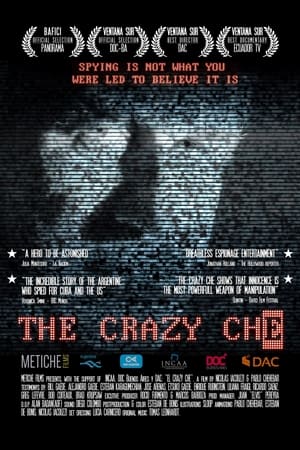
The incredible story of Bill Gaede, an Argentinian engineer, programmer… and Cold War spy.
Centered on the six years before the fall of Batista's dictatorship and the subsequent 40 years of the Cuban Revolution.
In Cienfuegos in the 1980s, a poetic young girl tries to make sense of her parents' volatile separation while keenly observing the reality of Cuba's dilemmas.
The first years of the Cuban Revolution characterized by social transformations and class struggles.
In 1950s Havana, a romance blooms between two young revolutionaries whose clandestine printing press publishes pamphlets meant to stir up rebellion against the dictatorship of Fulgencio Batista. As their popularity grows, so, too, does their revolutionary zeal and their desire to mobilize other urban guerilla units.