The Kalaallit people of Greenland have been intimately connected to the eternal ice for millennia. These massive glaciers stand as records of ancient eras of the planet – but recently they began disappearing. As the foundation of their traditions literally melts beneath their feet, members of the Kalaallit community work with artists to capture the images and stories of a vanishing landscape and way of life.
This documentary looks at the stories that take place around a unique 1.5 kilometre long bamboo bridge that for generations has been built every year following the rhythms of nature across the Mekong River to join the rural community of Koh Paen to the city of Kampong Cham in Cambodia.
In the remote village of El Echo that exists outside of time, the children care for the sheep and their elders. While the frost and drought punish the land, they learn to understand death, illness and love with each act, word and silence of their parents. A story about the echo of what clings to the soul, about the certainty of shelter provided by those around us, about rebellion and vertigo in the face of life. About growing up.
Dinner for Wan(ne)
Khaïma
The Kuwaiti short film العاصفة (The Storm) explores Kuwait's social and economic shifts before and after the discovery of oil. Through the perspectives of an older father and his modernized son, it delves into the challenges of tradition versus rapid modernization.
It was a different time! The female contestants on an Irish TV show with an iconic gentleman host look back on a beige-coloured chapter in TV history. More than entertaining kitsch, and with some delightfully quick-witted ladies in the winning role.
The Shipibo-Konibo people of Peruvian Amazon decorate their pottery, jewelry, textiles, and body art with complex geometric patterns called kené. These patterns also have corresponding songs, called icaros, which are integral to the Shipibo way of life. This documentary explores these unique art forms, and one Shipibo family's efforts to safeguard the tradition.
Highlighting the unique culture of the Zapotec people of Oaxaca, Mexico, this groundbreaking documentary chronicles the lives of those who identify as muxes, a widely recognized third gender.
When a Mongolian nomadic family's newest camel colt is rejected by its mother, a musician is needed for a ritual to change her mind.
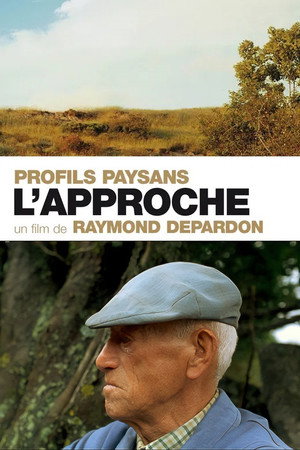
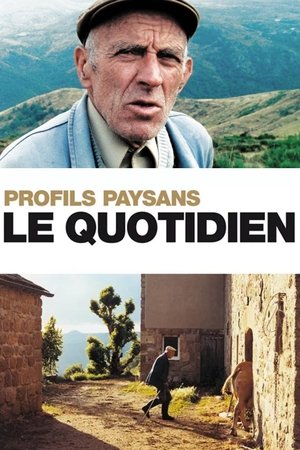
For ten years, Raymond Depardon has followed the lives of farmer living in the mountain ranges. He allows us to enter their farms with astounding naturalness. This moving film speaks, with great serenity, of our roots and of the future of the people who work on the land. This the last part of Depardon's triptych "Profils paysans" about what it is like to be a farmer today in an isolated highland area in France. "La vie moderne" examines what has become of the persons he has followed for ten years, while featuring younger people who try to farm or raise cattle or poultry, come hell or high water.
In the coldest waters surrounding Newfoundland's rugged Fogo Island, "people of the fish"—traditional fishers—catch cod live by hand, one at a time, by hook and line. After a 20-year moratorium on North Atlantic cod, the stocks are returning. These fishers are leading a revolution in sustainability, taking their premium product directly to the commercial market for the first time. Travel with them from the early morning hours, spend time on the ocean, and witness the intricacies of a 500-year-old tradition that's making a comeback.
Dríades
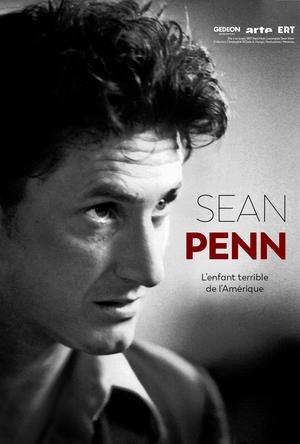
Sean Penn is almost a living legend. His filmography paints a picture of an 'other America': the lower class, the oppressed and the outsiders. Whether as an actor or director, he turns all the great myths upside down.
In this layered short film, filmmaker Janine Windolph takes her young sons fishing with their kokum (grandmother), a residential school survivor who retains a deep knowledge and memory of the land. The act of reconnecting with their homeland is a cultural and familial healing journey for the boys, who are growing up in the city. It’s also a powerful form of resistance for the women.
On the night of 3 August 1996 a school of striped dolphins ran ashore near the village of Tuo on Ngasinue/Fenualoa Island in the Reef Islands (Solomon Islands). Dolphins have a special kinship-related link to the Aiwoo-speaking people in Tuo. Moffat Bonunga tells the legend or so-called local kastom story that explains why. Moffat's explanations are linked with those of another local expert, Commins Veio, who tells his version of the story to Nathaniel Meningi inside the men's house (sapolau) in Tuo. The night the dolphins run ashore, Moffat immediately contacts the film crew - the villagers want the crew to film this peculiar phenomenon. Although the film focuses on the kastom story and the villagers' re-enactment of the hunt, it also documents the villagers' joy that the sea once again has proved an important source of food.
Hildy Young, a fun-loving 30-something with abandonment issues, becomes convinced that her dating problems will be resolved if she can only track down the father she never knew. When she finds him, she discovers that he's a contract killer and that she may have found her calling.
A Tainha e a Onda
Short documentary film that captures the spirit of a new generation of Latvian jazz musicians shaping the contemporary sound of Latvia. With a poetic visual style and personal reflections from the artists themselves, the film explores how jazz becomes a dialogue between generations — a space of tension, competition, and ultimately, self-discovery.
Hold mig fast. Før jeg forsvinder