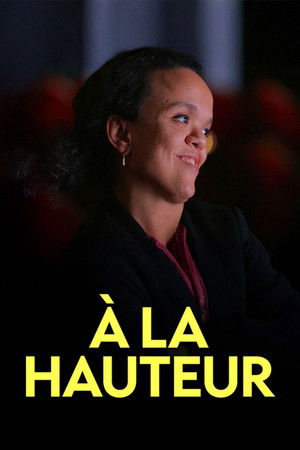
Afghan documentary maker Najiba Noori offers not only a loving and intimate portrait of her mother Hawa, but also shows in detail how the arduous improvement of the position of women is undone by geopolitical violence. The film follows the fortunes of Noori’s family, who belong to the Hazaras, an ethnic group that has suffered greatly from discrimination and persecution.
On November 13, 2015, the attacks in Paris and Saint-Denis, carried out by three Islamist commandos and claimed by ISIS, were the deadliest in France since the end of World War II. In the months that followed, the November 13 Program was launched by the CNRS and Inserm to study the construction of individual and collective memory around an event that profoundly marked French society. Today, the testimonies of 27 volunteers—among some 1,000 people—who participated in the study form a mosaic of experiences that shows how trauma extends beyond the immediate circle to permeate the national collective memory.
Béatrice Dalle, à prendre ou à laisser
In 1989, prostitute Aileen Wuornos befriends and enters a relationship with a young woman named Selby. Determined to straighten out her life, Aileen's limited education lands her back on the corner. She's raped by a trick, who she kills. A string of murder and robbery follows that ultimately leads Aileen to becoming America's first female serial killer.
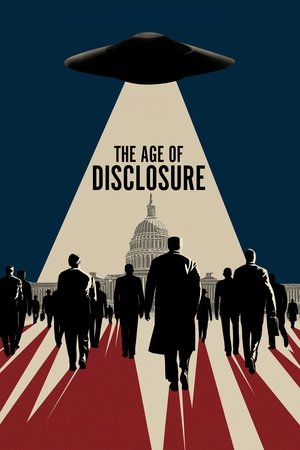
Discover the UFO phenomenon like never before, with insights from NASA, CNES, Oxford, compelling firsthand witnesses, and even the possible viewpoint of extraterrestrial visitors.
Sherlock Holmes investigates a series of so-called "pajama suicides". He knows the female villain behind them is as cunning as Moriarty and as venomous as a spider.
Never before in Russian history has the Russian domestic intelligence services been more powerful than today. The FSB is a murky organisation that can ruin people’s lives who are deemed enemies of the Russian state and even commit murder on behalf of the Kremlin. Four people in exile open up about their experiences with the FSB.
Vivre dans l'Allemagne en guerre
In a brand-new documentary, the actress who portrayed the unforgettable Émilie Bordeleau revisits her memories of filming and analyzes the cultural legacy of this cult saga. By exploring the timeless power of its characters, she testifies to the major impact this work has had on the collective imagination and on the history of Québec television.
Writing late becomes usual, we are always too late. Boris was my alter ego and I was his alter ego. Now that he is no longer here, I can be honest.
As Australian cinema broke through to international audiences in the 1970s through respected art house films like Peter Weir's "Picnic At Hanging Rock," a new underground of low-budget exploitation filmmakers were turning out considerably less highbrow fare. Documentary filmmaker Mark Hartley explores this unbridled era of sex and violence, complete with clips from some of the scene's most outrageous flicks and interviews with the renegade filmmakers themselves.
Inoffensifs, mes implants ?
Most of us think of death as something clear-cut, and that medical science has it neatly figured out. This feature documentary explodes such assumptions through its exploration of a phenomenon that blurs life and death to an unprecedented degree. In what Tibetan Buddhists call tukdam, advanced meditators die in a consciously controlled manner. Though dead according to our biomedical standards, they often stay sitting upright in meditation; remarkably, their bodies remain fresh and lifelike, without signs of decay for days, sometimes weeks after clinical death. Following ground-breaking scientific research into tukdam and taking us into intimate death stories of Tibetan meditators, the film juxtaposes scientific and Tibetan perspectives as it tries to unravel the mystery of tukdam.
Has the time of women finally come? Have their everyday lives truly changed over the past sixty years? Guided by Agnès Jaoui, women—famous and unknown—share their stories across generations. From childhood to retirement, the documentary traces shared experiences shaped by prejudice, but also by hope, strength, and humor. Blending personal archives, historic moments, and social media footage, the film places women at the center of their own story. Welcome to the Time of Women.
An unflinching and deeply personal journey into the life and work of guitarist Eric Clapton told through his own words and songs.
This documentary looks back on a career of a woman who, very early on, refused to accept the roles assigned to her. In the 1980s, while others were trying to please, she wrote "Les hommes préfèrent les grosses" (Men Prefer Fat Women), a manifesto ahead of its time, funny, feminist, and blunt. Later, with "Gazon maudit" (Damned Grass), she tackled homosexuality with a freedom that is still shocking today.
When the Department of Physical Education cries theft after the disappearance of a school-owned football, a reactionary and wildly disproportionate set of playground lockdown measures is enforced until a culprit is found.
Six survivors of sexual abuse speak of the consequences of growing up with the secret of their abuse.
A portal, a sorceress, a fictional device to portray existence as a moment encapsulated inside an instantaneous photograph to present fragmented biographical elements —family disintegration, rootlessness, scars, two loyal companions, the promises of a new land—subverting the notion of a home-movie and transform it into a pilgrimage tool of self-discovery, mirroring the fragile nature of memories.
1941, dernier bateau pour l'exil