OJ: TRIAL OF THE CENTURY, premiered on June 12, 2014 and it chronicles the twists and turns of the OJ Simpson murder trial and allows viewers to relive every moment of the investigation first-hand.
The twelfth edition of the International Meeting of Collective Architectures was held in Palma de Mallorca, in the neighborhoods of La Soledat, Nou Llevant and Es Molinar, at the end of September 2019. The meeting focused on the imposition of false paradises and the description of the current mechanisms of urban transformation that expel people from their neighborhoods.
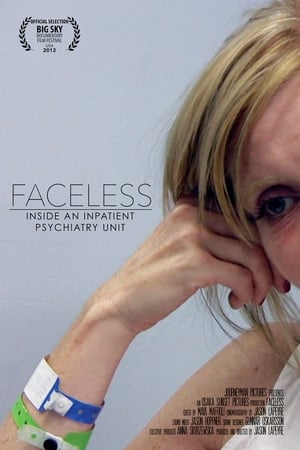
Faceless is a documentary film about the workings of an inpatient psychiatry unit, seen through the eyes of both the patients trying to get well and the staff trying to help them.
Documentary about the 1993 "Whore Culture: A Festival of Sex Work" event in Toronto.
A journey through the fantastic and mysterious Barcelona that the Spanish writer Carlos Ruiz Zafón (1964-2020) loved so much, the city of myth and legend, the city that was before it became one of the main European tourist destinations.
A short documentary shot in November 2021 in Berkeley. It reflects on the ethos of privatization in American culture and how public spaces are being built to exclude people through cruel architecture. The context used is the gentrification circle around the University of California Berkeley intended to build student housing. An eye-opening journey that explores structures and elements you would never have stopped at.
Rob Ford scandalized Canadian politics as the brash yet beloved mayor of Toronto — until an infamous video of him smoking crack sparked his downfall.
The thousand-year-old tradition of pottery in the Indian subcontinent is now under threat. With the market being flooded with plastic in the evolution of civilization, today this Pal community is becoming displaced.
Targeted for several failed redevelopment plans dating back to the days of Robert Moses, Willets Point, a gritty area in New York City known as the “Iron Triangle,” is the home of hundreds of immigrant-run, auto repair shops that thrive despite a lack of municipal infrastructure support. During the last year of the Bloomberg Administration, NYC’s government advanced plans for a “dynamic” high-end entertainment district that would completely wipe out this historic industrial core. The year is 2013, and the workers of Willets Point are racing against the clock to forestall their impending eviction. Their story launches an investigation into New York City’s history as the front line of deindustrialization, urban renewal, and gentrification.
People from different ethnic backgrounds with "difficult" names by Western standards share their experience with moving through the world with an identity that challenges others to simply just say their name. A short social docu-film by Mariam Meliksetyan, “Say My Name” is a meditation on identity, otherness, assimilation, community, and ancestral roots.
A love letter to a place that will forever be home, a visual ode, and a farewell to a neighborhood that is rapidly changing due to the forces of gentrification and Miami’s housing crisis.
Filmed over four years, this documentary focuses on the impacts of gentrification as gay white professionals move into a largely black working-class neighborhood in Columbus, Ohio.
In 1959 New York City announced a "slum clearance plan" by Robert Moses that would displace 2,400 working class and immigrant families, and dozens of businesses, from the Cooper Square section of Manhattan's Lower East Side. Guided by the belief that urban renewal should benefit - not displace - residents, Frances Goldin and her neighbors formed the Cooper Square Committee and launched a campaign to save the neighborhood. Over five decades they fought politicians, developers, white flight, government abandonment, blight, violence, arson, drugs, and gentrification - cyclical forces that have destroyed so many working class neighborhoods across the US. Through tenacious organizing and hundreds of community meetings, they not only held their ground but also developed a vision of community control. Fifty three years later, they established the state's first community land trust - a diverse, permanently affordable neighborhood in the heart of the "real estate capital of the world."
With its fluid arrangement of black and white scenes paired with an immersive soundscape, Je me souviens d’un temps où personne ne joggait dans ce quartier is a celebration of the many faces of Park Extension. The film provides a glimpse inside a festive cultural gathering; the workshop of a meticulous artisan; and an alley where a young cyclist is learning to ride. With her restrained approach, the filmmaker hints little by little at a seemingly inevitable transformation, while the relentless onset of gentrification threatens the social fabric of a neighbourhood. After a critically acclaimed detour into audio documentary, Jenny Cartwright returns to the evocative force of images to evoke a rich and diverse community.
Stompin' Tom performs live at the Horseshoe Tavern on Queen St. in Toronto.
A film about the cross coalition of communities that stopped a planned network of freeways from being built in Seattle in the late 60s and early 70s. It weaves together archival material with the filmmaker's personal narrative about living next to freeways, and features interviews with participants from the freeway revolt.
A short documentary about gentrification and tenant activism in one Toronto neighbourhood, "This House Is Not A Home" presents a poignant and informative look into resident experiences in Parkdale.
Filmed over five weeks at the Warrendale residential treatment center near Toronto, "Warrendale" observes twelve emotionally disturbed children and the staff who care for them. Working without narration, interviews, or direction, Allan King records daily life as it unfolds, establishing what he later described as “actuality drama.”
A portrait of Toronto, as defined by the spaces its queer residents inhabit and the memories they’ve created there.
This short documentary records Anne Cools’ 1978 run for the Liberal Party nomination in Rosedale, one of Toronto's largest and socially most diverse federal ridings. The film records her bid for political power, and explains the nomination contest, a basic step in the Canadian electoral process. Because she was competing against the Liberal Party's preferred candidate, the nomination battle in Rosedale turned into one of the most innovative and fascinating in the history of Canadian politics.