JFK documentary directed by Arthur J. Bressan Jr.
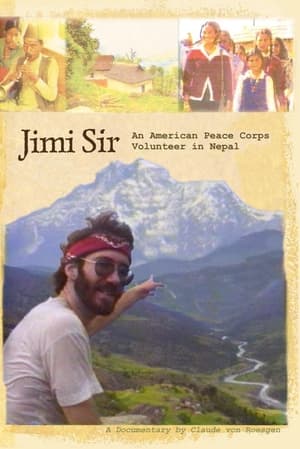
Take a journey to the rugged terrain that separates the barren Tibetan plateau and the plains of India. Live alongside Jimi, a Peace Corps volunteer in Melung, a days walk south of the trail from Kathmandu to Mt Everest base camp.
In the summer of 2011 twenty Peace Corps Volunteers returned to Sierra Leone, West Africa. For most of them, it was the first time returning to the country since they had served in the 1960’s and 1970’s. They came to reconnect with their friends in Sierra Leone. It was an auspicious time for their trip. The nation was celebrating its fiftieth anniversary of independence from Great Britain. The year also marked the fiftieth anniversary of the Peace Corp's arrival in Sierra Leone.
In the summer of 1966 a group of 65 idealistic Peace Corps volunteers headed for Africa and landed in the dusty, heat-scorched desert of Niger. They stayed for two years working in agriculture, digging wells and starting health clinics for women and their babies. In 2008 five of them returned to Niger to revisit the country, see old friends, and witness how their work has improved the lives of Nigeriens. And create a documentary of their experiences.
A former Peace Corps volunteer returns to Nepal to find his adoptive family in the aftermath of the country's Maoist civil war.
Construyamos una escuela
After taking his dying father's advice, Hal dates only the embodiments of female physical perfection. But that all changes after Hal has an unexpected run-in with self-help guru Tony Robbins. Intrigued by Hal's shallowness, Robbins hypnotizes him into seeing the beauty that exists even in the least physically appealing women. Hal soon falls for Rosemary, but he doesn't realize that his gorgeous girlfriend is actually a 300-pound-not-so-hottie.
Darcy and Tom gather their families for the ultimate destination wedding but when the entire party is taken hostage, “’Til Death Do Us Part” takes on a whole new meaning. Now, Darcy and Tom must save their loved ones—if they don’t kill each other first.
A haunting look at a 19th-century colonial experiment in Senegal, blending history, architecture, and the politics of land.
Wir Weltmeister – ein Fußballmärchen
'Country: Portraits of an American Sound' is a documentary film that explores the history and culture of country music through the lens of photography, which has portrayed the ideals, lifestyle and personalities of country music artists for over 80 years. The film features imagery and commentary from Grand Ole Opry photographer Les Leverett, the late celebrity photographer Leigh Wiener, documentary photographer Henry Horenstein, iconic music photographers Henry Diltz and Raeanne Rubenstein, and contemporary photographers David McClister and Michael Wilson. Over a dozen country music artists also appear, including Rosanne Cash, Roy Clark, Merle Haggard, Lyle Lovett, Charley Pride, LeAnn Rimes, Kenny Rogers, Tanya Tucker, The Band Perry and Keith Urban. The film weaves iconic images, historical footage and over 25 country music hits into a dynamic look at this uniquely American sound.
'Six degrees of separation' is the theory of how everybody is connected, in six steps or less. Where can a journey through the six degrees take you, if you let random encounters decide your path? This observing documentary puts the theory to the test, and brings you along on a journey through the States like you have never experienced before.
A humorous and illuminating series of coffee klatches with 20 friends that proves the old adage, “Where you have two Jews, you have three opinions.” Ranging in age from 18 to 85, and in experience from greenhorn to Pulitzer-Prize winner, the film’s subjects kibitz over all manner of concern, from Israel to tight pants, gay rights, and the place of women at the Wailing Wall.
One is a former police officer, bodyguard and hairdresser. Currently retired, he takes care of his extravagant and almost hundred-year-old illiterate mother. He writes poems and hopes to see them published one day. The other, a declared womanizer, workaholic, and leftist, was imprisoned during the dictatorship, runs a small grocery shop, and controls the life of his young second wife. Both were born in the Uruguayan hinterland during the Second World War, and share the same name as well as the fact that neither has wished to change it. The film is a tragicomic portrait of a country whose cultural diversity, its peculiar history and the character of its inhabitants allow the existence of exceptional and remarkable persons that depict a live picture of Uruguay, with its plurality and contradictions, its small and large history, without departing a single moment from irony or reflection.
A group of archaeologists from the University of the Republic enters, for the first time in Uruguayan history, into a barracks to dig for the remains of persons imprisoned-disappeared during the military dictatorship. Only one year earlier, not even the boldest observer would have dared predict such a possibility. After one hundred days of digging, the earth reveals its secret: the first remains appear. The documentary reconstructs the process that cuts the country’s history in two: before and after.
Angdu is no ordinary boy. Indeed, in a past life he was a venerated Buddhist master. His village already treats him like a saint as a result. The village doctor, who has taken the boy under his wing, prepares him to be able to pass on his wisdom. Alas, Tibet, Angdu’s former homeland and the centre of his faith, lies far away from his current home in the highlands of Northern India. On top of that, the conflict between China and Tibet makes the prospect of a trip there even more daunting. Undeterred by these harsh facts, the duo set off for their destination on foot, accompanied by questions of friendship and the nature of life. With its narrative approach steeped in a serene sense of concentration, this documentary film, composed over a period of eight years, stands as a fundamental experience in its own right.
Milošević’s regime has rigged the results of parliamentarian elections in autumn 1996. This was a cause for mass rallies in Belgrade and other cities in Serbia. The film documents the protests during the first four days of their protests, their political and criticising charge but also the carnival spirit. On the seventh day of the protests the film was edited and had a premiere screening in the Rex Cinema.
Liya and her younger brothers, Cocoa and Chino, work as caddies at the luxurious golf club "Cantegril" in Punta del Este, Uruguay, and they live with their children in the illegal settlement called Kennedy, located next to the club. Accustomed to being always in the background, they now face the possibility of winning a labor lawsuit that would allow them gain control over their own destinies and those of their families.
A documentary thriller describing the last days of the Israeli community in Tehran, on the eve of the Islamic Revolution in 1979. The director, whose family was in Tehran at the time, uses rare archive materials to illustrate how thousands of Israelis, who enjoyed unusual affinity with the Shah's regime, wake up one morning to find their paradise vanished.
The protagonist of the story is a place of calmness, purity and serenity: an ancient shrine on an islet, dedicated to Our Lady. It is facing a strange antagonist: speed, tumult, superficiality, and vanity of the modern era. Heavenly vs. mundane, temporarily vs. eternal, material versus spiritual…