An essay film about Jean-Paul Sartre and the French Existentialists, featuring Roland Barthes' last interview.
A thoughtful exploration of gypsy culture, an intimate portrait of flamenco guitar player Yerai Cortés and a healing family exorcism through music. Antón Álvarez (aka C. Tangana) makes his filmmaking debut with this documentary.
A short made during quarantine. - "I feel like I'm coming out of hibernation. I did not learn anything, I did not developed personal growth, nor qualities. I was smart for one day and read challenging stuff, and then for three days watched persisently TV series. I couldn't write. I found a handful of indispensable people. I didn't really understand much of this whole quarantine story; but I'm analytically only retroactive, so maybe it's going to happen. This movie made me feel alive for a few days."
A video essay about a conversation the director had with a friend about a particular picture of a cat sitting in front of a plate of blins.
A very personal look at the history of cinema directed, written and edited by Jean-Luc Godard in his Swiss residence in Rolle for ten years (1988-98); a monumental collage, constructed from film fragments, texts and quotations, photos and paintings, music and sound, and diverse readings; a critical, beautiful and melancholic vision of cinematographic art.
A peculiar portrait of the Argentinean writer Jorge Luis Borges (1899-1986) drawn by the extravagant and original look of the Spanish writer Fernando Arrabal, who establishes a bold parallelism between Borges' work and opinions and his own creations, both literary and cinematographic.
People constantly appear walking through passageways in the films of Japanese filmmaker Yasujirō Ozu (1903-63). His art resides in the in-between spaces of modern life, in the transitory: alleys are no longer dark and threatening traps where suspense is born, but simple places of passage.
Enrique Morente's three sons tell the story of their father: the most revolutionary flamenco in history. Despite criticism from purists, he opened cante jondo to cultured poetry, brought it closer to young university students, explored its Arab roots and paired it with rock and other contemporary sounds. Much of the Spanish music of the last decades is heir to his findings.
In his time of greatest splendor, the singer Miguel 'Bambino' Vargas Jiménez (1940-99) was the last frontier of flamenco, an immense musical genre that he developed and brought closer to large audiences: an artist of artists, the idol of the roadside bars, whose inimitable style, scenic magnetism and heartbreaking personality made of his figure a myth, a king without a kingdom, a giant of the popular music of the 20th century.
A cinematic essay interweaving private archive images and a mixture of reflective, speculative and poetic intertitles that, like “an old movie from the 20th century”, invites us to meditate on what Des Pallières once liked to call “our old homeland”.
Two decades on from Cinema of Unease, Tim Wong’s essay film contemplates the prevailing image of a national cinema while privileging some of the images and image-makers displaced by the popular view of filmmaking in Aotearoa. Now streaming for free at: films.lumiere.net.nz
A "cinematic object" by Mariano Llinás, divided into 9 chapters, based on the poetry of Henri Michaux.
A long-hidden, personal doc about leaving a beloved house by the late, revered Portuguese director Manoel de Oliveira.
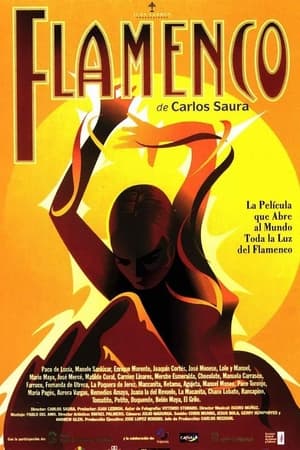
A look at the history and traditions of flamenco music and dance.
Seville, Spain, 14th century. A group of black slaves brought from Africa form the Hermandad de los Negros, a Holy Week brotherhood that has survived over the centuries, despite the opposition of the powerful; still active, it is one of the oldest institutions in Europe.
Korean film critic Jeong Sung-il’s camera explores the work of Wang Bing, a Chinese director who won international fame with his film Tie Xi Qu: West of the Tracks. Jeong’s attempt to pry into Wang’s filmmaking secrets leads to the question: “What is film?”
Louis-Ferdinand Céline described the period he spent in Sigmaringen in his delirious and infernal novel, Castle to Castle, published in 1957. The last months before the German “moment of truth”, as they’ve never been portrayed before: Documented in delirious reality. A documentary film based on Céline’s texts. A screen adaption with documentary material.
A girl haunted by traumatic events takes us on a mesmerising journey through 100 years of horror cinema to explore how filmmakers scare us – and why we let them.
For just forty days, filmmaker and writer Mark Cousins embarks on a peculiar journey in order to explore topics as the passion for cinema and certain aspects related to making films as style, ideas, emotions and practicalities; an ambitious exploration of the universal language of cinema by analyzing pieces of work that cross every artistic and cultural boundaries.
Stephen Torino, who is tricked by his brother Marco into an arranged marriage with tempestuous Annie Caldash. Annie is willing to give the union a go, but Torino wants none of it.