A day in the city of Berlin, which experienced an industrial boom in the 1920s, and still provides an insight into the living and working conditions at that time. Germany had just recovered a little from the worst consequences of the First World War, the great economic crisis was still a few years away and Hitler was not yet an issue at the time.
Carefully picked scenes of nature and civilization are viewed at high speed using time-lapse cinematography in an effort to demonstrate the history of various regions.
A documentary of insect life in meadows and ponds, using incredible close-ups, slow motion, and time-lapse photography. It includes bees collecting nectar, ladybugs eating mites, snails mating, spiders wrapping their catch, a scarab beetle relentlessly pushing its ball of dung uphill, endless lines of caterpillars, an underwater spider creating an air bubble to live in, and a mosquito hatching.
Somewhere in stoic, rural Russia, at the edge of mapped time and memory, a snowbound airport idles in stillness. Six Weapons of Post-Modern Time Travel indifferently observes as time stretches beyond the runways. Absence hums under old fluorescent lights as the ordinary turns spectral. This film documents the weight of a place coming to terms with silence, holding it's breath as departures have outlived arrivals.
Structured as a labyrinth-like game and inspired by Jorge Luis Borges, Aleph is a travelogue of experience, a dreamer's journey through the lives, experiences, stories and musings of protagonists spanning ten countries and five continents.
Thirty-three shots based on the landscapes of the Isère region near Vienne. A work of observation on light, the dilation of Time, wind, calm and storm.
This documentary from Albert and David Maysles follows the bitter rivalry of four door-to-door salesmen working for the Mid-American Bible Company: Paul "The Badger" Brennan, Charles "The Gipper" McDevitt, James "The Rabbit" Baker and Raymond "The Bull" Martos. Times are tough for this hard-living quartet, who spend their days traveling through small-town America, trying their best to peddle gold-leaf Bibles to an apathetic crowd of lower-middle-class housewives and elderly couples.
"The Pig and the Society," symbolizes the stark contrast between the excesses of wealth and the plight of those left behind. It invites viewers to reflect on their perceptions and prejudices, challenging them to see beyond the surface and understand the systemic issues perpetuating homelessness.
A woman narrates the thoughts of a world traveler, meditations on time and memory expressed in words and images from places as far-flung as Japan, Guinea-Bissau, Iceland, and San Francisco.
A documentation of artist JP Meldrum as he prepares for an experimental gig with noise-rock drummer Maxwell Paterson. A concert film, a rehearsal, and an exploration of Victoria outlets and ways-of-creating beyond the traditional spaces.
Starting with a long and lyrical overture, evoking the origins of the Olympic Games in ancient Greece, Riefenstahl covers twenty-one athletic events in the first half of this two-part love letter to the human body and spirit, culminating with the marathon, where Jesse Owens became the first track and field athlete to win four gold medals in a single Olympics.
Part two of Leni Riefenstahl's monumental examination of the 1938 Olympic Games, the cameras leave the main stadium and venture into the many halls and fields deployed for such sports as fencing, polo, cycling, and the modern pentathlon, which was won by American Glenn Morris.
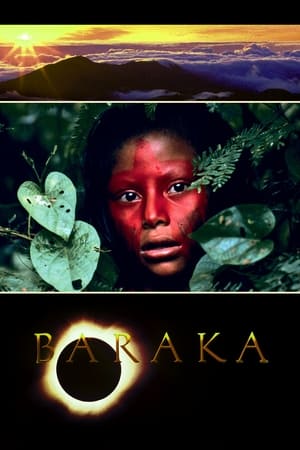
A paralysingly beautiful documentary with a global vision—an odyssey through landscape and time—that attempts to capture the essence of life.
A visual montage portrait of our contemporary world dominated by globalized technology and violence.
We observe the daily routines of an elderly couple. Within the quiet flow of time, a longing for youth and irretrievable memories begin to surface. This piece reflects the sorrow hidden in the stillness of old age and the deep yearning for the past.
A young filmmaker maintains an epistolary conversation with his deceased grandmother while he rediscovers the space they both inhabited for more than a decade.
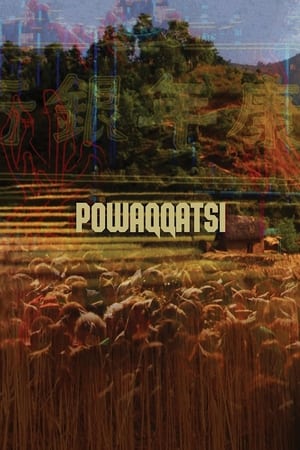
Shot under extreme conditions and inspired by Mayan creation theory, the film contemplates the illusion of reality and the possibility of capturing for the camera something which is not there. It is about the mirages of nature—and the nature of mirage.
An exploration of technologically developing nations and the effect the transition to Western-style modernization has had on them.
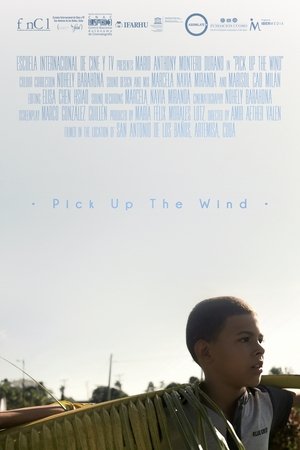
A short film following Anthony, a young child from the small, rural town of San Antonio de los Baños, Cuba. We see him in different moments of his daily life as he interacts with different forms of environmental, familial, and social influences. While Anthony displays contradictory traits of creativity, destruction, rigidity, and tenderness as he interacts with his external and internal worlds, we see a story built from the the multidimensionality of Anthony's layered personality as a young man.
Miška is 20 years old, and she has a dream of living in Prague. While coming along her journey, we find out more about her mental health and her love life