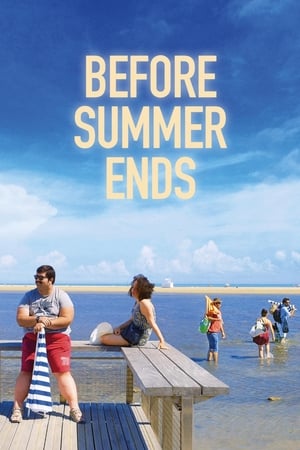
After five years studying in Paris, Arash has not adjusted to life there and has decided to return to Iran to live. Hoping to change his mind, his two friends Hossein and Ashkan convince him to take a last trip through France.
The Freedom of the Sea is a short documentary highlighting the freedom of living in the UK - in contrast to a more restrictive life in Iran - through the joy of daily sea swimming in Brighton.
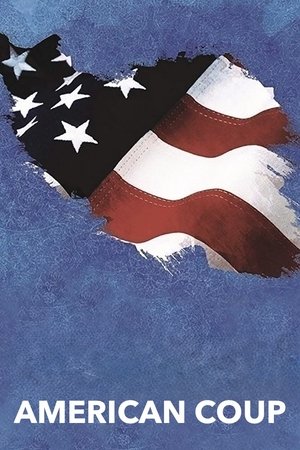
AMERICAN COUP tells the story of the first coup ever carried out by the CIA - Iran, 1953. Explores the blowback from this seminal event, as well as the coup's lingering effects on the present US-Iranian relationship. Includes a segment on the 1979 Iranian Hostage Crisis and its relation to the 1953 coup. Concludes with a section on the recent Iranian presidential election. Contains interviews with noted Middle East experts and historians and prominent public figures such as Stephen Kinzer (author, All The Shah's Men), Prof. Ervand Abrahamian, Trita Parsi, Col. Lawrence Wilkerson, Ted Koppel and Rep. Ron Paul of Texas. With Iranian cinematography by James Longley.
When an Iranian-Canadian filmmaker hears the story of Master Ghadamyar- a Kurdish 120-year-old Tanbur player, he takes off on a mission to discover more about this spiritual master's musical and enchanting life. The film follows his journey to Western Iran, where he unearths the ancient traditions and teachings of Ghadamyar's faith known as Yarsanism, and its relationship to the mysterious Tanbur as a meditative instrument. The film takes audiences on a musical and visual quest among rugged landscapes of Western Iran to experience undiscovered voices and spiritual awakening. We witness the collective prayer of Yarsani Tanburists, as a practice to maintain their spiritual identity and search for inner beauty.
In 1972, Bahman Maghsoudlou made a short film about Iranian artist Ardeshir Mohasses. For 36 years, this remained the only film about this internationally acclaimed artist. In 2008, spurred by a New York retrospective of Mohasses's work and the artist's passing, Maghsoudlou finally began work on the extended film he knew its subject deserved. Thus was born, Ardeshir Mohasses: The Rebellious Artist.
Leyla and her six-year-old daughter Nila live in the holy city of Mashhad in Iran. Nila is the result of a temporary marriage, which allows a man to marry a woman even if he is already married. Children born from such a relationship are legally non-existent. As long as the father does not recognize the child, no birth certificate can be issued and Nila cannot attend school. The documentary depicts Leyla's tireless efforts to clarify Nila's legal status in order to offer her a perspective for her future. In a never-ending bureaucratic battle, Leyla fights not only against the legal system, but also against a judgmental society.
It's a satirical comedy that chronicles 3 young Canadian film makers from Yellowknife as they travel from northern Canada to the middle east just as the Iraq war is erupting. As well as being very funny, it is also quite thought provoking. The trio travels through Canada, Turkey, Israel, Jordan and finally Washington DC interviewing "regular people" for their comments on the impending war. This film won best documentary at the 2003 Whistler Film Festival in Canada.
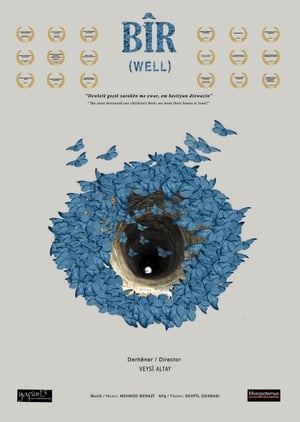
After seven years in prison, a female student in Tehran is hanged for murder. She had acted in self-defence against a rapist. For a pardon, she would have had to retract her testimony. This moving film reopens the case.
In this guided tour of a unique Persian carpet, a close-up of the delicate "spine" of a tree branches out into the discovery of a fantastical world.
Russia, China and Iran: three former empires are determined to take their revenge and reassert their power after centuries of humiliation. Since the start of the war in Ukraine, they have never been so aligned on the international stage. Their common goal: to put an end to Western hegemony, restore their zone of influence and propose a new model of society. To achieve this, they are waging a hybrid war against the democracies: military, technological, economic, informational and ideological. Are they on the verge of joining forces to create a new world order?
Starting with her own memories of working as an actress on Abbas Kiarostami's Ten, filmmaker Roya Akbari proceeds to elicit other testimonies on the masters of Iranian cinema from three people who are themselves among the foremost Iranian directors: Rafi Pitts on Parviz Kimiavi; Amir Naderi on Sohrab Shahid Saless; and Bahram Bayzai on Arby Ovanessian. Bayzai also analyses Haji Agha, the Cinema Actor (1933) by Ovanes Ohanian, considered the first feature film made in Iran.
Planned by Britain’s MI6 and then executed by America’s C.I.A., the coup d’état which follows will destroy Iran’s last democracy, and relations between Iran and the West until the present day. Most shocking of all, the truth about Her Majesty’s role will be hidden from the Queen herself, and even the all-powerful Shah who will be used by Britain and American to replace Iran’s last democratic Prime Minister. The coup will lead to political upheaval all over the Middle East for decades to come, eventually resulting in the Islamic Revolution of 1979 which will end the reign of the Shah, and British and American influence in Iran, inspiring countless other Islamist revolutions around the world.
Shâd Bâsh
On stage since she was a toddler, Googoosh has been an icon of Iranian pop culture since the 1970s. Her progressive style and raw singing talent attracted worldwide acclaim and saw her performing alongside the likes of Tina Turner and Ray Charles. But the star's career came to an abrupt halt after the Islamic Revolution, which banned women from singing in public. Googoosh was placed under house arrest, where she remained for the next two decades. Niloufar Taghizadeh's documentary, which includes interviews with the charismatic singer (now in her seventies, but still performing and advocating for women and girls) and arresting archival footage, offers both a loving portrait of a national icon and a fascinating historical and cultural record of Iran.
Iranian Taboo tells the harrowing story of Baha'i woman Nadereh and her 14-year-old daughter who decide to sell all their belongings and leave their home in Isfahan to take refuge in the west. The film takes us across continents from Turkey to Israel and from the USA to Iran. We are given unique insights - from the underground Baha'i university (BIHE) to Iranian Nobel Peace Prize winner, Shirin Ebadi, from the suppressed Baha'i peasants of the Ivel village in the northern province of Mazanraran to Abolhassan Banisadr, 1st president of the Islamic Republic of Iran.
Endless powder fields and a magnitude of potential lines aren't immediately what you may think of when talking about Iran... This mini documentary tells the story of Iranian pro snowboarder Mona Seraji who invites two fellow snowboarders from Australia, Amber Arazny and Michaela Davis-Meehan, to come discover the wonderful mountains of Iran.
Filmed in Canada, Iran, and the United States, Secrets of the Surface: The Mathematical Vision of Maryam Mirzakhani examines the life and mathematical work of Maryam Mirzakhani, an Iranian immigrant to the United States who became a superstar in her field. In 2014, she was both the first woman and the first Iranian to be honored by mathematics' highest prize, the Fields Medal. Mirzakhani's contributions are explained by leading mathematicians and illustrated by animated sequences. Her mathematical colleagues from around the world, as well as former teachers, classmates, and students in Iran today, convey the deep impact of her achievements. The path of her education, success on Iran's Math Olympiad team, and her brilliant work, make Mirzakhani an ideal role model for girls looking toward careers in science and mathematics. Written by George Csicsery
Can we reinvent our lost queer histories? #Familiar #Touch #Lost #Figures is about queer ancestry and diaspora, a hybrid of cultural traditions and contemporary queer identity. It explores feelings of guilt and joy, and intimacy between femmes of colour.
On June 20, 2009, Neda Agha-Soltan was shot and killed on the streets of Tehran during the turmoil that followed the Iranian presidential contest. Within hours, images of her dying moments, captured on cell phones, appeared on computer screens across the world, focusing the world's attention on mass protests against the rigged elections in Iran. Featuring previously unseen footage of Neda with friend and family, as well as exclusive video of her recorded the day she died, "For Neda" debuts just before the anniversary of her death.
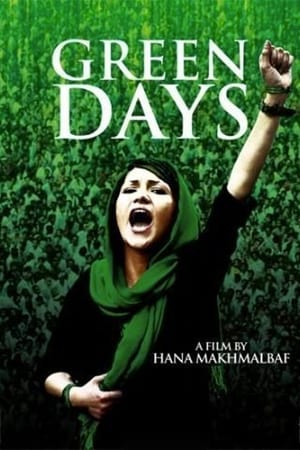
Green was the symbol of recognition among the supporters of Iranian presidential candidate Mir-Hossein Mousavi. This documentary-collage illustrates with animated blogs and tweets the story of democracy under fire and the dramatic events before and after the 2009 presidential elections in Iran.