An acting ensemble rehearses for an upcoming theater festival. They rig up stage scenery and practice dialogue and set pieces in the middle of a residential area. But this is no ordinary theater setting, as evidenced by the armed guards at the entrance. Festival 4 Chemins is taking place in Port-au-Prince, the capital of Haiti. Gangs are active in the city; you can hear machine-gun fire in the distance.
Semences : les gardiens de la biodiversité
Exiled after Haiti’s political struggles of the 90s, Mikerlande—a former activist and now entrepreneur—rekindles memories of resilience and commitment. Through griot, she shares a story of struggle, legacy, and strength, bridging past and present to preserve her heritage.
This black-and-white film is a loving portrait of Santiago de Cuba and its people. It provides a view of Cuba as a picturesque country, the product of an earthy mix of black and criollo cultures. The film uses historical images which portray the end of the eighteenth century when Haitian slave owners fled with their slaves to Cuba after the Haitian Revolution.
La dérive douce d’un enfant de Petit-Goâve
The Soul of Bossales is an immersion in the heart of popular Haitian culture whose spirituality and creativity have been forged by a surge of freedom and identity affirmation. Foukifoura, Édris, Charlotte or Ramoncite, “Bossales” characters with committed artistic and political acts, give us the gripping story of a very harsh reality: material and health precariousness, political violence, neo-colonialism.
Zombies are part of pop culture, but what are they? Where do they come from? To find real zombies we visit Haiti where Zombies are an integral part of the island's cultural and religious roots.
Haïti Chérie is a respond to the 2010 earthquake in Haiti. A few weeks after the catastrophe Huber carries out a performance over the snowy, seemingly endless, frozen sea in Finland, waters carrying on to reach the coasts of Haiti. Snow angels drawn by Huber’s body symbolize sorrow and lives lost, but also solidarity and hope.
1804 is a feature length documentary film about the untold history of the Haitian revolution
Around the fire, travellers and pirates recount their memories, their dreams, their battles. From one language to another, from story to story, we hear the roar of the storm and the rustle of the leaves, the menacing sirens and the wild dances, the clash of the swords and the song of the birds. Until dawn, a thousand and one paths take shape on this imaginary yet real island.
MARABOU
In the 1980s, a swine flu crossed the Haitian-Dominican border and started to affect the Creole pig, an important commodity in Haiti. The flu also threatened livestock in the United States. As a preemptive measure, the USAID in conjunction with the Haitian government proceeded to exterminate all Creole pigs from the island, leading to a crushing economic blow for an already impoverished country.
The Heroes of the Massacre River is a powerful documentary that chronicles the stories of the pioneers behind the construction of the historic Canal of Ouanaminthe, a project that united Haitians across the nation and the diaspora. This film celebrates the groundbreaking efforts of key figures, centering on Dr. Bertrhude Albert, Dr. Naismy-Mary Fleurant, architect Wideline Pierre, economist Etzer Emile as well as dedicated canal workers Milourie Sylfrard, Theodore Johnson and Joseph Pressoir — all guided by the investigative journey of Max Angie Clervil. It also serves as a commentary on the complexity of colonialism and borders, tracing the role that the Massacre River continues to play in the history of Ayiti.
This short film from the Perspective series highlights social and economic development in Haiti circa 1957. It depicts customs and traditions used to pass along the history of a people, and offers a look into their daily lives — lives that looks very different from their experiences today.
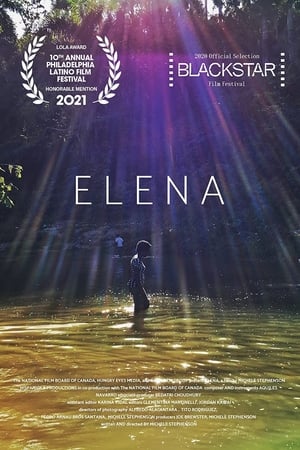
In 1937, tens of thousands of Haitians and Dominicans of Haitian descent were exterminated by the Dominican army, on the basis of anti-black racism. Fast-forward to 2013, the Dominican Republic's Supreme Court stripped the citizenship of anyone with Haitian parents, retroactive to 1929, rendering more than 200,000 people stateless. Elena, the young protagonist of the film, and her family stand to lose their legal residency in the Dominican Republic if they don't manage to get their documents in time. Negotiating a mountain of opaque bureaucratic processes and a racist, hostile society around, Elena becomes the face of the struggle to remain in a country built on the labor of her father and forefathers.
In the slum of Cité Soleil, President Aristide's most loyal supporters were ruling as kings. The five major gang leaders were controlling heavily armed young men; the Chiméres. The Secret army of President Jean-Bertrand Aristide. "Ghosts of Cité Soleil" is a film about Billy and Haitian 2pac. Two brothers. Gang Leaders of the Chiméres.
Set mainly in present day Dallas, Texas and Port-au-Prince, Haiti, this film features three main characters at three different stages of the same process. Supported by a nonprofit, these extremely tall teenagers come to the United States from Haiti using basketball as means to get an education and help their own country change.
In 1791, in Haiti, Dutty Boukman presided over a Vodou ritual in Bois-Caïman that led to the creation of the first Black republic. Since then, rituals of transformation and artistic expression have been at the core of a thriving culture as the country faces oppression, poverty, and natural disasters. "Kite Zo A” (Leave the Bones) is a sensorial film about rituals in Haiti, from ancient to modern, made in collaboration with poets, dancers, musicians, fishermen, daredevil rollerbladers, and Vodou priests, set to poetry by Haitian author Wood-Jerry Gabriel.
A documentary that reveals the underbelly of the global aid and investment industry. It's a complex web of interests that span the earth from powerful nations and multinational corporations to tribal and village leaders. This documentary offers unique insights into a multi-billion dollar world by investigating how aid dollars are spent.
In Mexico, the lack of jobs in villages and communities forces people to migrate to cities in search of opportunities and better income. This is the case of Justino, originally from the village of Muchucuxcáh, in the Yucatán Peninsula, who after traveling to Cancun and encountering problems and suffering there, decided to return to his village and learn to work with wood. Justino demonstrates how humans can interact with nature and their surroundings to have a dignified job.