A young teacher in Zurich in the 1950s falls in love with a transvestite star but is torn between his bourgeois existence and his commitment to homosexuality. He joins a gay organization that is eventually seen as the pioneer of gay emancipation in Europe.
Filmmaker Jonathan Caouette's documentary on growing up with his schizophrenic mother -- a mixture of snapshots, Super-8, answering machine messages, video diaries, early short films, and more -- culled from 19 years of his life.
"Race d’Ep!" (which literally translates to "Breed of Faggots") was made by the “father of queer theory,” Guy Hocquenghem, in collaboration with radical queer filmmaker and provocateur Lionel Soukaz. The film traces the history of modern homosexuality through the twentieth century, from early sexology and the nudes of Baron von Gloeden to gay liberation and cruising on the streets of Paris. Influenced by the groundbreaking work of Michel Foucault on the history of sexuality and reflecting the revolutionary queer activism of its day, "Race d’Ep!" is a shockingly frank, sex-filled experimental documentary about gay culture emerging from the shadows.
The Untold Tales of Armistead Maupin celebrates one of the world’s most beloved storytellers, following his evolution from a conservative son of the Old South into a gay rights pioneer whose novels inspired millions to reclaim their lives.
Instructional documentary produced in association with the Terrence Higgins Trust.
Private Diary documents photographer Pedro Usabiaga working with a variety of amateur models. The audience sees how the relationships between the photographer and the subjects changes during their time together, as well as how the individual photographs begin to take shape. Pedro Usabiaga is a well-established Basque photographer whose chief concerns are figurative photography and whose passion in photographing the Spanish male. In this hour long conversation with the artist we are given entry into that process of selecting models (none of the models he uses for this book to be titled 'Private Diary' are professional, but instead are randomly chosen as Usabiaga observes athletes in action) and then allowed to follow Usabiaga and his crew as they photograph these men in natural settings and natural light.
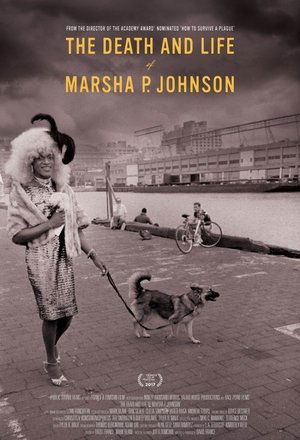
Describing herself as a 'street queen,' Johnson was a legendary fixture in New York City’s gay ghetto and a tireless voice for LGBT pride since the days of Stonewall, who along with fellow trans icon Sylvia Rivera, founded Street Transvestites Action Revolutionaries (S.T.A.R.), a trans activist group based in the heart of NYC’s Greenwich Village. Her death in 1992 was declared a suicide by the NYPD, but friends never accepted that version of events. Structured as a whodunit, with activist Victoria Cruz cast as detective and audience surrogate, The Death and Life of Marsha P. Johnson celebrates the lasting political legacy of Johnson, while seeking to finally solve the mystery of her unexplained death.
Tells the story of the rise and fall of Michael Alig, a kid from Middle America who aspired to take the place of Andy Warhol. Michael quickly rose to become the biggest party promoter in New York and King of the so-called Club Kids. But after spiraling into drug addiction, Michael brutally murdered his roommate Angel Melendez.
Narrated by Linda Hunt, this documentary examines the life of the late author and gay rights activist Paul Monette. Born in 1945 to a well-off Massachusetts family, Monette grows up unable to accept his homosexuality, for years hiding it from his loved ones while struggling to develop as a writer. In 1978, Monette publishes his first novel, which allows him to come out to his parents. After losing one lover to AIDS in 1986, he becomes a ferocious advocate for awareness of the disease.
A cruise ship and 3,000 men – it is a universe without heteros and women that usually remains a mystery to the outside world. Once a year the Dream Boat sets sail for a cruise exclusively for gay men where most passengers are united by the wish to live life authentically as themselves in a protected place.
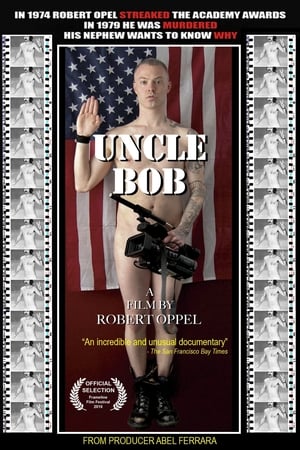
Robert Oppel's documentary about the life and murder of his uncle and namesake, Robert Opel, the man who streaked the Academy Awards in 1974.
A short documentary exploring the ways LGBT couples show affection, and how small interactions like holding hands in public can carry, not only huge personal significance, but also the power to create social change.
This sequel to "Before Stonewall" documents the history of gay and lesbian life from the riots at Stonewall in 1969 to the present. Narrated by Melissa Etheridge, the film explains the work, struggles, victories, and defeats the gay community has weathered to become a vibrant and integral part of North American society.
When a feature film is made about them seven years after their break-up, Benjie Nycum visits his ex-boyfriend Michael Glatze and finally tries to get answers about his bewildering shift from gay activist to ex-gay evangelical.
Documentary in which Years and Years frontman Olly Alexander explores the mental health issues faced by members of the LGBT+ community.
Favela Gay tells the story of eleven individuals in their own words. Living in eight slums (favelas) in Rio de Janeiro, these members of the LGBTQ community – two transgender women, a crossdressing man, a travesti prostitute, a famous carnival dancer, two community activists, and even a young man who used to be transgender, but transitioned back – have fought prejudice and seen some of the most unsavoury sides of the city.
Tom of Finland is one of the gay world's few authentic icons. His drawings have had an enormous influence on gay identity. Tom's ultimate leather men are known and seen everywhere. They are symbols of gay pride and friendship. The documentary includes some titillating 'enactments' inspired by Tom's art work.
Paid 50 dollars for their time, 101 male prostitutes -- spanning all ages, ethnicities, and personal backgrounds -- are questioned by the filmmakers about their lives.
During the Nazi regime, there was widespread persecution of homosexual men, which started in 1871 with the Paragraph 175 of the German Penal Code. Thousands were murdered in concentration camps. This powerful and disturbing documentary, narrated by Rupert Everett, presents for the first time the largely untold testimonies of some of those who survived.
The Other Side of AIDS takes us behind the hype and headlines and into the heart of a brewing controversy over the cause and treatment of AIDS. Through candid interviews with doctors and scientists representing both sides of the issue and HIV positives on and off the drugs, the film opens minds and much-needed dialogue. Informative without being instructive, it raises fundamental questions about what we think we know. Its surprising and sometimes shocking revelations inspire us to take a closer look at HIV and AIDS and the systems that support our current views.