A fairy tale about communism, social-democracy, and capitalism. (The sequel to Wandering Marxwards)
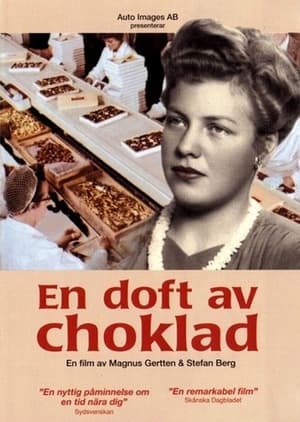
Documentary about Margit Nielsen and her work at the Malmö chocolate factory.
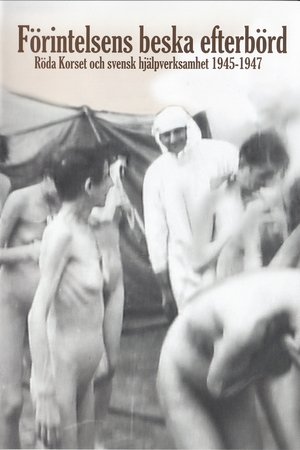
The film starts just when WWII is over. A German ship, m / s Homberg, arrived at Malmö Nyhamn on May 11, 1945. On board there were over 1300 former concentration camp prisoners to be taken care of. We then follow one of the Red Cross Sergeant who was in Germany and received prisoners from concentration camps for further transport by boat to Sweden. 10000 prisoners would be decontaminated and made ready for departure. This happened in Lübeck. He was later moved to Poland to transport medical equipment to Otwock outside Warsaw where Sweden would build a hospital. Through his amateur photos we get an insight into the difficult circumstances that prevailed.
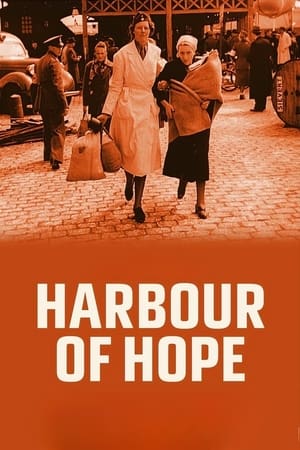
In 1945 Irene, Ewa and Joe were among the nearly 30,000 survivors rescued from German concentration camps to the peaceful harbour town Malmö, Sweden. Here they started life again.
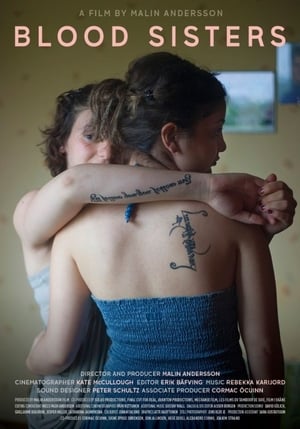
Julia and Johanna, from the high-rise flats of Rosengård in Malmö, inseparable for as long as they remember. Curled up beside each other at night, carrying equal memories of abduction and abuse in their home country Azerbaijan. In Blood Sisters we follow their journey from twin sisters in symbiosis to young women trying to stand on their own feet.
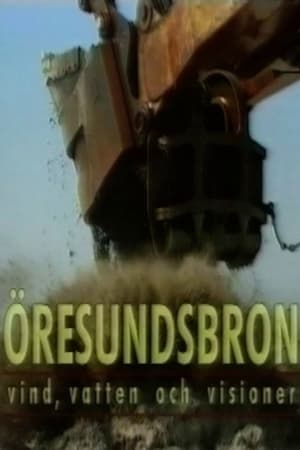
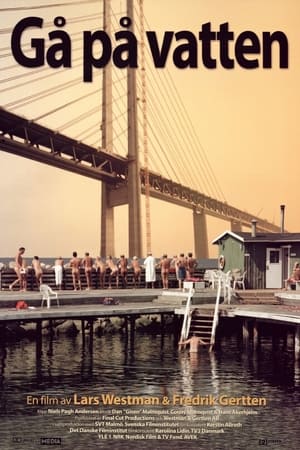
An often humorous documentary about the building of the Öresund bridge, connecting Copenhagen in Denmark to Malmö in Sweden. We meet the people who work on production of the bridge, as well as opponents to the idea of such a bridge.
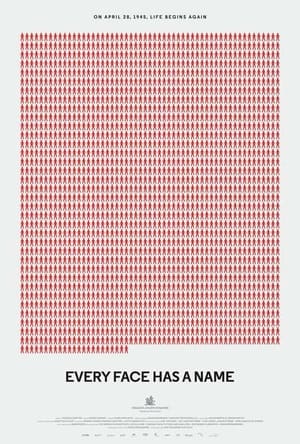
Recalls the day when Holocaust survivors took their first steps into freedom, unaware of their future. Every Face Has a Name puts a name on those nameless faces and lets them recount their feelings of that day, the 28th of April, 1945.
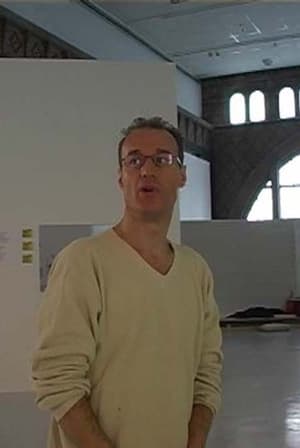
A series of psychic readings of spaces, commissioned by the artist in an attempt at connecting with the past of domestic or exhibition spaces, despite the limitations of rational discourse. The video is not edited, respecting the actual duration of the performance. In this particular case, Frans Dupont is looking at the past but also at the future of Rooseum - Center for contemporary art in Malmoe, which was on the verge of being shut down while Blum was artist-in-residence.
Partway through the building of the Öresund Bridge this documentary looks at the process for what has been built so far and looks into the future at what opportunities the bridge might bring.
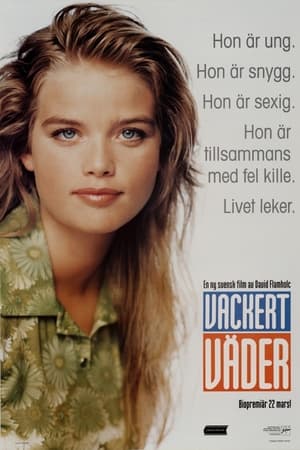
Daniel, a teenager from Stockholm, spends the summer in Malmö with his mother and her new husband. Daniel gets a job at McDonald's and falls in love with a girl.
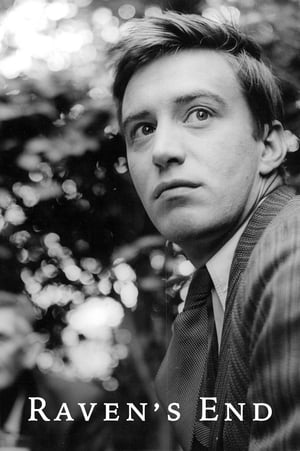
In 1936, aspiring writer Anders, along with his friend Sixten, is desperate to escape his working-class upbringing. Anders' father is an unemployed alcoholic and his mother slaves away at a laundry to support the family. A ray of hope comes Anders' way when he finishes his first novel and submits it to a publisher. But after his girlfriend gets pregnant, his future dims before his eyes once more.
Cameras follow Irish solo sailor Tom Dolan as he attempts to sail single-handed around the island of Ireland, which is one of the toughest feats in sailing.
Nicolas Cage dies all the way from Hollywood to Direct-To-DVD.
Working men and women leave through the main gate of the Lumière factory in Lyon, France. Filmed on 22 March 1895, it is often referred to as the first real motion picture ever made, although Louis Le Prince's 1888 Roundhay Garden Scene pre-dated it by seven years. Three separate versions of this film exist, which differ from one another in numerous ways. The first version features a carriage drawn by one horse, while in the second version the carriage is drawn by two horses, and there is no carriage at all in the third version. The clothing style is also different between the three versions, demonstrating the different seasons in which each was filmed. This film was made in the 35 mm format with an aspect ratio of 1.33:1, and at a speed of 16 frames per second. At that rate, the 17 meters of film length provided a duration of 46 seconds, holding a total of 800 frames.
It often happens that at the moment of death, transgender individuals are shorn of their identity. Their families are ashamed, the funeral takes place in secret, and on the tomb appears the name the deceased had before their transition, in one stroke nullifying the entire life path they had chosen. The same thing happened to Antonia. Her girlfriends gather to honor her memory and give her back her identity denied. In telling her story, the film’s stars, all drawn from the variegated transgender world, interweave the narrative with tales of their own lives, experiences, and memories.
Tom Angelripper narrates the struggles of the band in the mid-Nineties, his many side projects, and yet another drastic line-up overhaul.
Sequel to the "The Waterfowl People". The author interprets the kinship, linguistic and cultural relationships of the Finno-Ugric peoples. Finns, Vepsians, Votes, Setos, Erzya-Mordvinians, Mansi, Hungarians, Sami, Nganasans, and Estonians appear in the film. The film was shot in 1977 on location in northern Finland, Sapmi, Vepsia, Votia, Mordovia, Khantia-Mansia, Hungary, the Taymyr Peninsula, the Setomaa region in Estonia, and on the Estonian islands of Saaremaa and Muhu. Footage was also shot in 1970 in the Nenets Okrug. The second documentary in Lennart Meri's "Encyclopaedia Cinematographica Gentium Fenno - Ugricarum" series.
Made famous by the 1957 Hollywood movie, the bridges of the River Kwai emblematize one of the most misunderstood events in history. Contrary to the romanticized film version, the structures represent a period of terror, desperation, and death for over 16,000 POWs and 100,00 local slaves. The Thailand - Burma Railway was the vision of the Japanese Imperial Army: a 250-mile track cut through dense jungle that would connect Bangkok and Rangoon. To accomplish this nearly impossible feat, the fanatical and ruthless Japanese engineers used POWs and local slaves as manpower. Candid interviews with men who lived through the atrocity - including Dutch, Australian, British, and American POWs - illuminate the violence and horror of their three-and-a-half-year internment. From Britain's surrender of Singapore the enduring force of friendship, The True Story Of The Bridge On The River Kwai narrates a moving and unforgettable account of a period in history that must be remembered.
From hooliganism and violence through to the ecstasy and the rise of rave culture, Andy Swallow, co-founder of West Ham's ICF and later Centreforce 883, opens up about his life for the very first time.
This second entry in MGM's "Romance of Film" series documents how celluloid movie film is processed and features behind-the-scenes glimpses of current MGM productions.