A documentary that focuses on Hayao Miyazaki’s deep connection to nature and the environmental themes expressed through his films.
A portrait of the legendary actor Jean-Pierre Léaud, icon of the French New Wave and closely linked to the work of François Truffaut and Jean-Luc Goddard.
A documentary that details the process of restoring 270 of the 520 lost films of pioneering director Georges Méliès, all orchestrated by a Franco-American collaboration between Lobster Films, the National Film Center, and the Library of Congress.
The first feature-length documentary that fully explores how the toxic social and political Canadian context after 1968 created some of the most nihilistic and imaginative Canadian cult films of the 1970s and 80s and beyond.
Portrait of director Andrey Zvyagintsev against the background of the filming of his film "Loveless".
Brought to life through archival material and the reflections of over 40 colleagues, friends and fans, BLOOD & FLESH is much more than the story of a moviemaking life most unusual. It beautifully captures the worlds of outsider filmmaker communities that existed in California in the ’70s, and the weird ways they intersected with Hollywood mainstream and union indies. On Adamson shoots, regular Orson Welles crew and cinematographers like Gary Graver, Vilmos Szigmond and Lazlo Kovaks worked alongside Bud Cardos — and at one point, Charles Manson! Director David Gregory (founder of Severin Films, director of LOST SOUL: THE DOOMED JOURNEY OF RICHARD STANLEY’S ISLAND OF DR. MOREAU) spent years making this film, speaking to everyone down to the cops who investigated Adamson’s murder, vividly encapsulating both a bold life and tragic demise, with alien conspiracies, go-go dancers and Colonel Sanders coming in along the way. If you’ve got even a passing interest in cinema, you want to see this
A journey through the work of Spanish filmmaker Juan Piquer Simón (1935-2011).
How could the Cannes Film Festival become the biggest cinema event in the world? For 75 years, Cannes has succeeded in this prodigy of placing cinema, its sometimes paltry splendors but also its requirements of great modern art, at the center of everything, as if, for ten days in May, nothing was more important than it. This film tells how Cannes has become the largest film festival in the world by opening up to cinematic modernity while never forgetting that cinema remains a performing art, a popular art.
A nostalgic journey through ’80s Sci-Fi-films, exploring their impact and relevance today, told by the artists who made them and by those who were inspired to turn their visions into reality.
Kirby Dick's provocative documentary investigates the secretive and inconsistent process by which the Motion Picture Association of America rates films, revealing the organization's underhanded efforts to control culture. Dick questions whether certain studios get preferential treatment and exposes the discrepancies in how the MPAA views sex and violence.
As Australian cinema broke through to international audiences in the 1970s through respected art house films like Peter Weir's "Picnic At Hanging Rock," a new underground of low-budget exploitation filmmakers were turning out considerably less highbrow fare. Documentary filmmaker Mark Hartley explores this unbridled era of sex and violence, complete with clips from some of the scene's most outrageous flicks and interviews with the renegade filmmakers themselves.
In 1981, a film about the misadventures of a German U-boat crew in 1941 becomes a worldwide hit almost four decades after the end of the World War II. Millions of viewers worldwide make Das Boot the most internationally successful German film of all time. But due to disputes over the script, accidents on the set, and voices accusing the makers of glorifying the war, the project was many times on the verge of being cancelled.
Famous French director Tavernier tells us about his fantastic voyage through the cinema of his country.
Profiles the double Oscar winner, who helmed some of the most well-respected movies of all time, via never-before-seen archive and contributions from leading film directors. Haunted by the shadow of his dismissive father and his puritan upbringing, Lean was married six times, and he created layered and complex narratives in his work while struggling to find connection and meaning in his personal life.
This documentary treats movie fans to a behind-the-scenes look at the making of Max Keeble's Big Move, about a young boy who uses his imminent move to another town as his big chance for revenge on everyone who's tormented him, only to have his plan backfire. Included are interviews with the cast and crew who talk about the experience of making the film, as well as all of the effort that went into it.
The history of the Yakuza Eiga at the TOEI studio is roughly outlined. Real Yakuza and also their connections to the movie business are discussed, and many important actors and directors of the genres are interviewed. Former real yakuza boss turned actor Noboru Ando, Takashi Miike, Sonny Chiba and many more get a chance to speak.
Conrad Brooks discusses "Hellborn," his unfinished movie with Ed Wood, and other projects
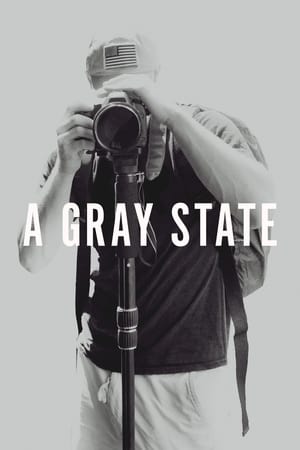
In 2010 David Crowley, an Iraq veteran, aspiring filmmaker and charismatic up-and-coming voice in fringe politics, began production on his film Gray State. Set in a dystopian near-future where civil liberties are trampled by an unrestrained federal government, the film’s crowd funded trailer was enthusiastically received by the burgeoning online community of libertarians, Tea Party activists and members of the nascent alt-right. In January of 2015, Crowley was found dead with his family in their suburban Minnesota home. Their shocking deaths quickly become a cause célèbre for conspiracy theorists who speculate that Crowley was assassinated by a shadowy government concerned about a film and filmmaker that was getting too close to the truth about their aims.
Documentary about the making and reception of Carl Th. Dreyer's final movie, "Gertrud."
A cheerful road movie all about Belgian films at Cannes over the past 70 years. Filmmakers from the past converse with those from the present to paint the portrait of a cinema that is both diverse and free. An account of Belgium’s participation in the greatest film festival in the world.