Mysteries of the Unseen World transports audiences to places on this planet that they have never been before, to see things that are beyond their normal vision, yet literally right in front of their eyes. Mysteries of the Unseen World reveals phenomena that can't be seen with the naked eye, taking audiences into earthly worlds secreted away in different dimensions of time and scale. Viewers experience events that unfold too slowly for human perception
Warsaw's Central Railway Station. 'Someone has fallen asleep, someone's waiting for somebody else. Maybe they'll come, maybe they won't. The film is about people looking for something.
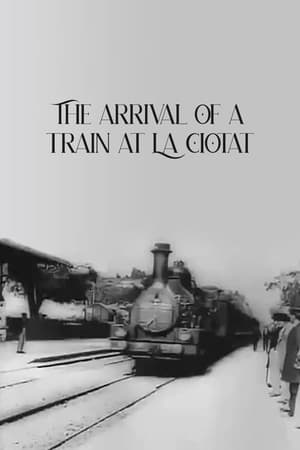
A group of people are standing along the platform of a railway station in La Ciotat, waiting for a train. One is seen coming, at some distance, and eventually stops at the platform. Doors of the railway-cars open and attendants help passengers off and on. Popular legend has it that, when this film was shown, the first-night audience fled the café in terror, fearing being run over by the "approaching" train. This legend has since been identified as promotional embellishment, though there is evidence to suggest that people were astounded at the capabilities of the Lumières' cinématographe.
A day in the city of Berlin, which experienced an industrial boom in the 1920s, and still provides an insight into the living and working conditions at that time. Germany had just recovered a little from the worst consequences of the First World War, the great economic crisis was still a few years away and Hitler was not yet an issue at the time.
An experimental ethnographic documentary that criticizes the colonizer view of anthropology.
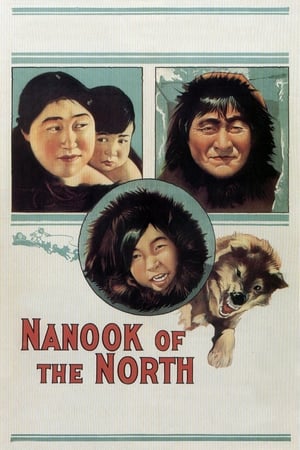
This pioneering documentary film depicts the lives of the indigenous Inuit people of Canada's northern Quebec region. Although the production contains some fictional elements, it vividly shows how its resourceful subjects survive in such a harsh climate, revealing how they construct their igloo homes and find food by hunting and fishing. The film also captures the beautiful, if unforgiving, frozen landscape of the Great White North, far removed from conventional civilization.
An appreciative, uncritical look at silent film comedies and thrillers from early in the century through the 1920s.
This short film documents Australian composer Richard Meale’s homage to the young French poet, Arthur Rimbaud. Meale composed a music piece for woodwind, percussion and strings which he titled “Incredible Floridas”.
Early Mondo film featuring primitive rituals, animals being butchered, unusual birth defects, and a legit trepanation scene.
A unique hybrid of documentary, silent film, drama and dance, 'Breaking Plates' puts revolutionary women of the past on the screen with present day filmmakers. Contemporary women talk to characters from 100 years ago, reanimate their antics and emulate their mayhem moves. As early 21st century performers step into the clothes of their early 20th century counterparts, battling their haywire machines, exploding gags, and eruptive bodies, they learn to wield humour as a weapon against the structures that contain them today.
To popularize the idea of automobile travel, Ford Motor Company produced Ford Educational Weekly, a film magazine distributed free to theaters. One 1916 series featured "Visits to American Cities." In this episode, Los Angeles is featured at the very beginning of the boom created by oil, movies and aircraft. On the occasion of its centennial in 1953, Ford donated its film to the National Archives and Records Service; this copy derives from a fine grain master printed from the Archive's preservation negative. Music by Frederick Hodges.
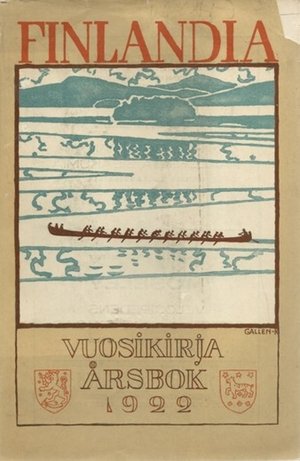
Finland’s first nature documentary. The filmmakers’ expedition leads them all the way to the Åland Islands and the Karelian Isthmus.
Coral Reef Adventure follows the real-life expedition of ocean explorers and underwater filmmakers Howard and Michele Hall. Using large-format cameras, the Halls guide us to the islands and sun-drenched waters of the South Pacific to document the health and beauty of coral reefs. Featuring songs written and recorded by Crosby, Stills & Nash.
Sea life in a whole new way. Deep Sea 3D, an underwater adventure from the filmmakers behind the successful IMAX® 3D film Into the Deep, transports audiences deep below the ocean surface. Through the magic of IMAX®; and IMAX 3D, moviegoers will swim with some of the planets most unique, dangerous and colorful creatures, and understand this inspiring underworld.
Retrace the groundbreaking footsteps of Charles Darwin with a young scientist as she explores the biological diversity and unique geologic history of the Galapagos archipelago. Using the magic of IMAX® and IMAX® 3D technology, plunge 3,000 feet into underground lava tubes, soar over the peaks of 5,000 foot volcanoes and encounter an abundance of marine life.
The Living Sea celebrates the beauty and power of the ocean as it explores our relationship with this complex and fragile environment. Using beautiful images of unspoiled healthy waters, The Living Sea offers hope for recovery engendered by productive scientific efforts. Oceanographers studying humpback whales, jellyfish, and deep-sea life show us that the more we understand the ocean and its inhabitants, the more we will know how to protect them. The film also highlights the Central Pacific islands of Palau, one of the most spectacular underwater habitats in the world, to show the beauty and potential of a healthy ocean.
The story of the evolution of tropical rain forests, their recent and rapid destruction, and the intense efforts of scientists to understand them even as they disappear. This film gives viewers a better appreciation of the importance of tropical rain forests on a global scale.
Explore the extraordinary hidden world of insects, where a leaf weighs more than a car, rain drops feel like exploding hand grenades and a blade of grass soars like a skyscraper. Shot on location in the Borneo rainforest, Bugs! brings the beautiful and dangerous universe of its tiny stars up close and personal with cutting-edge technology that magnifies them up to 250,000 times their normal size.
The film "Hurricane on the Bayou" is about the wetlands of Louisiana before and after Hurricane Katrina.
The first woman to appear in front of an Edison motion picture camera and possibly the first woman to appear in a motion picture within the United States. In the film, Carmencita is recorded going through a routine she had been performing at Koster & Bial's in New York since February 1890.