When the Cows Come Home introduces audiences to Tilly and Maggie, a pair of cows that musician, journalist, artist and cow whisperer, Andrew Johnstone has befriended and subsequently saved from slaughter. The garrulous herdsman is enthusiastic to expound his views on animal husbandry, bovine communication and the vagaries of life in general, before the film walks us back through the events that have shaped the singular farmer-philosopher. From personal family tragedy to warring with Catholic school authorities, innovating in Hamilton’s nascent music scene to creating guerrilla art installations; Johnstone’s life has had a truly idiosyncratic trajectory. Mental health issues may have seen him retreat to life on the farm, but the film makes clear its subject’s restless inquisitiveness is far from being put out to pasture.
King Corn is a fun and crusading journey into the digestive tract of our fast food nation where one ultra-industrial, pesticide-laden, heavily-subsidized commodity dominates the food pyramid from top to bottom – corn. Fueled by curiosity and a dash of naiveté, two college buddies return to their ancestral home of Greene, Iowa to figure out how a modest kernel conquered America. With the help of some real farmers, oodles of fertilizer and government aide, and some genetically modified seeds, the friends manage to grow one acre of corn. Along the way, they unlock the hilarious absurdities and scary but hidden truths about America’s modern food system in this engrossing and eye-opening documentary.
Is your hedge thin and straggly? Don't worry, help is at hand.
In such a difficult situation in Hong Kong agriculture, to local farmers, before expecting a good harvest, they have to first overcome the problems caused by agricultural policy implementation, land policy and urban development in Hong Kong. This film is about three middle-aged local organic farmers and their farming stories: A peasant leader, who faces political infiltration in organization, decides to quit and focuses on his farming; a rural woman who fights against North East New Territories development plan and taking care of her sick husband at the same time, decides to combine family life with her home farming; a sixty years old truck driver who decides to have a career change, trying to live a fearless and free life as a farmer.
An intimate portrait of an old man coming to terms with own mortality and letting go off his magnum opus - his garden. Living through an autumn of his life, he reminisces about his life filled with hard work, love for nature and onions.
Taleb, who came to a refugee camp at the age of five in 1975 and returned there after his studies abroad, tells of his life as a displaced person, his gratitude for the reception and support in Algeria, and his hope that the Sahrawis may one day return to their homeland. For Taleb, this hope drives him to actively prepare for better times: as a graduate in agricultural sciences, he conceived a successful small-scale closed-loop economy in a desert under the most difficult conditions, producing enough food for self-sufficiency.
In this sequel to the award-winning You’ve Been Trumped, director Anthony Baxter once again follows American billionaire Donald Trump and a cast of other greedy characters who want to turn some of the Earth’s most precious places into golf courses and playgrounds for the super rich. From the historic site of Dubrovnik to the ancient sand dunes and rolling green hills of the seaside town of Balmedie, these tycoons bully local residents, influence governments, ignore local referendums and even meddle in national environmental policies to acquire their latest trophies. With in-depth interviews and Baxter’s expert storytelling, we learn just how devastating these golf courses can be to the surrounding countryside and water tables. In this funny, inspiring and at times heartbreaking David and Goliath story for the 21st century, the locals don’t give in easily. But will their fight be enough to protect their land and traditional way of life?
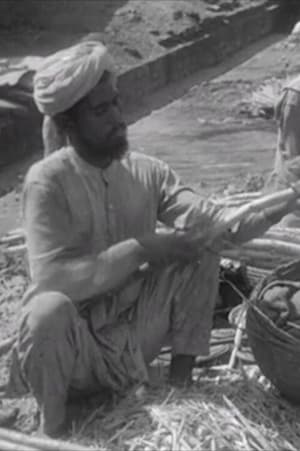
Two sides of Mysore: down to earth with the field workers and an Indian spectacle for the Maharaja.
The inspiring story of British farmers standing up against the industrial food system and transforming the way they produce food - to heal the soil, benefit our health and provide for local communities.
A park keeper is having telepathy with busts of distinguished individuals of Rasht city.
L'Amour vache
Permaculture teacher Geoff Lawton designs and builds a dam and water harvesting system on a farm.
Filmmaker Claudia Hefner showcases the Kramerterhof, an Alpine estate which Sepp Holzer has transformed from an ordinary farm into a paragon of permaculture. Spectacular aerial photography helps viewers to appreciate the magnificence of the landscape and the efficiency of the property.
Every year, a Kurdish family leaves Gaziantep (Anatolia) to work on the land near Ankara. This thankless life of seasonal labor turns upside down when the eldest son falls in love.
Patrick Kielty explores the untold story of Harry Ferguson and Henry's Ford's remarkable handshake agreement and how it led to a $250 million lawsuit.
L'Éveil de la Permaculture
During the rice sowing season, Jun, a young Catalan of Chinese origin, works as a seasonal worker in the Ebro Delta. This ancient labour will make him confront his own roots and the distance that separates him from his family.
Created over 75 years and three generations, Les Quatre Vents stands as an enchanted place of beauty and surprise, a horticultural masterpiece of the 21st century. See how Frank Cabot gave birth to one of the greatest gardens in the world.
This film, with an autobiographical flavor, was shot in part on the very premises where Father Proulx grew up and highlights the importance of agriculture and the very special attention given to rural youth in the from the Government of Quebec. The farm and its little world are presented during the four seasons: the introduction of children to agricultural work, the holidays, the return to school. From November to the end of April, the older ones take courses in the various agricultural schools scattered across Quebec. In addition to studying the methods of cultivation and breeding, they receive notions of carpentry, blacksmithing and other lessons likely to be useful in their future work as farmers. In the spring, the young girls go to secondary schools of agriculture to learn domestic art, beekeeping, weaving, sewing, etc.
Anita Chitaya has a gift: she can help bring abundant food from dead soil, she can make men fight for gender equality, and maybe she can end child hunger in her village. Now, to save her home in Malawi from extreme weather, she faces her greatest challenge: persuading Americans that climate change is real. Traveling from Malawi to California to the White House, she meets climate sceptics and despairing farmers. Her journey takes her across all the divisions that shape the USA: from the rural-urban divide, to schisms of race, class and gender, and to the American exceptionalism that remains a part of the culture. It will take all her skill and experience to help Americans recognise, and free themselves from, a logic that is already destroying the Earth.