Since 1950, Alberta's fabled Rat Patrol has kept the province rat-free. But as pest control meets ecology in the 21st century, what does the future hold for this mythic institution and their "enemy?"
The film offers a comprehensive examination of the exploitation of animals in modern society.
While many in the Western world view Islam as socially repressive, in Indonesia, the world's largest Muslim country, exists a community of biological men who live openly as women-- the warias. As four warias strive to find romance, intimacy, and acceptance, they encounter unique obstacles that force them to make extraordinary sacrifices to keep the ones they love.
Explore a lesser-known part of Venice: the wild side! In coral reefs and hidden gardens, find everything from poisonous mammals to strange sea life.
Spend a year with a Red Panda named Tashi and experience her life in the forests underneath the Himalayas. Along the way, meet the other rare bird, insect and animal inhabitants of this remote lush area in Northern India, including the leopard. And if cute could get even cuter, meet Tashi's cub...
Humpback Whales takes audiences to Alaska, Hawaii and the Kingdom of Tonga for a close-up look at how these whales communicate, sing, feed, play and take care of their young. Humpbacks were nearly driven to extinction 50 years ago, but today are making a steady recovery. Join a team of researchers as they explore what makes humpbacks the most acrobatic of all whales, why only the males sing, and why these intelligent 50-foot, 48-ton animals migrate more than 6,000 miles round-trip every year.
The Run is a feature length documentary film which follows Australian Pat Farmer’s test of human spirit and behind the scenes drama as he runs the length of India – 80 kilometres a day for 64 days with the backdrop of colourful, enchanting, challenging, organized chaos of India, which will saturate your senses.
It is quickly becoming the most populated country in the world, but India holds a dark secret. Men and women who make their homes in the poor villages throughout the central region of the country are forced to make decisions that no parents should ever have to make. Sell a child into slavery or watch your children starve to death.
Hindu legend tells of white warrior monkeys fighting to rescue the god Hanuman from evil demons. Centuries later in Jodhpur, India, the Hanuman langurs are fighting still. Comprised of 20 or more females and their young, and governed by a ‘Warlord, ‘ 29 langur ‘gangs’ have carved up the city between them. Warlords reign for three or four years before they’re overthrown. When a new Warlord comes to power he will purge the gang of young males, creating a society of ‘Lost Boys’ whose only chance is to violently displace another Warlord. Natural selection is harsh indeed, but what better way to build a culture of warriors?
The Duplex A86 is a 10 kilometer underground highway buried more than 90 meters deep. This concrete tube, measuring the equivalent of more than 30 lying Eiffel towers, is the longest tunnel in France. The result of a succession of technical prowess born from the imagination of visionary engineers, the Duplex A86 allows you to cross all of western Paris in a few minutes.
David Attenborough tells the remarkable story of how these " birds of paradise " have captivated explorers , naturalists, artists, filmmakers and even royalty.
Best of E.O.F.T. No. 2
A passionate conservation biologist brings together a river bushman fearful of losing his past and a young scientist uncertain of her future on an epic, four-month expedition across three countries, through unexplored and dangerous landscapes, in order to save the Okavango Delta, one of our planet's last pristine wildernesses.
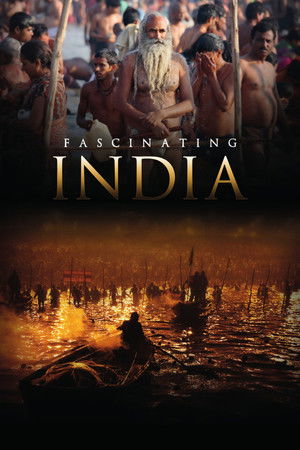
February 2013, Allahabad, India. Over the next 55 days, nearly a hundred million people will come here, to the Great Kumbh Mela. This incredible and awe-inspiring celebration of the world's oldest religion happens every 12 years at the place where Hindus believe two sacred rivers meet. For many Hindus this is their most important pilgrimage, and it happens at one of the most holy sites in India. Hindus come to cleanse themselves in the sacred waters of the river Ganges, to pray and emerge purified and renewed. This follows British pilgrims as they embark on a once-in-a-lifetime spiritual journey. A journey that will take them into the heart of Hinduism - its philosophy, its beliefs and its traditions. A journey that will culminate in the largest ever gathering of humans in one place.
Welcome to the largest human gathering ever in this one-hour special, World’s Biggest Festival: Kumbh Mela. Imagine a crowd so massive, it is visible from space. A crowd, likely 100 million strong, intent on just one thing: bathing in a sacred river to wash away sins and gain a chance at a new beginning. In the World’s Biggest Festival: Kumbh Mela, experience the dazzling spectacle of spiritual fervour and collective diversity as Hindus from across the globe converge on the Maha Kumbh Mela. Not only is it the world’s largest religious festival, but it is also believed to be the largest gathering of humans in one place, at one time on Earth.
At a time when the public is more concerned than ever about the health and environmental problems associated with large-scale factory farming, Peaceable Kingdom explores another angle of this unfolding story: the interconnected life journeys of farm animals, former farmers, and animal rescuers struggling against an out of control industrial system. Breaking generations of silence in the farm community, Peaceable Kingdom weaves together themes of respect, forgiveness, commitment, and healing, offering a vision of a more peaceful world that is well within our reach.
Cat experts explain the behaviors of domestic cats and how their sometimes undesirable actions are really innate instincts, revealing how closely they are still connected to their wild ancestors.
The River of Life and Death captures the slow time in the well-known Indian pilgrimage place of Benares, the act of purification by water, the burning funeral pyres, and the dandling snakeheads under the temple stairs.
Only twenty-five years ago, the first evidence of self-medicating behaviour among animals was reported among chimpanzees. On the basis of this pioneering research, led by the American Michael Huffman, a new science was founded: "zoopharmacognosy", or the study of animal pharmacopeia. Animals are apparently able to treat themselves actively, to detect natural substances that can provide a remedy for health problems, or to prevent them. The primatologist Michael Huffman explains how he discovered that chimpanzees can heal their diseases with medicinal plants from their environment. The scientist then comments on other very surprising examples: Birds that disinfect their nests by filling them with aromatic plants with repellent properties, a rodent that covers its coat with toxic sap as a poisonous defence against predators and elephants that place mud plasters on their injuries. Some therapeutic behaviours may even be transmitted socially among certain species.
Once upon a time, there was a pedunculate oak (Quercus robur), born in 1810, 210 years old and a pillar in its kingdom. This spectacular adventure features an extraordinary cast: squirrels, barnacles, jays, ants, field mice... This vibrant, whirring, marvelous little world seals its destiny around the majestic tree that welcomes them, feeds them and protects them from its roots to its crown. A poetic ode to life, in which nature alone expresses itself.