Prague au service de Moscou : Dans les secrets de la guerre froide
Alexej Čepička – Z vojína generálem
Modelování
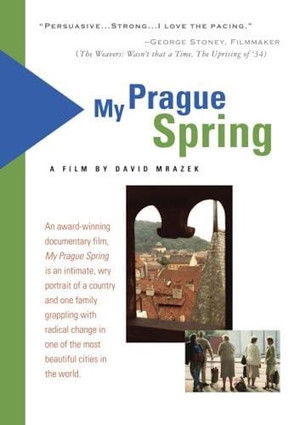
In its "velvet revolution" of 1989, the people of Czechoslovakia toppled its communist dictatorship and embraced democracy and capitalism. By January 1993, the country had peacefully split in two. In the early 1990s, thousands of American college graduates began flocking to Prague, where they could postpone entering the "real world," and live cheaply in a beautiful undiscovered European city. Throughout that decade more and more tourists crossed the statue-lined Charles Bridge in search of old world beauty previously hidden by communist isolation. But what of the people who cross the Charles Bridge on their way to work every morning? Who are the Czechs? What is their history? What is their future? My Prague Spring is an award-winning film that vividly humanizes a resilient people who have survived a tumultuous history. In the spring of 1990, a Czech-American filmmaker spent four months living with his Czech relatives, and opened an intimate window into an uncertain world.
Tenkrát 2 – Šance pro Slovensko
Tenkrát
Zima v Československu
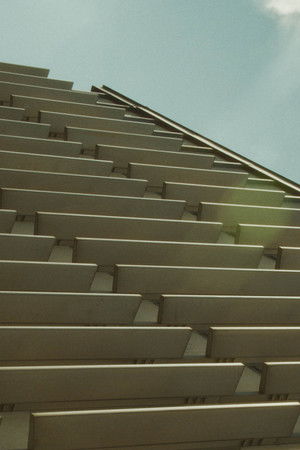
Oľga Ondreičková is one of the exceptional figures of the first generation of Slovak architects. Her work is characterized by pragmatism, simplicity, and monumentality. Her husband is architect Pavel Ondreička, with whom she collaborated on several projects, as well as on the design of furniture, interiors, and artistic decorations. At the height of her career, Oľga Ondreičková led her own project team, which was rare for a woman at that time.
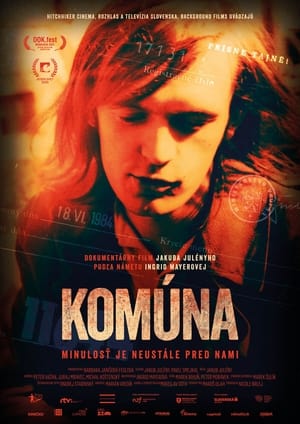
The desire for freedom during Czechoslovakia’s Normalization period brought together people professing a deep inclination towards principles of the underground movement. Now, decades later, they can’t face their mutual suspicions of betrayal – of having cooperated with the state security police. Drifting throughout is the memory of their tragically departed guru, philosopher and poet Marcel Strýko. To try to come to terms with the past, an old companion from Prague organizes a revival concert in a Gothic cathedral. Will this reunion of freethinkers finally lead to repentance and forgiveness?
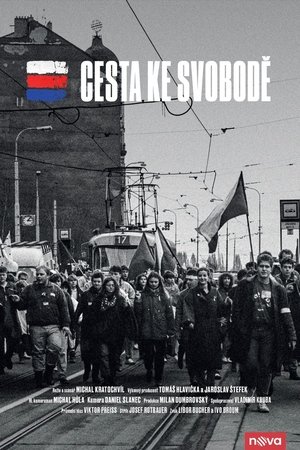
Cesta ke svobodě
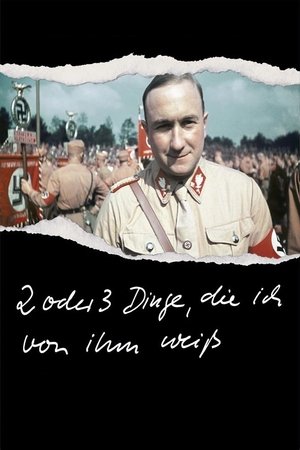
What would your family reminiscences about dad sound like if he had been an early supporter of Hitler’s, a leader of the notorious SA and the Third Reich’s minister in charge of Slovakia, including its Final Solution? Executed as a war criminal in 1947, Hanns Ludin left behind a grieving widow and six young children, the youngest of whom became a filmmaker. It's a fascinating, maddening, sometimes even humorous look at what the director calls "a typical German story." (Film Forum)
Reinhard Heydrich was considered the most dangerous man in Nazi Germany after Hitler himself. The plot to kill him masterminded in England and carried through to finality in Prague in 1942, is told in this gripping dramatised documentary special. Featuring meticulous reconstructions, coupled with authentic historical film, some of it never shown before the film powerfully presents a vivid account of the only successful assassination of a leading Nazi in World War II. It also chillingly recreates the terrible human cost of SS savagery against the Resistance and the total obliteration of the village of Lidice.
Showing his own original footage of Prague Spring, director Evald Schorm describes the atmosphere these days in 1968.
Marie Rottrová: To mám tak ráda
Jaromír Jágr
A film about the contrasts between Czechoslovakia and Bulgaria in 1968. A film that reveals the mechanisms of censorship and propaganda during communism. A film about how information about events in Czechoslovakia was distorted in Bulgaria.
Zánik Československa v parlamentu
A feature about philosophy, perception and imprisonment in Aldo Lado's Giallo "Short Night of Glass Dolls".
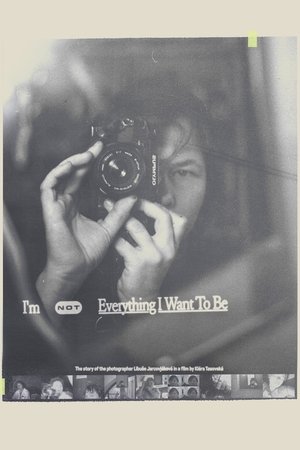
After the Soviet invasion of Czechoslovakia in 1968, Libuše Jarcovjáková, a young female photographer, strives to break free from the constraints of Czechoslovak normalization and embarks on a wild journey towards freedom, capturing her experiences on thousands of subjective photographs.
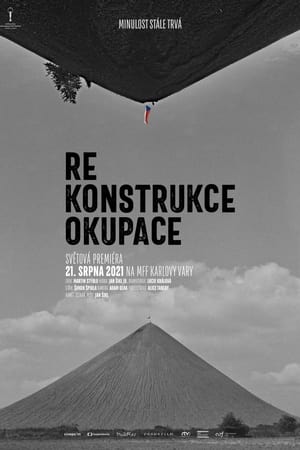
Documentary filmmaker Jan Sikl came across several hours of footage showing the Warsaw Pact invasion of Czechoslovakia in private film archives. 53 years later, historical memory awakens from a long slumber with this reconstruction of the occupation, a cinematic adventure of a truly archeological nature.