The true life-story of Sara Góralnik, a 13 year-old Polish Jew whose entire family was killed by Nazis in September of 1942. After a grueling escape to the Ukrainian countryside, Sara steals her Christian best friend’s identity and finds refuge in a small village, where she is taken in by a farmer and his young wife. She soon discovers the dark secrets of her employers’ marriage, compounding the greatest secret she must strive to protect, her true identity.
When Naomi, a young refugee from Nazi-occupied Paris, moves into Alan Silverman’s building in New York, he does his best to avoid her. But despite Naomi's strange behavior and the language barrier, they slowly develop a deep and touching friendship.
An in depth look at the persecution and subsequent death of the 5 million non Jewish victims of the World War II Holocaust and the lives of those who survived. Through stories of survivors and historical footage, these lesser known voices are brought to life. From the Roma and Sinti people who were also targeted for complete annihilation to the thousands of Catholic Priests who were killed for speaking out, Forget Us Not strives to educate and give tribute to those who were killed for their religion, ethnicity, political views, sexual orientation and physical handicaps.
Hiroshima and Nagasaki: 75 Years Later is told entirely from the first-person perspective of leaders, physicists, soldiers and survivors.
End of the WWII, concentration camp somewhere in Poland. Prisoners have heard that Germans have plans to kill them all, before the Allies come. One of the prisoners escapes, and tries to find the Allies. A manhunt begins.
A captured French Resistance fighter during World War II engineers a daunting escape from prison.
In the years before World War II, a tomboyish postulant at an Austrian abbey is hired as a governess in the home of a widowed naval captain with seven children and brings a new love of life and music into the home.
Betrayed by an informant, Philippe Gerbier finds himself trapped in a torturous Nazi prison camp. Though Gerbier escapes to rejoin the Resistance in occupied Marseilles, France, and exacts his revenge on the informant, he must continue a quiet, seemingly endless battle against the Nazis in an atmosphere of tension, paranoia and distrust.
A group of kids from the Bosnian village often run away from school from the terror of Pepper, a teacher who got his nickname because of his red nose. Soon they formed a brigand division, but have been discovered and caught. The sudden arrival of year 1941 turns their game into reality.
In the 1920s, the rivalry between fashion icon Gabrielle Chanel and her stylistic rival Elsa Schiaparelli gave rise to innovations in haute couture.
Evan, a filmmaker from Mississippi, catches feelings for a gal he meets at a found footage film festival in San Francisco. They decide to make a movie together, exploring the haunted landscapes of Evan’s family history in the swamplands of Florida. Old wounds are reopened and generational trauma reveals itself to be perhaps the scariest part of this attempted mockumentary that ends up being a little too real.
Based upon the final confession of Adolf Eichmann, made before his execution in Israel, of his role in Hitler's plan for the final solution.
Based on the novel of the same name by Harry Turk. 1944. In occupied Poland, a railway line is being built to transport lead ore to Germany. The Valley of Seven Moons is restless, with construction materials disappearing and people vanishing. The occupiers feel uneasy on foreign soil. Despite increased security, partisans carry out one act of sabotage after another, hindering construction in every way possible. The German Rudek and the Jewish girl Martina, who at first stand aside from any struggle, join the partisan detachment.
When his family moves from their home in Berlin to a strange new house in Poland, young Bruno befriends Shmuel, a boy who lives on the other side of the fence where everyone seems to be wearing striped pajamas. Unaware of Shmuel's fate as a Jewish prisoner or the role his own Nazi father plays in his imprisonment, Bruno embarks on a dangerous journey inside the camp's walls.
This documentary follows the steps of the boys of H Company as they fight on the island of Iwo Jima.
A life story of bees and people. In order to get to the bottom of the mysteries of the life of bees and show them to the audience, the camera enters a contemporary hive and a traditional wild beehive drilled in the trunk of an old tree. It wanders the forests in Poland and Ural, mountains in Nepal and... roofs of Paris and Warsaw. For millions years bees have been laboriously building the natural environment of our planet. These days, they started to die by millions. A programme of wild tree beekeeping reintroduction was launched in Polish forests. It has been an ancient local tradition. Maybe reaching for the past, the original model of coexistence of bees and people, for wild tree beekeeping, can help us to save the bees? After watching “Honey Hunters” everyone wants to have their own beehive and harvest their own honey!
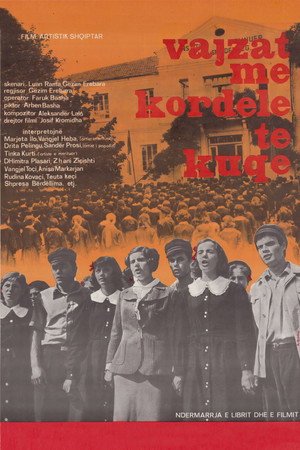
A documentary exploring how Albanians, including many Muslims, helped and sheltered Jewish refugees during WWII at their own risk, and trying to help the son of an Albanian baker that housed a Jewish family for a year return some Hebrew books that the family had to leave behind.
Upon Canada's entry into World War II, the RCMP rounded up thousands of people it considered fascist sympathizers. Among them, 700 Italian-Canadians were held for up to three years in internment camps. None were ever charged with a criminal offence.
The Balkans cradles Europe's last wild rivers and supports abundant wildlife and healthy, intact ecosystems. These rivers are "The Undamaged" – clean, pristine, and undammed. With over 2,700 small and large hydro power plants planned or under construction in the Balkans, corruption and greed are destroying the last free-flowing rivers of Europe. Follow the Balkan Rivers Tour, a rowdy crew of whitewater kayakers, filmers, photographers and friends who decided to stand up for the rivers, travelling from Slovenia to Albania for 36 days, kayaking 23 rivers in 6 countries to protest the dams and show the world the secret wild rivers of the Balkans. The film honours everyday people and local activists who are fighting to defend rivers and aims to spread the word of the plight of these rivers, showing a new style of nature conservation that is fun, energetic and effective.
The film is based on a real story that happened in 1943 in the Sobibor concentration camp in German-occupied Poland. The main character of the movie is the Soviet-Jewish soldier Alexander Pechersky, who at that time was serving in the Red Army as a lieutenant. In October 1943, he was captured by the Nazis and deported to the Sobibor concentration camp, where Jews were being exterminated in gas chambers. But, in just 3 weeks, Alexander was able to plan an international uprising of prisoners from Poland and Western Europe. This uprising resulted in being the only successful one throughout the war, which led to the largest escape of prisoners from a Nazi concentration camp.