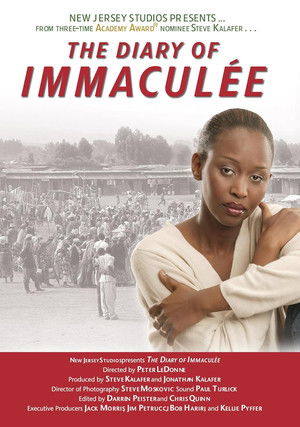
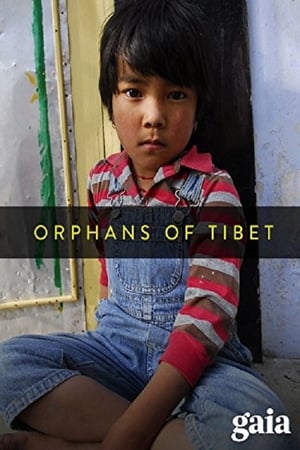
As the war wages on, Ukrainians under everyday threat find ways to live. A soldier returns home, a chaplain grapples with the weight of responsibility, and a mother grieves the loss of her family. These stories, amidst others, are a testament of Ukraine’s history, perseverance and plea to be remembered.
Works with sound recordings of Dion McGregor, who became famous for talking in his sleep.
An experimental sports film made partly during the Scandinavian Open Championships in Halmstad in 1970, partly during the Chinese players' exhibition tour in Denmark immediately after the SOC. First of all, it is a film about their style, about the artistic culmination that is ping-pong at its best, it records China's comeback into the international sports world.
Filmmakers use archival footage and animation to explore the culture surrounding nuclear weapons, the fascination they inspire and the perverse appeal they still exert.
Six blind Tibetan teenagers climb the Lhakpa-Ri peak of Mount Everest, led by seven-summit blind mountain-climber Erik Weihenmayer.
"With characteristic wit and rigor, experimental filmmaker Larry Gottheim here applies his impressionistic editing style to footage collected during his travels in the Dominican Republic. Gottheim’s formal emphasis on repetition and fissures between sound and image resonates here as a mode of sociological reflection (with the fragmentary montage mirroring elements of ritual while also destabilizing the ethnographic gaze). A largely overlooked antecedent to the contemporary blending of avant-garde and ethnographic filmmaking, MACHETTE GILLETTE… MAMA still poses a potent challenge to documentary convention." - Max Goldberg
Moving to Mars charts the epic journey made by two Burmese families from a vast refugee camp on the Thai/Burma border to their new homes in the UK. At times hilarious, at times emotional, their travels provide a fascinating and unique insight not only into the effects of migration, but also into one of the most important current political crises - Burma.
An anthology of one-minute films created by 51 international filmmakers on the theme of the death of cinema. Intended as an ode to 35mm, the film was screened one time only on a purpose-built 20x12 meter public cinema screen in the Port of Tallinn, Estonia, on 22 December 2011. A special projector was constructed for the event which allowed the actual filmstrip to be burnt at the same time as the film was shown.
In search of the lucrative matsutake mushroom, two former soldiers discover the means to gradually heal their wounds of war. Roger, a self-described 'fall-down drunk' and sniper in Vietnam, and Kouy, a Cambodian refugee who fought the Khmer Rouge, bonded in the bustling tent-city known as Mushroom Camp, which pops up each autumn in the Oregon woods. Their friendship became an adoptive family; according to a Cambodian custom, if you lose your family like Kouy, you must rebuilt it anew. Now, however, this new family could be lost. Roger's health is declining and trauma flashbacks rack his mind; Kouy gently aids his family before the snow falls and the hunting season ends, signaling his time to leave.
In focusing his attention on the competitors of Mr Gay Syria, director Ayse Toprak shatters the one-dimensional meaning of “refugee”. Using the pageant as a means of escape from political persecution, the organiser Mahmoud — already given asylum in Berlin — hopes to offer the winner a chance to travel as well as bring international attention to the life-threatening situations faced by LGBT Syrians.
Cinema and painting establish a fluid dialogue and begins with introspection in the themes and forms of the plastic work of a woman tormented by the elongated specters, originating from her obsessions and nightmares.
The documentary film "There is no turning back" by Stéphane Kleeb tells the story of the Tibetan siblings Losang and Dechen Barshee, who came to Switzerland as refugee children in 1964. After a difficult childhood in various foster families, they return to Tibet with their mother 40 years later. This journey confronts them with the alienation from their mother and their changed homeland. The film addresses homelessness, uprooting and lost dreams.
Experimental film fragment made with the Edison-Dickson-Heise experimental horizontal-feed kinetograph camera and viewer, using 3/4-inch wide film.
Combining high definition and Super 8 footage, Lampedusa is composed of interwoven narratives based on a series of real events. In 1831, a volcanic island suddenly erupted from the sea a few kilometers off the southern coast of Sicily. An international dispute ensued, as a number of European powers laid claim to this newfound “land”. The island receded below sea level six months later, leaving only a rocky ledge under the sea…
"The Boy Of The Fish" follows Noon, a young boy living in a Syrian refugee camp, who finds solace and a sense of freedom in a whale-shaped doll he names "Bahr." Set against the challenging realities of camp life, Noon’s journey is both a story of resilience and a testament to the boundless imagination of childhood. Through vivid symbolism and a unique soundscape, the film explores themes of loss, hope, and the longing for freedom amidst confinement. Shot entirely on an iPhone due to restrictions in the conflict zone, the film combines raw authenticity with poetic depth to capture the emotional landscape of a young soul navigating adversity.
Study of the relationship between observer and landscape in the contemplative experience. The view building the landscape from the necessary distance. The delimitation of its borders against the total continuum of nature. The observer immersed in the path of his gaze across the landscape. Resting the gaze in the details that make the globallity. The view selecting the space included as a landscape.
We approach to invisible details for our eyes, figures disappearing as we move away from them, diluted in space. Parts that are integrated into the whole landscape. The remoteness as disappearance. The human figure betrays us here negligible small in the vastness of the territory, the voracity of the active vacuum that surrounds him. Images captured in the Atlas region in Morocco.
The documentary focuses on the annual Mani Rimdu festival of Tibet and Nepal, an event which encapsulates the Himalayan Buddhist experience.
An hour-long portrait of Canadian immigration lawyer, M. Lee Cohen, renowned for his work with refugees. The film follows his representation of Sonya Pecelj and Vladimir Zalipyatskikh. The first case follows a young woman, Sonya Pecelj from Kosovo, who seeks sanctuary for more than a year in a church; the second case follows a Russian sailor who dives off a ship in Halifax Harbour to escape virtual imprisonment by the Russian fish mafia.
The rare short film presents a curious dialogue between filmmaker Julio Bressane and actor Grande Otelo, where, in a mixture of decorated and improvised text, we discover a little manifesto to the Brazilian experimental cinema. Also called "Belair's last film," Chinese Viola reveals the first partnership between photographer Walter Carvalho and Bressane.