A found footage experiment made using an excerpt from the film Taranula! (1955)
A found footage experiment made using footage from a 50s disaster film. Slowed down audio and lots of distorted textures are present.
The films of Jorge O Mourão, a collection of autobiographical performance pieces, constitute visceral reactions to the authoritarian regime in Brazil and channel the paranoia and claustrophobia of his generation through the disjunction of sound and image.
A portrait of a street corner in flux.
Restore the classical definition of planet! Bring back planet Pluto! The solar system is twelve!
Bela
The Island is a short film shot entirely on Pulau Bidong, an island off the coast of Malaysia that became the largest and longest-operating refugee camp after the Vietnam War. The artist and his family were some of the 250,000 people who inhabited the tiny island between 1978 and 1991; it was once one of the most densely populated places in the world. After the United Nations High Commissioner for Refugees shuttered the camp in 1991, Pulau Bidong became overgrown by jungle, filled with crumbling monuments and relics. The film takes place in a dystopian future in which the last man on earth - having escaped forced repatriation to Vietnam - finds a United Nations scientists who has washed ashore after teh world’s last nuclear battle. By weaving together footage from Bidong’s past with a narrative set in its future, Nguyen questions the individual’s relationship to history, trauma, nationhood, and displacement.
Fixed and symmetrical shots make up the world where a beast wanders into the different stages of a scientific testing that has been exposed to. Human figures appear in harmless and impersonal spaces where they modify the animal biologically, without uttering words. Nowadays, man only seems to move around a constant improvement, a search for improving the nature that surrounds us, thinking about the possibility to taste a celestial candy.
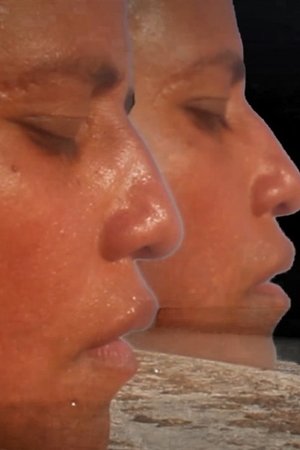
An experimental and poetic portrait of a woman.
An abstract work featuring three dancers, the performers interact with large screens as well as each other. Included in Shirley Clarke’s Four Journeys Into Mystic Time, costuming and color play an integral role in this piece.
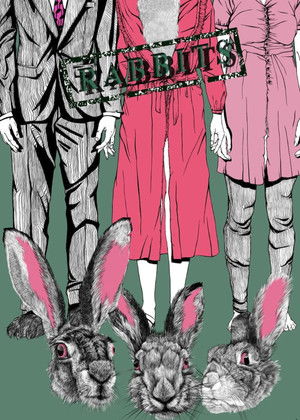
A story of a group of humanoid rabbits and their depressive, daily life. The plot includes Suzie ironing, Jane sitting on a couch, Jack walking in and out of the apartment, and the occasional solo singing number by Suzie or Jane. At one point the rabbits also make contact with their “leader”.
The film takes us through the working day of protagonists, factory workers. Their basic working tool is their body, ready to execute strenuous manual tasks. Day after day the same story, the same faces, the same spaces, the same tasks. Feeling confined, they seek a sheet anchor, a way out, an escape. They venture into the unknown, dance, drift and float in the air.
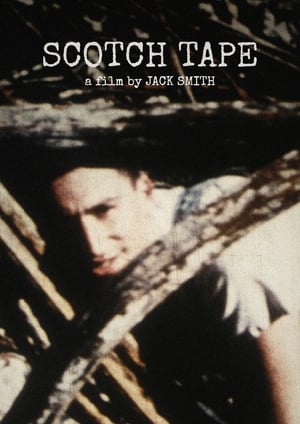
Andy Warhol directs a single 35-minute shot of a man's face to capture his facial expressions as he receives the sexual act depicted in the title.
We live with stories. And it's hard for us to give up on these stories, which provide us our identity, a way of understanding ourselves. Reflections from three successive generations are dusted off and presented as remaining fragments. An attempt to archive thoughts on familial history, narrative traditions, human perception and "the story" from known and unknown sources. "There is history behind it and the history becomes the story and the story becomes the pattern and the pattern becomes rigidity."
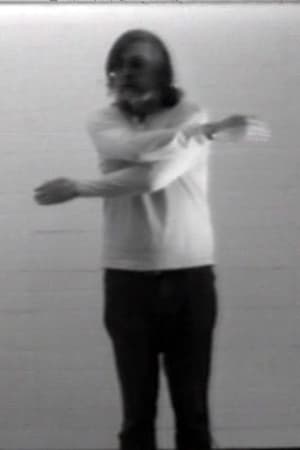
In an ironic reference to body art, process art and performance, Baldessari challenges definitions of the content and execution of art-making. Performing with deadpan precision, he moves his hands, arms and entire body in studied, minute motions, intoning the phrase "I am making art" with each gesture. Each articulation of the phrase is given a different emphasis and nuance, as if art were being created from moment to moment. This index of body movements is ironically offset by the repetitive monotony of the exercise.
Goodbye Fantasy is about two bodies in relation to each other as they let go of multiple cinematic universes they occupy together. Transforming from a fantasy body to a dreaming body to a dying body, they enact different constellations of social and political power as they relate to each other within the tight construct of the frame.
A monkey paces inside a cage: visually, the short film confines itself to this stark simplicity, yet its message resonates deeply. It draws on whispered excerpts from Goffman’s seminal Asylums on total institutions, paired with a poignant citation from Poe. In the spirit of post-'68 thought, closed and segregated spaces take center stage in the social and cultural discourse, and this film embodies that reflection with radical intensity.
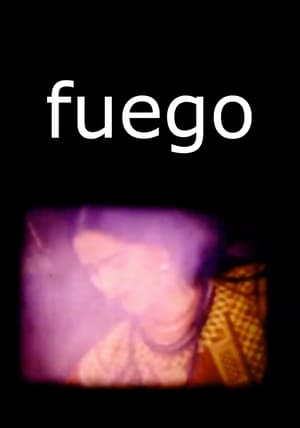
Fuego
Against a backdrop of electrocution, dominance, and scientific precision, wasps nest in an abandoned refrigerator, eyelashes flutter, curtains blow in open windows, and queers congregate. Adapting Stanley Milgram's 1963 experiment on obedience to authority, "Gold Moon, Sharp Arrow" explores how queer communities reenact, resist, and respond to assimilation, coercion, and trauma.
"Let's Not Pretend" is a film by Riley Bartolomeo about acclaimed artist Susan Calza. This documentary follows this award and fellowship grant winning artist to discover the autobiographical stories which lay beneath her art. Moreover, the film emphasizes the importance of art in our communities, country and world!