The gorgeous and evocative Otto Schenk/Günther Schneider-Siemssen production continues with this second opera in Wagner’s Ring cycle. Hildegard Behrens brings deep empathy to Brünnhilde, the favorite daughter of the god Wotan (James Morris) who nevertheless defies him. Morris’s portrayal of Wotan is deservedly legendary, as is Christa Ludwig, as Fricka. Jessye Norman and Gary Lakes are Sieglinde and Siegmund, and Kurt Moll is the threatening Hunding. James Levine and the Met orchestra provide astonishing color and drama. (Performed April 8, 1989)
Siegfried is the third of the four operas that constitute Der Ring des Nibelungen (The Ring of the Nibelung), by Richard Wagner.
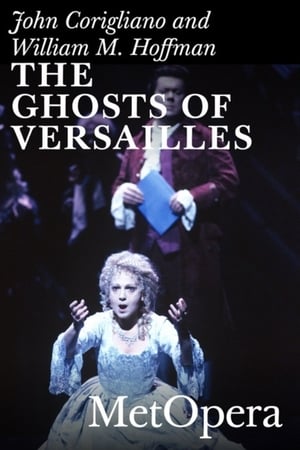
What happened to Figaro and his friends after the events told in Rossini’s and Mozart’s operas? One possible sequel is told in John Corigliano’s “grand opera buffa” The Ghosts of Versailles—an uproariously funny and deeply moving work inspired by Beaumarchais’s third Figaro play, La Mère Coupable, and commissioned by the Met to celebrate its 100th anniversary. This telecast captures its world premiere run, conducted by James Levine. Håkan Hagegård is Beaumarchais, Figaro’s creator, who is deeply in love with Marie Antoinette (Teresa Stratas in a heart-searing performance) and determined to rewrite history and save her from the guillotine. A young Renée Fleming, at the beginning of her international career, sings the unfaithful Rosina. Gino Quilico is the wily Figaro who tries to take matters in his own hands, and Marilyn Horne stops the show as the exotic entertainer Samira.
Gaetano Donizetti and his librettist Felice Romani kept the focus of their opera ANNA BOLENA on the personal rather than the political in this fictionalized Tudor tale: Henry VIII of England wants to get rid of his second wife, Anne Boleyn, so that he can marry her lady-in-waiting, Jane Seymour. He brings Lord Richard Percy, Anne's first love, back from exile so that he can find an excuse to accuse her of adultery. With the unwitting aid of Smeaton, a court musician, and Lord Rochefort, Anne's brother, the trap is easily sprung. This 2011 live recording from the Wiener Staatsoper showcases Anna Netrebko as she "scored a personal triumph" in her debut as the hapless Tudor Queen, while her stage partners - notably Elīna Garanča as Jane Seymour and Ildebrando D'Arcangelo as Henry VIII - were likewise showered with critical acclaim.
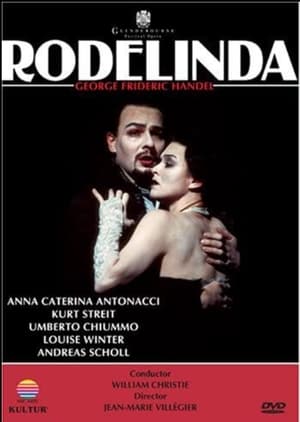
Renée Fleming stars in the title role of one of Handel’s greatest dramas, seen in Stephen Wadsworth’s 2004 Met premiere production. Rodelinda is faced with an impossible dilemma: With her husband Bertarido believed dead, she either has to marry the despised Grimoaldo (the elegant Joseph Kaiser), who has usurped her husband’s throne, or see him murder her son. But Bertarido (leading countertenor Andreas Scholl) is alive and eventually reclaims both throne and wife—and makes peace with his enemies. Stephanie Blythe is marvelous as Eduige, Bertarido’s sister, who is betrothed to Grimoaldo but turns against him. Baroque authority Harry Bicket conducts.
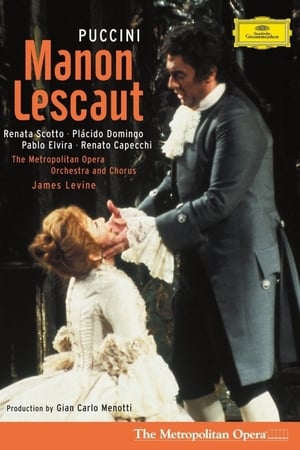
"Manon", wrote Puccini to his publisher Giulio Ricordi in 1889, "is a heroine I believe in and therefore she cannot fail to win the heart of the public." This turned out to be a truly prophetic statement since none of Puccinis other world successes were received on their first nights as rapturously as Manon Lescaut. The popularity of Puccinis great masterpiece has never waned and the highly acclaimed Götz Friedrich production at Covent Garden was hailed as an operatic milestone. Two of the worlds leading stars--Kiri Te Kanawa and Placido Domingo--head a strong cast conducted by the brilliant Italian conductor Giuseppe Sinopoli.
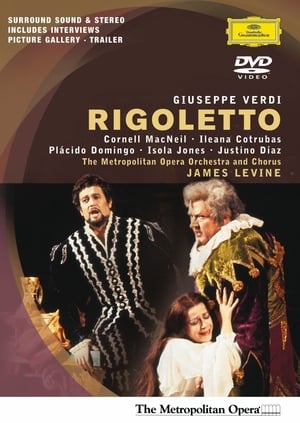
A Victor Hugo play, haunting and scandalous, provided the inspiration for Verdi’s mid-career masterpiece. A vengeful but misguided court jester strives to save his daughter from a duke’s licentious clutches, but can't part with the feeling that a curse looms over all of his actions. In Rigoletto, the composer introduces several of his most iconic arias and duets—as well as an 11th-hour quartet that counts among the finest moments in opera.
Georgian mezzo-soprano Anita Rachvelishvili gives a dynamic performance as Bizet’s iconic gypsy, the woman who lives by her own rules. Aleksandrs Antonenko is Don José, the soldier who falls under her spell, and Ildar Abdrazakov plays Escamillo, the swaggering bullfighter who takes Carmen away from Don José—an action that seals Carmen’s tragic fate. Anita Hartig is Micaëla, and Pablo Heras-Casado conducts Richard Eyre’s hit production, set in 1930s Spain.
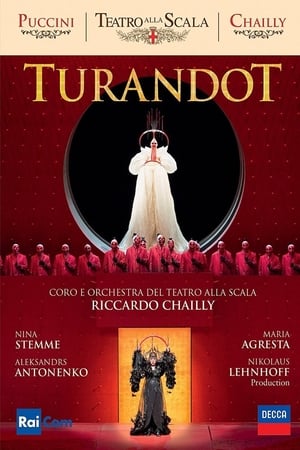
The Franco Zeffirelli production of Puccini's "Turandot", recorded live at the Metropolitan Opera in April, 1987. Éva Marton stars as Turandot, with Plácido Domingo as Calaf, Leona Mitchell as Liù, Paul Plishka as Timur, and Hugues Cuenod as L'Imperatore Altoum. James Levine conducts.
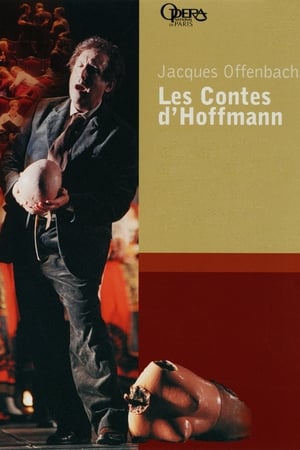
Live performance, Bayerische Staatsoper, 2011. The Tales of Hoffmann (French: LES CONTES D'HOFFMANN) is an opéra fantastique by Jacques Offenbach that combines three short stories by E.T.A. Hoffmann into a haunting whole: a melancholy poet reflects on three women he loved and lost in the past: a mechanical performing doll, a Venetian courtesan, and the consumptive daughter of a celebrated composer. One of the questions this opera poses for any director is how to link the 'tales' of Hoffmann's three lost loves together and knit them satisfactorily into the Prologue and Epilogue. In this production, Richard Jones solves the puzzle by turning it into an autobiographical journey which ends with a grand meet-up of all the characters Hoffmann has encountered: for once, Hoffmann is not presented as a rollicking kind of drunken story-spinner, but rather a sad-eyed, sobered-up depressive, who reaches for the bottle only because his disastrous love life has gone wrong yet again.
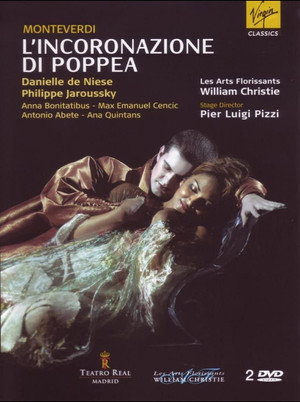
A masterpiece of bel canto at the Teatro Real in Madrid: conductor José Miguel Pérez-Sierra and director David McVicar take on Donizetti’s Maria Stuarda, with Lisette Oropesa in the title role.
Mozart's famous Singspiel after Christoph Friedrich Bretzner's work "Belmonte und Konstanze", DIE ENTFÜHRUNG AUS DEM SERAIL comes to life in the sumptuous setting of Topkapi, the Ottoman sultans' own Istanbul seraglio (palace harem). Belmonte finds his fiancée Konstanze and her English maid Blondchen, who were captured and sold by pirates, in the Mediterranean seraglio of the Ottoman pasha Selim. Belmonte's servant Pedrillo gets him engaged as builder. After Selim tried to enforce himself upon Konstanze, Pedrillo and Blondchen, his own sweetheart, prepare their flight, managing to get Osmin, the pasha's overseer, drunk. Yet Osmin and Selim's guard still capture them, already in the garden; however the touching display of true love melts the pasha's heart, so he lets them go.
A musical adaptation of Victor Hugo's novel "Notre Dame de Paris" which follows the gypsy dancer Esmeralda and the three men who vie for her love: the kind hunchback Quadimodo, the twisted priest Frollo, and the unfaithful soldier Phoebus.
‘Nabucco’, or ‘Nebuchadnezzar’ (Italian: Nabucco), is an opera by Giuseppe Verdi with a libretto by T. Solera, based on events described in the Bible. (Nabucco is a shortened Italian rendering of the name of King Nebuchadnezzar II). It was this opera, the third in Verdi’s oeuvre, that brought him true fame. It tells of the tribulations of the Jews, their captivity by the Babylonians, and their subsequent release to their homeland by Nebuchadnezzar, King of Babylon. Giuseppe Verdi’s opera ‘Nabucco’, is a monumental work that tells the story of the enslavement of the Hebrew people by the Babylonian king Nebuchadnezzar (Nabucco) and their journey towards redemption. The premiere took place on 9 March 1842 at La Scala in Milan. The first performance of the final version was held at the Teatro San Giacomo in Corfu in September 1844. From the box set of 27 Verdi operas, ‘Tutto Verdi’. Recorded live at the Teatro Regio in Parma, 12–14 October 2009.
David McVicar's exhilarating new production, with Anne Sofie von Otter in the title role, restores the Opera Comique to Bizet's masterpiece. Philippe Jordan, in his Glyndebourne debut, conducts the London Philharmonic Orchestra, the Glyndebourne Chorus, and a cast which includes Marcus Haddock, Laurent Naouri, and Lisa Milne.
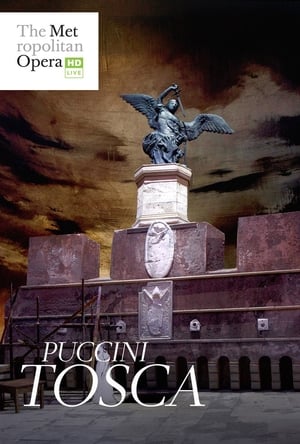
Tosca is an opera in three acts by Giacomo Puccini to an Italian libretto by Luigi Illica and Giuseppe Giacosa. It premiered at the Teatro Costanzi in Rome on 14 January 1900. This version is conducted by Riccardo Muti at La Scala, Milan.
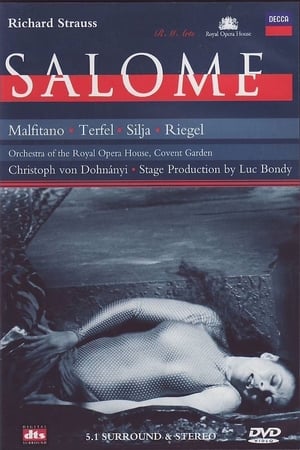
Richard Strauss's opera, from the Royal Opera House, Covent Garden.
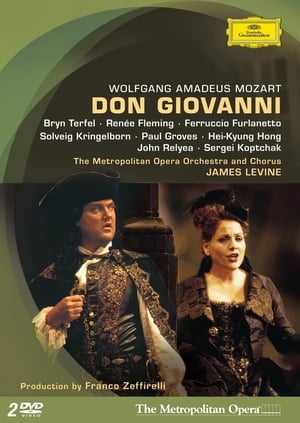
Simon Keenlyside smolders dangerously in the title role of Mozart’s version of the legend of Don Juan, creating a vivid portrait of a man who is a law unto himself, and all the more dangerous for his eternally seductive allure. Adam Plachetka is his occasionally unruly servant Leporello. It’s when Giovanni tangles with Donna Anna (Hibla Gerzmava) that things start to unravel, aided by the reappearance of Donna Elvira (Malin Byström), who is determined not to let her seducer go. With Paul Appleby as Don Ottavio, Donna Anna’s eternally steadfast fiancé. Principal Conductor Fabio Luisi leads the Met Orchestra and Chorus.
Live performance from the Schwetzinger Festspiele, 1987. At the age of 21, Italian composer Giacchino Rossini penned the masterful comic opera “L’Italiana in Algeri” (“The Italian Girl in Algiers”) in less than a month. The composer’s youthful exuberance comes across in this infectious 1987 performance. Though she’s known mainly for her Wagner roles, acclaimed German mezzo-soprano Doris Soffel shines in the title role of Isabella. Ralf Weikert conducts, and Mauro Pagano oversees sets and costumes.
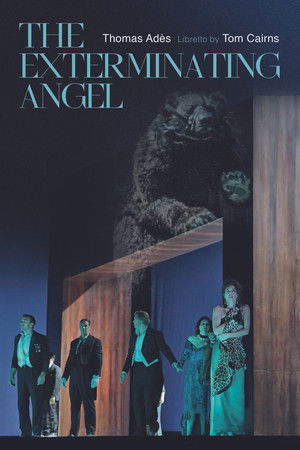
After the acclaimed Met premiere of Thomas Adès's "The Tempest" in 2012, the composer returned with another masterpiece, this time inspired by filmmaker Luis Buñuel's seminal surrealist classic "El Ángel Exterminador", during the 2017–18 season. As the opera opens, a group of elegant socialites gather for a lavish dinner party, but when it is time to leave for the night, no one is able to escape. Soon, their behavior becomes increasingly erratic and savage. The large ensemble cast tackles both the vocal and dramatic demands of Adès's opera with one riveting performance after another. Tom Cairns, who also penned the work's libretto, directs an engrossing and inventive production, using a towering wooden archway to trap the characters onstage. And Adès himself takes the podium to conduct the frenzied score, which features a host of unconventional instruments, including the eerie electronic ondes Martenot.