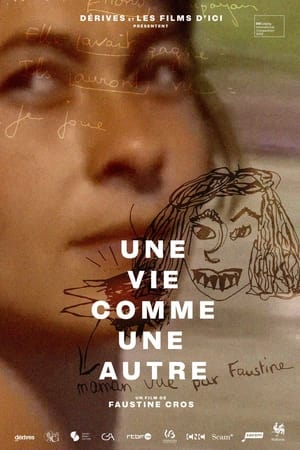
Léa is an old punk, Rémi an old hippie, Tonton a former fairground worker, Kiki a pink-haired Ma' Daltone, and Galak, their poodle. They all live together amidst laughter, drugs and rough love, dividing their time between a cramped Parisian council flat and a chalet in the Alps that’s far too big for them. One day, Kiki has a stroke, plunging her into dependency and forcing her daughter to take charge of her, even though she struggles to look after herself. No More Heroes tells the story of a tribe trying to hold its own in the world.
The personal stories lived by the Uncle, the Father and the Son, respectively, form a tragic experience that is drawn along a line in time. This line is comparable to a crease in the pages of the family album, but also to a crack in the walls of the paternal house. It resembles the open wound created when drilling into a mountain, but also a scar in the collective imaginary of a society, where the idea of salvation finds its tragic destiny in the political struggle. What is at the end of that line? Will old war songs be enough to circumvent that destiny?
In the heart of Durango, the Low Biker community has forged a unique bond through a shared love for cumbias and custom bicycles, uniting neighborhoods across the city in a vibrant, collective passion. Amid the joy of their culture, they face the harsh realities of discrimination and prejudice, navigating daily challenges from a society that struggles to accept their way of life.
Few amateur films with sound were produced in the 1930s and fewer remain extant. A charming artifact that demonstrates the expressive possibilities and technical limitations of amateur talkies, "The Spider and the Fly" includes a backyard Labor Day gathering, a trip to the Riverview Amusement Park, and a homemade Halloween parade of witches and ghouls.
In the Sardinian town of Tonara, where the ancient art of crafting cowbells teeters on the edge of extinction, a family battles to preserve their heritage, passing down skills to a new generation while grappling with personal struggles and the pull of modernity. English subtitles.
Faced with an assignment to film something personal, Cem begins a quiet search for what that really means. A casual conversation with a close friend leads him to turn the camera toward the people who already shape his life. Through moments with his grandmother, spontaneous talks about family, and reflections on his dream of becoming a filmmaker, MozikMoro slowly transforms into a portrait of connection and self discovery. Between the ordinary and the intimate, Cem captures a world that is both deeply personal and universally human.
An Austrian director followed five successful African music and dance artists with his camera and followed their lives for a year. The artists, from villages in Ghana, Gambia and Congo, were the subjects of Africa! Africa! touring across Europe, but they have unbreakable roots to their homeland and their families. Schmiderer lovingly portrays his heroes, who tell their stories about themselves, their art and what it means to them to be African with captivating honesty. The interviews are interwoven with dance scenes and colourful vignettes set to authentic music.
ROGER, MY BROTHER immerses us in the moving story of Christiane, who is devoted to caring for her brother Roger, who has Alzheimer's disease. Her tireless commitment allows Roger to avoid being placed in a nursing home despite the challenges. At the heart of this sibling relationship lies an unbreakable bond of love, demonstrating human resilience and the strength of family ties. This film celebrates the dignity, compassion, and determination that drive the bond between brother and sister, offering a profound reflection on love's ability to overcome the most insurmountable obstacles.
Poème pour un foyer
Mon premier cri
What happens when your child comes out to you? In this feature documentary, parents of lesbian, gay, bisexual and trans-gender individuals in Turkey intimately share their experiences with the viewer, as they redefine what it means to be parents in this conservative society.
Kalkidane, le serment d'une adoptée
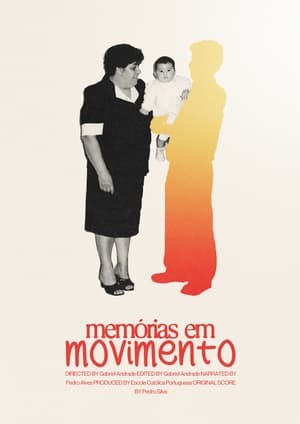
A meeting between the daughter and the grandmother of the director, Iván Mora Manzano, at a time when the memories of one, the girl’s, were taking shape, and the other’s the grandmother’s, were vanishing. This starting point is used as a pretext to talk about other topics such as the importance of family memories and the search for memory.
An ocean stood between Baba and her grandson, so she did the only thing she could: she became a whale and swam to him.
What is a true punk band? We sit down with St. John's punk band, Banana Vacuum, to explore punk culture and question what it takes to be punk in today's world. This new band has gained some notoriety in the past year for it's unusual lead singer and themes throughout the album. This film explore the people behind Banana Vacuum and the music that has made fans all over Canada go wild for their unapologetic true punk identity.
An animation about the uncertainties in human connections over time, portrayed in an affectionate relationship between a granddaughter and her grandfather with dementia as they grow old together.
Honduran immigrants living in Mexico, teenage siblings Rocío and Ale must take over care of their two younger siblings after their mother is sentenced to prison on dubious grounds. Tensions grow between the pair as the decision must be made on whether to stay together in Mexico or split the family up to cross into the US to work.
In the streets of Huentitán el Bajo, the horn of Chapo's car blares. He's a man who transformed his life, marked by violence, gangs, and addiction, into a story of redemption through art. After surviving a near-fatal ordeal, he found in sign painting and murals a way to heal and restore identity to his community. With his chopper bike, his music, and his wooden cart full of paint, Chapo travels the neighborhood, filling the walls with color and hope. Beyond his tough exterior, he reveals himself as a loving father, a committed artist, and a symbol of change in an environment still battling violence.
A brief glimpse through the life of Granny Lue. A woman of faith, fearlessness, and fierce energy, she never allowed her disability to determine her ability to live.
Painter Zdzisław Beksiński, his wife Zofia and their son Tomasz, a well-known radio journalist and translator, were a typical and unconventional family, both at the same time. One of the father’s obsessions was filming himself and his family members. Using archival footage only, shot primarily by Zdzisław, as well many other materials, which have not been presented anywhere so far, the film tells a tragic story of the Beksińskis that has never ceased to fascinate Polish filmmakers.